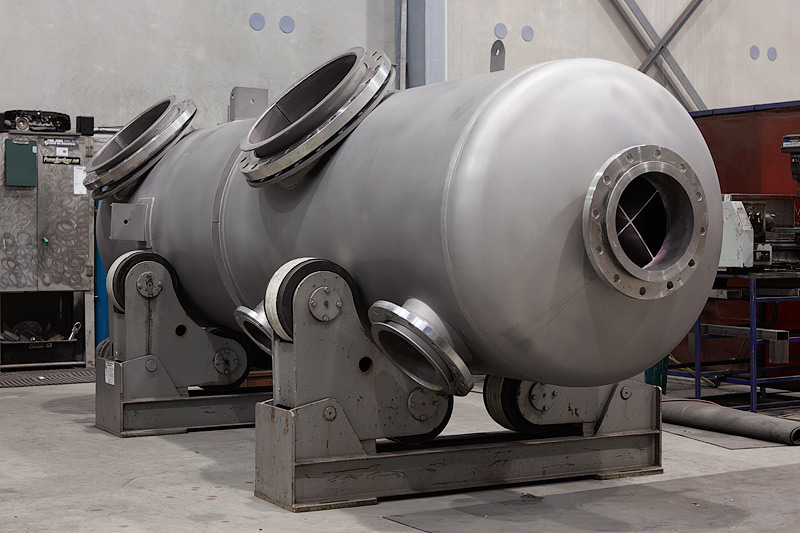
Pressure vessels are essential components across petrochemical, mining, food processing, water treatment and manufacturing industries. Because they hold gases or liquids at pressures substantially different from atmospheric, failure can cause catastrophic consequences — so design, manufacture, testing and in-service inspection are tightly regulated. Australia’s approach blends national standards (notably AS 1210), state/territory plant registration and work health & safety laws, and conformity assessment provided by independent bodies (e.g., NATA-accredited laboratories). This longform guide explains the technical and regulatory framework, compares AS 1210 with ASME Section VIII, details Australian compliance and inspection practice, and explores common challenges and the future of pressure-equipment regulation in Australia.
Quick primer: what AS 1210 covers and where it sits in the Australian system
AS 1210 — Pressure Vessels (current designation AS 1210–2010) is the principal Australian standard used for the design, construction, testing and inspection of pressure vessels in Australia. It describes allowable stresses, design equations, fabrication requirements (welding, joining, forming), marking, testing (hydrostatic and pneumatic tests) and protection devices (e.g., relief valves). AS 1210 is referenced by the parent standard AS/NZS 1200 (the “general requirements” document for pressure equipment) and is widely applied by designers and fabricators as the “design code of record” for pressure vessels manufactured or used within Australia.
Key points about AS 1210:
- It applies to “pressure vessels” operating up to specified pressures (AS 1210 traditionally covers vessels up to about 21 MPa depending on materials and temperature limits) and provides design-by-rule methods that are intended to be straightforward to use for standard vessels.
- AS 1210 is maintained by Standards Australia (committee ME-001 Pressure Equipment) and is updated periodically; when using it in engineering work you should confirm the edition in force and any supplements or national amendments that apply.
Differences between AS 1210 and ASME Section VIII (practical engineering view)

Both AS 1210 and ASME Boiler & Pressure Vessel Code (BPVC) Section VIII are widely used around the world. While either can be used in Australia under contract or client requirements, they contain subtle — and sometimes important — differences that affect design, fabrication and testing.
Philosophy and structure
- ASME Section VIII is a large, modular code with separate Divisions (Div 1 covers design by rule, Div 2 covers design by analysis with more advanced requirements). ASME gives detailed procedures, material allowable stress tables and extensive mandatory rules for certain designs.
- AS 1210 is more compact and oriented to Australian industrial practice; it is commonly used in tandem with AS/NZS 1200 for jurisdictional compliance. AS 1210’s provisions are often simpler to apply for common vessel geometries.
Design formulae and safety factors
- Some of the fundamental design formulae differ (for example, the derivation of shell thickness and the way corrosion allowance, joint efficiency and weld factors are combined). This can yield slightly different required thicknesses for an identical vessel under ASME vs AS 1210. Engineers must choose the code and document it on drawings and calculations.
Hydrostatic testing pressures
- One commonly cited difference is hydrostatic test multiplier: AS 1210 and regionally used Australian practice tend to apply a hydrotest pressure based on 1.5 × MAWP × (Sa/So) in some circumstances, while ASME often uses a lower multiplier (typical ASME practice around 1.3–1.5 factors depending on clauses and interpretations). The precise multiplier depends on the clause and the allowable stress definitions used — but this difference affects how tough the vessel is tested and can drive additional reinforcement or inspection. Always check the exact clause for your standard edition.
Hazard classification and registration impact
- Australian jurisdictions commonly require hazard classification for pressure equipment (A, B, C, D) using AS 4343 criteria. That classification affects registration, inspection frequency and in some states whether design or item registration is required. ASME does not directly produce Australian hazard classification tables; when ASME is used in Australia, the designer must still comply with local classification and registration processes.
Material & welding acceptance
- Both codes place heavy emphasis on material traceability and weld quality, but acceptance criteria and required NDT (radiography, ultrasonic testing, dye-penetrant, etc.) can differ in default requirements. In practice, many Australian fabricators adopt AS1210 requirements for local compliance, or adopt ASME but supplement it with AS/NZS 1200 or client-specified test regimes.
Practical takeaway: if you’re working on vessels that will be used in Australia, specify which code governs the design and ensure the design record, manufacturing plan and test criteria all reference that code and any local statutory obligations.
Compliance requirements in Australia — law, plant registration and duties
Australia’s compliance framework for pressure equipment is a hybrid of national standards and state/territory statutory regulation.
Work Health & Safety (WHS) duties
- Employers, designers, manufacturers and controllers of plant (including pressure vessels) have duties under the Work Health & Safety Acts and Regulations (a model WHS Act adopted by most jurisdictions). These duties require that plant be designed, constructed and maintained to be safe and without risks to health, so standards such as AS/NZS 1200 and AS 1210 are commonly accepted means of compliance. The state regulator (e.g., SafeWork NSW) enforces these duties.
Plant registration and design registration (example: NSW)
- In many Australian jurisdictions pressure vessels must be registered as part of plant registration programs. For example, SafeWork NSW requires registration of certain plant items; designs for some hazard-level vessels must be lodged for design registration before construction or operation. The classification (hazard level A–D) uses AS 4343 criteria and determines the degree of oversight required. Plant registration ensures records exist for inspections and incident tracing.
Use of standards as compliance tools
- While Australian standards (AS 1210, AS/NZS 1200, AS 4343, AS/NZS 3788, etc.) are not statutory laws by themselves, they are deemed or referenced by regulators and courts as accepted ways to satisfy statutory duties. That’s why design and fabrication records almost always reference standards and include documentation showing compliance.
Documentation and traceability
- A robust compliance package includes: design calculations and drawings with code clauses cited; material certificates (mill test certificates); welding procedures and welder qualifications; NDE reports and calibration certificates for test equipment; pressure test certificates; and tags/serial numbers linked to plant registers. Regulators and insurers expect this traceability.
Inspection and testing standards in Australia
Inspection and testing are the last line of defence against failure. Australian practice combines standardised inspection codes, accredited testing services and jurisdictional inspection schedules.
Inspection standards commonly used
- AS/NZS 3788 — Pressure equipment — In-service inspection provides guidance on inspection intervals, internal inspections, NDT techniques and risk-based inspection planning. This standard is frequently used by owners to plan internal inspection frequency and scope.
- Other referenced documents include AS 1210 (for design verification and testing), AS/NZS 1200 and AS 4343 for hazard classification.
Hydrostatic and pneumatic testing
- Hydrostatic testing (filling the vessel with water and pressurising to test pressure) is the most common acceptance test; pneumatic testing (using gas) is less common due to the increased stored energy and risk if something fails. Hydrotests are often carried out at the fabricator or accredited test facility, witnessed by the client or an independent inspector, and the results recorded on test certificates. The test pressure is code-dependent (see section above about multipliers).
Accredited testing and NDT (NATA)
- Australia’s NATA (National Association of Testing Authorities) provides accreditation for laboratories and inspection providers. NATA accreditation gives confidence in test competence and impartiality and is often required by clients, regulators or international buyers. Accredited providers perform hydrostatic testing, pressure calibration, NDT (radiography, ultrasonic, MPI, dye-penetrant), and metallurgical tests. Choosing NATA-accredited providers is a common best practice to satisfy regulators and insurance.
Inspection frequency and risk-based scheduling
- Inspection intervals are influenced by hazard level, service fluids (corrosive, toxic), operating temperature, cyclic loading and history. AS/NZS 3788 guides internal inspection periodicity — but owners increasingly use risk-based inspection (RBI) tools to optimise intervals, focusing resources where the probability and consequence of failure are highest.
Certification bodies and conformity assessment in Australia
Multiple organisations and pathways exist for certifying pressure vessels and the competence of testing and inspection providers.
Standards Australia
- Standards Australia is the national standards body responsible for developing standards (AS, AS/NZS) including AS 1210. While Standards Australia does not “certify” vessels, its codes form the technical basis for certification by other bodies or by owners.
NATA (testing / laboratory accreditation)
- NATA accredits testing and calibration laboratories and some inspection services. NATA accreditation indicates a laboratory meets international benchmarks for technical competence (ISO/IEC 17025 for labs, ISO/IEC 17020 for inspection bodies). Many fabricators and owners require NATA-accredited test results for pressure testing, material verification and NDT.
Third-party inspection bodies and certifiers
- Independent third-party inspection firms (some NATA-accredited) perform hold-point inspections, witness tests and issue inspection certificates. Some owners and major contractors will insist on independent inspectors for critical vessels. In some sectors, private conformity assessment organisations or notified bodies provide additional certification if vessels are exported or part of an international scope of supply.
Jurisdictional plant registrars and inspectors
- State regulators (e.g., SafeWork NSW, Resources Regulator in NSW for mining plant) maintain plant registers and perform audits/inspections. They may require copies of design certificates and test records during registration or after incidents.
Case study — Pressure vessel fabrication and registration workflow in NSW (typical project)
Below is a representative, anonymised case study showing how a medium-sized pressure vessel project in NSW proceeds — from design to commissioning. This is a composite example based on common industry practice and NSW regulator guidance.
Project brief
A chemical plant in Newcastle (NSW) needs a 2-m³ carbon steel pressure vessel for a reagent storage application at 1.5 MPa design pressure and 120°C operating temperature. The vessel has corrosive service and is classified as hazard level B per AS 4343.
Step 1 — Design
- A certified pressure-vessel designer develops calculations and drawings to AS 1210 (design code) with reference to AS/NZS 1200 and client P&ID requirements. Materials are selected with corrosion allowance and temperature limits noted. The design package includes FEA for the nozzle reinforcement and stress concentration areas. (AS 1210 and AS/NZS 1200 cited in the design report).
Step 2 — Design registration
- Because the vessel’s hazard level and jurisdiction rules require design registration, the design package (drawings, calculations, material specs) is lodged with SafeWork NSW for registration. This step ensures the regulator has a record and can audit if required.
Step 3 — Fabrication plan and material procurement
- The fabricator buys materials with mill certificates (EN/AS grades), issues welding procedure specifications (WPS) and arranges welder qualifications. Welding procedures and personnel qualifications are documented to be available for inspection.
Step 4 — In-process inspection and NDT
- A nominated independent inspector (NATA-accredited inspection body) witnesses critical welds, performs radiography/UT where required, and raises nonconformances for remedial action. Pressure testing (hydrostatic) is performed at the fabricator’s test bay or NATA-accredited test facility. Test pressure and acceptance criteria reference AS 1210 clauses. Hydrotest certificates are completed and signed by the inspector.
Step 5 — Tagging, documentation and plant registration
- On completion, the vessel is tagged with a unique serial number; a dossier containing drawings, materials, weld maps, NDT reports, test certificates and operator instructions is handed to the owner. The owner completes the plant item registration with SafeWork NSW and files the documentation for the plant register.
Step 6 — Commissioning and in-service inspection planning
- The owner institutes an inspection plan (AS/NZS 3788 based), schedules the first internal inspection based on hazard classification and arranges relief-valve calibration intervals. A baseline thickness survey and RBI plan are recorded in the maintenance management system.
Why this workflow matters: it illustrates how standards, accreditation and jurisdictional registration interact in practice — ensuring both technical soundness and legal compliance.
Challenges in aligning with international codes
Australian projects frequently interact with international suppliers and codes. These interactions create friction points:
Code selection and contractual clarity
- If the contract or purchaser’s specification does not clearly state which code governs design and acceptance, suppliers and fabricators may design to different assumptions (ASME vs AS 1210), causing disputes at inspection. Contract clarity and an approved drawing pack with signature is essential.
Material and NDE acceptance
- Material grades and allowable stresses may differ between AS and ASME tables; substituting materials without cross-reference can invalidate certificates. Additionally, international weld inspection acceptance (radiography vs UT) must be mutually agreed and recorded.
Test and inspection acceptance across borders
- A vessel tested in another country to ASME may still need additional testing or evidence for Australian plant registration or insurance acceptance. Using NATA-equivalent accreditation bodies or harmonised ISO accreditations helps, but extra paperwork is common.
Local jurisdiction requirements
- Even if the vessel conforms to ASME, local laws (WHS, plant registration) still apply and often require documents presented in a way consistent with local standards (hazard classification, inspection schedules). This extra alignment step consumes time and cost.
Practical recommendations for designers, fabricators and owners
- Choose the code up front — specify AS 1210 or ASME (and edition) clearly on purchase orders and drawings. This avoids later rework.
- Maintain full traceability — keep mill test certificates, welding records, WPS, welder qualification and NDT reports grouped into a single fabrication dossier. Regulators and insurers expect this.
- Use NATA-accredited testing for acceptance — hydrotests and laboratory tests performed by NATA-accredited providers are more readily accepted.
- Plan for jurisdictional registration — identify if design or item registration is required where the vessel will operate and allow time for registration before commissioning.
- Adopt risk-based inspection (RBI) — for mature plant fleets RBI can optimise inspection intervals, reduce downtime, and focus resources where risk is highest. AS/NZS 3788 provides a baseline approach.
The future of pressure vessel standards in Australia
The landscape for standards and conformity assessment is evolving:
- Harmonisation and global trade pressures: Australia continues to align where practical with international norms (ISO, ASME), but national practice remains influenced by local regulatory needs (hazard classification, WHS). Expect continued emphasis on traceability and accredited testing to support international trade.
- Digital records and digital twins: regulators and operators are increasingly valuing searchable, digital plant dossiers (e.g., digital certificates, test records, inspection history). This improves auditability and supports RBI and predictive maintenance.
- Advanced analysis & additive manufacturing: as design-by-analysis and FEA become routine for complex vessels, standards will adapt to provide clearer frameworks for validation, especially for vessels using new manufacturing processes (e.g., large additively manufactured components or exotic alloys). ASME Division 2 and other performance-based parts of modern codes already lead here; AS standards are likely to reference equivalent validation paths.
- Stronger focus on competency and accreditation: the role of accredited labs and independent inspectors (NATA and equivalently accredited bodies) will remain central as owners and international buyers demand trustworthy verification.
Conclusion — what Australian owners and engineers should keep front of mind
Australia’s pressure vessel regime is robust because it combines technical standards (AS 1210, AS/NZS 1200), jurisdictional safety regulation (WHS and plant registration) and a mature conformity assessment ecosystem (NATA, independent inspectors). For projects to succeed smoothly:
- specify the design code and edition clearly;
- assemble a complete conformity and test dossier;
- use accredited testing and independent inspection where required; and
- plan early for plant or design registration with the relevant state regulator.
When international codes (ASME) are used, proactively map equivalences in formulae, test multipliers and inspection expectations — and document agreement between purchaser and supplier. Taking these steps reduces surprises during manufacture, testing and commissioning, and keeps plant safe and compliant in Australia’s regulatory environment.
Useful references & starting points
- Standards Australia — AS 1210: Pressure vessels (current edition).
- SafeWork NSW — Plant registration & design registration guidance for pressure vessels.
- NATA — Accredited organisations for hydrostatic/pneumatic pressure testing and NDT accreditation information.
- Comparative technical discussions (industry forums and training providers) on AS 1210 vs ASME Section VIII and hydrotest differences.