signing structures that must survive extreme environmental conditions—such as waves, currents, wind, corrosion, and seismic activity—requires far more than traditional hand calculations. Offshore platforms, coastal defenses, ports, ships, and floating structures all operate in highly complex and dynamic environments where safety, durability, and performance are critical.
FEA enables engineers to simulate real-world behavior of marine and coastal structures with high accuracy before construction or installation. By predicting stress distribution, deformation, fatigue life, and failure modes, FEA reduces engineering risk, improves structural efficiency, and ensures compliance with international standards.
This article provides a comprehensive overview of FEA applications in marine and coastal structures, explains how FEA supports structural design, clarifies the difference between FEA and CFD, and reviews the FEA software tools used by organizations such as NASA. The goal is to give decision-makers, engineers, and project owners a clear understanding of why FEA is essential in marine engineering projects.
What Is Finite Element Analysis (FEA)?
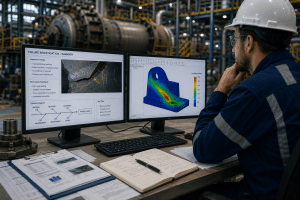
Finite Element Analysis is a numerical simulation technique used to predict how physical systems respond to external forces, boundary conditions, and environmental effects. In FEA, a complex structure is divided into a large number of small, interconnected elements—called finite elements. Mathematical equations are solved for each element, and the results are assembled to predict the behavior of the entire structure.
FEA is widely used to analyze:
- Stress and strain distribution
- Structural deformation
- Buckling and instability
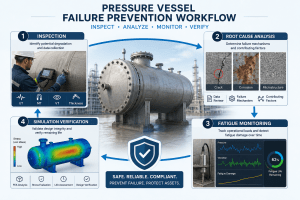
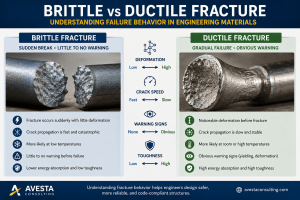
- Fatigue and fracture behavior
- Thermal effects and vibration
Why FEA Is Essential in Marine & Coastal Engineering
Marine and coastal structures face challenges that make analytical calculations insufficient:
- Complex geometries such as curved hulls, piles, and offshore jackets
- Nonlinear material behavior, including steel plasticity and concrete cracking
- Combined loading conditions (wave, wind, seismic, thermal, and operational loads)
- Long service life requirements in corrosive environments
FEA allows engineers to capture these complexities accurately, making it a cornerstone of modern marine engineering design.
FEA Applications in Marine & Coastal Structures
Offshore Structures
Offshore structures operate in some of the most demanding environments on Earth. FEA is extensively used in the design and analysis of:
- Oil and gas platforms
- Offshore wind turbine foundations
- Floating production storage and offloading (FPSO) units
- Subsea structures and pipelines
FEA helps engineers evaluate wave-induced loads, cyclic fatigue, structural stability, and extreme event scenarios such as storms or accidental impacts. Advanced simulations ensure that offshore structures meet safety and reliability requirements throughout their design life.
Coastal Infrastructure
Coastal infrastructure must withstand constant exposure to waves, tides, erosion, and in some regions, seismic activity. FEA is applied to:
- Breakwaters and seawalls
- Harbors and port facilities
- Coastal bridges and piers
Through FEA, engineers analyze soil–structure interaction, foundation performance, and long-term structural degradation. This approach supports optimized designs that balance safety, durability, and construction cost.
Ship and Marine Vessel Design
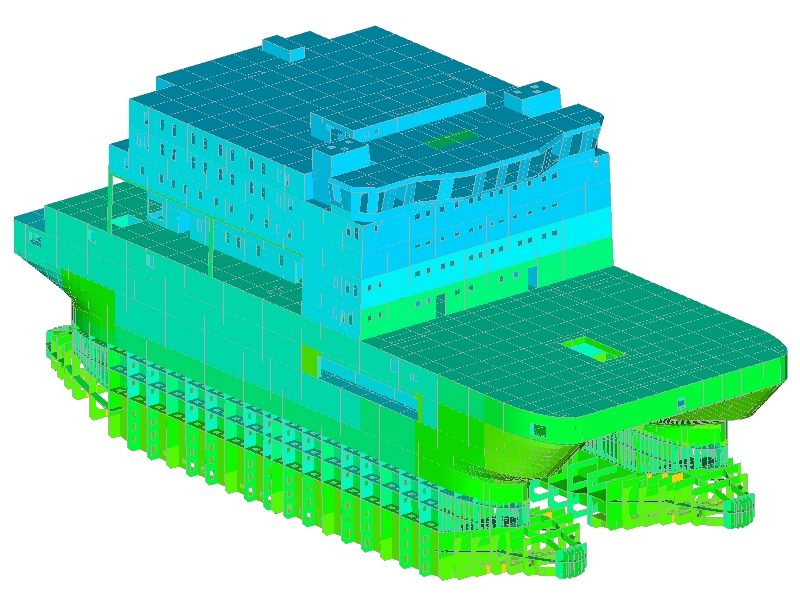
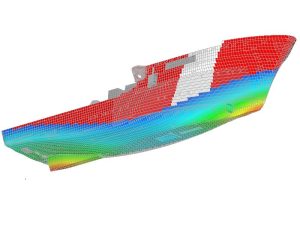
In shipbuilding and marine vessel design, FEA plays a critical role in ensuring structural integrity and operational safety. Typical applications include:
- Hull strength and global structural analysis
- Local stress concentration assessment
- Vibration and noise analysis
- Fatigue life prediction
By using FEA, designers can reduce unnecessary material usage while maintaining safety margins, leading to lighter, more efficient vessels with lower operating costs.
FEA in Structural Design
FEA is deeply integrated into every stage of structural design—from conceptual studies to final verification.
Conceptual Design Phase
During early design, FEA allows engineers to quickly evaluate multiple design alternatives. Load paths, stiffness distribution, and potential weak points can be identified before committing to detailed drawings.
Detailed Design and Optimization
In the detailed design phase, FEA supports:
- Material optimization
- Reduction of stress concentrations
- Validation of complex connections and joints
- Compliance with international design codes
For marine and coastal structures, this phase is particularly important due to the high cost of construction and maintenance.
Verification and Risk Reduction
FEA reduces project risk by identifying potential failure modes early. This minimizes design changes during construction and reduces the likelihood of costly retrofits or operational failures.
FEA vs CFD – What Is the Difference?
One of the most common questions in marine engineering is the difference between FEA and CFD, and when each should be used.
Fundamental Differences
| Aspect | FEA | CFD |
| Primary focus | Structural behavior | Fluid flow behavior |
| Main outputs | Stress, strain, deformation | Velocity, pressure, turbulence |
| Typical applications | Structural integrity, fatigue | Waves, wind, currents |
When to Use FEA
FEA is best suited for:
- Structural strength analysis
- Fatigue and fracture prediction
- Stability and buckling assessment
- Material and thickness optimization
When to Use CFD
CFD is used for:
- Wave–structure interaction
- Hydrodynamic force calculation
- Flow-induced vibration
- Wind and current analysis
Coupled FEA–CFD Simulations
In advanced marine engineering projects, FEA and CFD are often coupled. CFD calculates hydrodynamic loads, which are then transferred to FEA models for structural response analysis. This integrated approach provides highly accurate and realistic results.
FEA Software Used by NASA
NASA is known for its rigorous engineering standards and reliance on advanced simulation technologies. The organization uses several high-performance FEA tools for aerospace and structural applications, many of which are also widely used in marine and coastal engineering.
Commonly Used FEA Software
- ANSYS Mechanical – widely used for structural, thermal, and coupled simulations
- Abaqus – known for nonlinear and advanced material modeling
- NASTRAN – a legacy but powerful solver for structural dynamics
- COMSOL Multiphysics – suitable for multiphysics coupling
These tools enable high-fidelity simulations and are trusted by engineering consultants and research institutions worldwide.
Why FEA Is Critical for Marine Engineering Projects
FEA provides measurable value throughout the lifecycle of marine and coastal projects.
Key Benefits
- Reduced risk of structural failure
- Improved design efficiency
- Lower construction and maintenance costs
- Enhanced compliance with safety standards
- Support for digital twins and lifecycle management
For consulting firms like Avesta Consulting, FEA strengthens technical credibility and enables the delivery of optimized, data-driven engineering solutions.
Future Trends in FEA for Marine & Coastal Engineering
As computational power increases, FEA continues to evolve. Key trends include:
- Integration with digital twins
- Increased use of nonlinear and probabilistic analysis
- Coupling with AI-based optimization
- Real-time simulation for operational decision-making
These advancements will further expand the role of FEA in marine and coastal infrastructure development.
Frequently Asked Questions (FAQ)
What are the main applications of FEA in marine and coastal structures?
FEA is used to analyze stress, deformation, fatigue, and structural stability of offshore platforms, coastal defenses, ports, bridges, and marine vessels under environmental loads.
How is FEA used in structural design?
FEA supports structural design by optimizing material usage, identifying failure points, and validating performance under realistic loading conditions before construction.
What is the difference between FEA and CFD?
FEA focuses on structural behavior such as stress and deformation, while CFD analyzes fluid flow, pressure, and turbulence. In marine engineering, both methods are often used together.
What FEA software is used by NASA?
NASA uses advanced FEA tools such as ANSYS, Abaqus, NASTRAN, and COMSOL for high-fidelity structural simulations.
Conclusion
FEA applications in marine and coastal structures are essential for modern engineering practice. From offshore platforms and coastal defenses to ships and ports, FEA enables engineers to design safer, more efficient, and more reliable structures. When combined with CFD and advanced simulation tools, FEA provides a comprehensive understanding of complex marine environments. As challenges in marine engineering continue to grow, FEA will remain a fundamental technology for successful project delivery.