Reactive Root Cause Analysis (Reactive RCA) is one of the most widely used problem‑solving methodologies in engineering, industrial operations, energy systems, manufacturing, utilities, and safety‑critical environments. Organizations rely on reactive RCA to understand why incidents, failures, deviations, or breakdowns occurred and to ensure they do not happen again.
In highly regulated and competitive industries, failures are costly. Equipment downtime, safety incidents, environmental releases, quality defects, and production losses directly impact profitability, compliance, and reputation. Reactive RCA provides a structured, evidence‑based approach to learning from failures and transforming incidents into long‑term improvements.
This article provides a complete, in‑depth guide to Reactive Root Cause Analysis, explaining how it works, when to use it, the most common methods, its benefits and limitations, and best practices for effective implementation.
What is Reactive Root Cause Analysis?
Reactive Root Cause Analysis is an investigative approach performed after an incident, failure, or undesired event has already occurred. Its purpose is not only to identify what went wrong, but to uncover the underlying root causes that allowed the event to happen in the first place.
Unlike quick fixes that only address symptoms, reactive RCA seeks to understand technical, human, organizational, and process‑related factors behind failures. By doing so, organizations can implement corrective actions that prevent recurrence rather than repeatedly responding to the same problems.
Definition of Reactive RCA
Reactive Root Cause Analysis is a post‑event investigation method used to determine the fundamental causes of incidents, accidents, equipment failures, quality issues, or system outages. It focuses on identifying cause‑and‑effect relationships using data, evidence, and structured analysis techniques.
The key objective of reactive RCA is to move beyond immediate causes (such as operator error or component failure) and identify deeper contributing factors, including design weaknesses, inadequate procedures, poor maintenance strategies, training gaps, or management system failures.
Why Organizations Use Reactive RCA
Organizations use reactive RCA because:
- Failures have already occurred and must be understood
- Regulatory frameworks require documented investigations
- Repeated incidents indicate unresolved underlying problems
- Safety, reliability, and availability must be restored quickly
- Financial losses and downtime must be minimized
Reactive RCA allows companies to learn from failure, improve systems, and strengthen operational resilience.
Common Triggers for Reactive Investigations
Reactive RCA is typically initiated after:
- Safety incidents or near misses
- Equipment breakdowns or catastrophic failures
- Process deviations or loss of containment
- Production downtime or unplanned shutdowns
- Quality defects or customer complaints
- Environmental or regulatory non‑compliance
- IT or control system outages
These events signal that existing controls have failed and require deeper investigation.
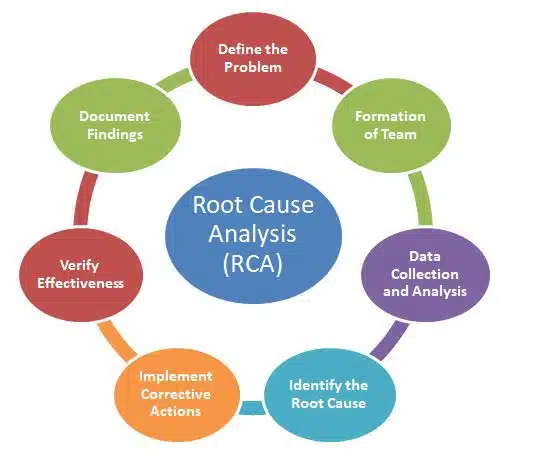
How Reactive Root Cause Analysis Works
Reactive RCA follows a systematic and structured workflow. Skipping steps or relying on assumptions reduces the effectiveness of the analysis and increases the risk of recurrence.
Identifying the Incident or Failure
The first step is clearly defining what happened. This includes:
- Date, time, and location of the incident
- Systems, equipment, or processes involved
- Immediate consequences (injury, downtime, quality loss)
- Scope and severity of impact
A well‑defined problem statement ensures the investigation remains focused and objective.
Collecting Evidence and Data
Accurate RCA depends on high‑quality data. Evidence collection may include:
- Equipment logs and sensor data
- Maintenance and inspection records
- Operating procedures and work instructions
- Interviews with operators and witnesses
- Photographs, samples, and physical evidence
- Alarm histories and control system data
The goal is to establish facts, not opinions or assumptions.
Determining the Root Cause
Once data is collected, analysis techniques are applied to determine cause‑and‑effect relationships. Investigators must distinguish between:
- Immediate causes (what directly failed)
- Contributing causes (conditions that allowed failure)
- Root causes (systemic issues that made failure possible)
True root causes are those that, if corrected, would prevent recurrence.
Implementing Corrective Actions
Reactive RCA is only valuable if it leads to effective corrective actions. Actions should:
- Address root causes, not symptoms
- Be specific, measurable, and realistic
- Include responsible owners and deadlines
- Be tracked to completion
Verification is essential to confirm that actions are effective and sustainable.
Reactive vs Proactive Root Cause Analysis
Reactive and proactive RCA share analytical principles but differ significantly in timing, objectives, and impact.
Key Differences in Timing and Approach
Reactive RCA:
- Conducted after failure occurs
- Driven by incidents and losses
- Focuses on learning from past events
Proactive RCA:
- Conducted before failure occurs
- Identifies potential risks and vulnerabilities
- Focuses on prevention and risk reduction
Advantages of Reactive RCA
Reactive RCA offers several advantages:
- Uses real failure data
- Easier to justify resources after incidents
- Often required for compliance and audits
- Provides tangible lessons learned
Because consequences are visible, reactive RCA often receives strong management attention.
Limitations Compared to Proactive RCA
Despite its value, reactive RCA has limitations:
- Failure has already caused damage
- Downtime and losses have already occurred
- Focus may remain too narrow
- May overlook hidden systemic risks
For mature organizations, reactive RCA should complement, not replace, proactive risk analysis.
Common Methods Used in Reactive RCA
Several analytical tools are commonly used in reactive investigations. The choice depends on incident complexity, data availability, and organizational maturity.
5 Whys Technique
The 5 Whys is a simple yet powerful questioning method. Investigators repeatedly ask “Why did this happen?” until the underlying cause is revealed.
Strengths:
- Easy to apply
- Requires minimal training
- Effective for simple problems
Limitations:
- Can oversimplify complex failures
- Heavily dependent on facilitator skill
Fishbone (Ishikawa) Diagram
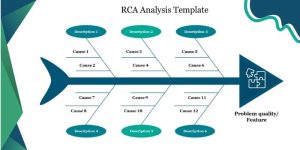
The Fishbone Diagram organizes potential causes into categories such as:
- People
- Methods
- Machines
- Materials
- Environment
- Management
It helps teams visually explore multiple contributing factors rather than focusing on a single cause.
Fault Tree Analysis
Fault Tree Analysis (FTA) uses logic diagrams to model how combinations of failures lead to a top event.
Advantages:
- Effective for complex systems
- Quantitative risk evaluation possible
- Common in safety‑critical industries
Event and Causal Factor Analysis
This method reconstructs the sequence of events leading to failure, identifying causal links between actions, conditions, and outcomes.
It is particularly useful for:
- Accident investigations
- Process upsets
- Multi‑step failures
Benefits of Reactive Root Cause Analysis
When applied correctly, reactive RCA delivers significant organizational value.
Immediate Problem Resolution
Reactive RCA helps restore operations quickly by identifying the true source of failure rather than applying temporary fixes.
Preventing Recurrence of Known Issues
By addressing root causes, organizations reduce repeat incidents, breakdowns, and defects.
Improving Compliance and Documentation
Reactive RCA supports:
- Regulatory reporting requirements
- Audit readiness
- Demonstration of due diligence
- Continuous improvement programs
Well‑documented RCA builds organizational credibility.
Limitations of Reactive RCA
Despite its usefulness, reactive RCA has inherent constraints.
Focuses Only After Failure Occurs
Reactive RCA is inherently reactive. Damage, downtime, or injury has already occurred.
Potential Downtime and Financial Impact
Investigations consume time and resources, often during periods of reduced production or service availability.
May Miss Systemic Risks
If investigations focus narrowly on individual incidents, broader systemic vulnerabilities may remain hidden.
When to Use Reactive Root Cause Analysis
Reactive RCA is most appropriate in specific situations.
After Safety Incidents
Accidents, injuries, and near misses require immediate RCA to prevent recurrence and protect personnel.
Following System Outages
Unplanned outages in power, utilities, IT, or production systems demand root cause investigation to restore reliability.
During Quality Failures
Customer complaints, product recalls, or specification deviations benefit from reactive RCA to protect brand reputation.
Best Practices for Effective Reactive RCA
To maximize value, organizations should follow proven best practices.
Avoiding Blame Culture
Effective RCA focuses on systems, not individuals. Blame discourages reporting and hides valuable information.
Using Structured Investigation Methods
Standardized methodologies improve consistency, objectivity, and quality of analysis across investigations.
Tracking Corrective Action Effectiveness
Corrective actions must be tracked, verified, and reviewed to ensure long‑term effectiveness.
Conclusion
Reactive Root Cause Analysis is an essential capability for organizations operating in complex, high‑risk, or high‑reliability environments. While it cannot prevent all failures, it transforms incidents into opportunities for learning, system improvement, and risk reduction.
When combined with strong leadership, structured methodologies, and a culture of continuous improvement, reactive RCA becomes a powerful driver of operational excellence rather than a mere compliance exercise.