In today’s complex operational environments, failures rarely occur in isolation. Equipment breakdowns, safety incidents, quality deviations, and organizational underperformance are often symptoms of deeper issues embedded within systems, processes, and decision-making structures. To prevent recurrence and improve performance, organizations rely on structured problem-solving methodologies—two of the most commonly used are Root Cause Analysis (RCA) and Root Cause Failure Analysis (RCFA).
Although these terms are frequently used interchangeably, they are not the same. Misunderstanding the difference between RCA and RCFA can lead to incomplete investigations, ineffective corrective actions, and repeated failures. This article provides a comprehensive comparison of RCA vs RCFA, explaining their definitions, purposes, differences, applications, strengths, and limitations—so you can confidently choose the right approach or integrate both effectively.
RCA vs RCFA: Key Differences
Definition of Root Cause Analysis (RCA)
Root Cause Analysis (RCA) is a systematic problem-solving methodology used to identify the underlying causes of undesirable events, performance gaps, or process failures. Rather than focusing on immediate symptoms, RCA seeks to uncover systemic, organizational, human, and process-related factors that allow problems to occur and persist.
RCA is widely applied across industries to address:
- Safety incidents
- Quality defects
- Process inefficiencies
- Compliance violations
- Organizational performance issues
The ultimate goal of RCA is prevention, not correction alone.
Definition of Root Cause Failure Analysis (RCFA)
Root Cause Failure Analysis (RCFA) is a specialized form of root cause investigation focused specifically on physical asset failures. RCFA aims to determine why a piece of equipment, component, or system failed, using engineering principles, failure mechanisms, and technical evidence.
RCFA is commonly applied in asset-intensive industries such as:
- Oil and gas
- Power generation
- Manufacturing
- Mining
- Utilities
- Aviation
The objective of RCFA is to eliminate or mitigate failure mechanisms that lead to costly downtime, safety risks, or reliability losses.
Why They Are Often Confused

RCA and RCFA share common characteristics:
- Both seek underlying causes
- Both use structured investigation techniques
- Both aim to prevent recurrence
- Both result in corrective actions
Because RCFA includes the term “root cause,” many organizations assume it is simply a more technical version of RCA. In reality, RCFA is a subset of RCA, focused primarily on physical failures, while RCA has a broader scope encompassing organizational and systemic causes.
What Is Root Cause Analysis (RCA)?
Focus on Identifying Systemic and Organizational Causes
RCA assumes that systems drive outcomes. When an incident occurs, RCA does not stop at identifying human error or procedural non-compliance. Instead, it asks deeper questions such as:
- Why was the procedure unclear or impractical?
- Why did supervision fail to detect the issue?
- Why were resources insufficient?
- Why were incentives misaligned?
This approach shifts the focus from blaming individuals to improving systems, processes, and governance structures.
Can Be Reactive or Proactive
RCA can be applied in two ways:
Reactive RCA
- Triggered by incidents, accidents, or failures
- Investigates past events to prevent recurrence
Proactive RCA
- Identifies potential failure pathways before incidents occur
- Used in risk assessments, audits, and continuous improvement initiatives
This flexibility makes RCA suitable for both operational recovery and long-term performance improvement.
Prevents Recurrence of Incidents
The true value of RCA lies in its ability to prevent recurrence. When conducted effectively, RCA leads to:
- Sustainable corrective actions
- Improved organizational learning
- Reduced incident frequency
- Stronger safety and quality culture
Weak RCA, on the other hand, results in superficial fixes such as retraining or reminders, which rarely address underlying causes.
What Is Root Cause Failure Analysis (RCFA)?
Focus on Equipment and Technical Failures
RCFA is centered on understanding how and why a physical asset failed. It investigates:
- Material degradation
- Fatigue
- Corrosion
- Wear mechanisms
- Design limitations
- Installation errors
- Operating condition deviations
RCFA relies heavily on engineering expertise and technical analysis rather than organizational diagnostics.
Often Used in Asset-Intensive Industries
Industries with high capital investment and operational risk depend on RCFA to:
- Reduce unplanned downtime
- Improve asset reliability
- Extend equipment life
- Prevent catastrophic failures
- Optimize maintenance strategies
In these environments, a single equipment failure can result in millions of dollars in losses, making RCFA a critical capability.
Structured Process to Prevent Future Failures
RCFA follows a disciplined technical workflow, often including:
- Failure data collection
- Physical inspection
- Non-destructive testing
- Metallurgical analysis
- Operating condition review
- Failure mode identification
The outcome is a clear understanding of the failure mechanism and targeted actions to prevent recurrence.
Core Differences Between RCA and RCFA
Scope: Systemic vs Technical
RCA Scope
- Organizational systems
- Human factors
- Processes and workflows
- Leadership and culture
- Policies and governance
RCFA Scope
- Physical components
- Equipment design
- Materials and metallurgy
- Operating conditions
- Mechanical or electrical failure modes
RCA looks at how the organization functions, while RCFA looks at how the asset failed.
Timing: Proactive/Reactive vs Typically Reactive
RCA can be:
- Proactive (risk-based)
- Reactive (incident-based)
RCFA is typically:
- Reactive
- Triggered by an actual equipment failure or breakdown
Although predictive maintenance can reduce the need for RCFA, the analysis itself usually follows a failure event.
Tools and Methods Used
Common RCA Tools
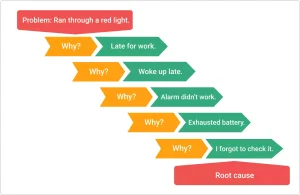
- 5 Whys
- Fishbone (Ishikawa) diagrams
- Barrier analysis
- Fault tree analysis
- Change analysis
- Process mapping
- Human factors analysis
Common RCFA Tools
- Failure Modes and Effects Analysis (FMEA)
- Weibull analysis
- Vibration analysis
- Oil analysis
- Metallurgical examination
- Fractography
- Reliability modeling
While there is some overlap, RCFA tools are more engineering-focused.
Outcome and Corrective Actions
RCA Outcomes
- Policy changes
- Process redesign
- Training improvements
- Leadership alignment
- Cultural interventions
- Governance enhancements
RCFA Outcomes
- Design modifications
- Material upgrades
- Maintenance strategy changes
- Operating parameter adjustments
- Equipment replacement or redesign
RCA actions often address how work is done, while RCFA actions address how equipment performs.
When to Use RCA
Repeated Operational Issues
If problems keep recurring despite previous fixes, RCA is essential to identify systemic weaknesses driving repeated failures.
Safety or Compliance Incidents
RCA is the preferred approach for:
- Safety incidents
- Environmental releases
- Regulatory non-compliance
- Near misses
These events often involve organizational and human factors beyond technical failures.
Organizational Performance Problems
RCA is ideal for investigating:
- Low productivity
- Poor change adoption
- Quality drift
- Ineffective transformation programs
Such issues rarely have a single technical root cause.
When to Use RCFA
Equipment or Component Failure
RCFA is the correct approach when:
- A machine breaks down
- A component fractures
- A system fails unexpectedly
Understanding the failure mechanism is critical to preventing recurrence.
High-Impact Operational Incidents
When equipment failure leads to:
- Safety risks
- Environmental damage
- Significant downtime
- Major financial loss
RCFA provides the technical depth required to prevent catastrophic repeat events.
Asset Reliability Improvement
RCFA supports long-term reliability strategies by identifying chronic failure modes and guiding maintenance optimization.
Can RCA and RCFA Be Integrated?
Combining Systemic and Technical Insights
The most effective investigations often integrate RCA and RCFA. For example:
- RCFA identifies a bearing failure due to misalignment
- RCA reveals inadequate training and poor maintenance planning caused the misalignment
Together, they provide a complete picture.
Building Comprehensive Corrective Actions
Integration ensures corrective actions address:
- Technical failure mechanisms
- Organizational conditions that allowed the failure
This prevents situations where equipment is fixed but systemic issues remain unresolved.
Supporting Reliability and Risk Management Programs
Integrated RCA-RCFA approaches strengthen:
- Asset management systems
- Safety management systems
- Quality management programs
- Operational excellence initiatives
They promote learning across technical and organizational domains.
Advantages and Limitations
Strengths of RCA
- Broad applicability across issues
- Addresses systemic weaknesses
- Supports cultural improvement
- Encourages organizational learning
Strengths of RCFA
- Deep technical insight
- Improves asset reliability
- Reduces unplanned downtime
- Supports engineering decision-making
Common Limitations of Each Method
RCA Limitations
- Can become subjective if poorly facilitated
- Risk of superficial conclusions
- Requires strong organizational support
RCFA Limitations
- Narrow technical focus
- May ignore human and organizational factors
- Requires specialized expertise
Understanding these limitations helps organizations design better investigations.
Choosing the Right Approach
Industry and Regulatory Considerations
Some industries mandate specific investigation methods. Asset-heavy industries often require RCFA, while regulated environments emphasize RCA for compliance and safety.
Risk Level and Organizational Objectives
High-risk, high-impact failures justify deeper RCFA, while systemic performance issues benefit more from RCA.
Integration into Quality and Reliability Programs
Organizations with mature management systems often embed both RCA and RCFA into:
- Continuous improvement frameworks
- Reliability programs
- Safety and quality management systems
This integration maximizes learning and long-term value.
Conclusion: RCA vs RCFA Is Not an Either-Or Choice
RCA and RCFA are not competing methodologies—they are complementary tools designed for different aspects of problem solving. RCA addresses the organizational system, while RCFA addresses the technical failure mechanism. When used together, they provide a powerful, holistic approach to preventing recurrence and improving performance.
Organizations that understand the difference—and know when and how to apply each—move beyond reactive firefighting and build resilient, high-performing systems.
- Comparison diagram showing differences between root cause analysis and root cause failure analysis
- Workflow illustrating how RCA and RCFA integrate to address systemic and technical failures