What Is RCFA and Why It Matters
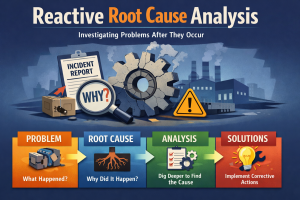
Root Cause Failure Analysis (RCFA) is a systematic, data-driven methodology used to identify the fundamental reasons behind failures in systems, equipment, processes, or operations. Unlike surface-level troubleshooting, which often focuses on immediate symptoms, RCFA seeks to uncover the true underlying causes that trigger failures, inefficiencies, safety incidents, or performance degradation.
In industrial environments—such as oil & gas, manufacturing, mining, power generation, marine engineering, and large-scale infrastructure—failures rarely occur due to a single isolated factor. Instead, they emerge from a chain of technical, human, environmental, and organizational issues. RCFA helps engineers and decision-makers break this chain permanently.
For engineering consulting companies like Avesta Consulting, RCFA is not just a problem-solving tool; it is a strategic capability. It enables clients to move from reactive maintenance toward predictive and reliability-centered strategies, reducing downtime, increasing asset life, improving safety, and optimizing operational costs.
Why RCFA Is Critical in Modern Engineering and Industry
1. Preventing Recurring Failures
Many organizations experience the same failures repeatedly—pump seal failures every few months, recurring pipeline leaks, frequent bearing overheating, or repeated software-control malfunctions. Traditional fixes often replace the failed component without addressing why it failed in the first place.
RCFA eliminates this cycle by identifying systemic root causes, ensuring corrective actions address the origin of the problem rather than its symptoms.
2. Reducing Downtime and Financial Losses
Unplanned downtime can cost industries thousands—or even millions—of dollars per hour. RCFA helps organizations:
- Minimize unplanned shutdowns
- Improve maintenance planning
- Optimize spare parts strategies
- Increase equipment availability
3. Improving Safety and Regulatory Compliance
In high-risk industries, failures can lead to severe safety incidents, environmental damage, and regulatory penalties. RCFA supports:
- Incident investigations
- Compliance with ISO, API, ASME, and IEC standards
- Demonstrable due diligence for audits and authorities
4. Supporting Data-Driven Decision Making
RCFA transforms raw operational data into actionable insights, enabling management to prioritize investments, redesign systems, and implement long-term reliability improvements.

Step-by-Step RCFA Workflow
A successful RCFA requires a structured and disciplined approach. At Avesta Consulting, RCFA projects typically follow a multi-stage workflow that integrates engineering analysis, operational data, and cross-functional expertise.
Step 1: Problem Definition and Failure Description
The foundation of any RCFA is a clear, objective, and measurable problem statement. A poorly defined problem leads to incorrect conclusions.
Key elements include:
- What failed?
- When did the failure occur?
- Where did it happen?
- How was the failure detected?
- What were the consequences?
Example:
“Centrifugal pump P-204 experienced bearing failure after 1,200 operating hours, significantly below the expected design life of 20,000 hours.”
At this stage, assumptions are avoided, and facts are prioritized.
Step 2: Data Collection and Evidence Gathering
RCFA relies heavily on accurate and comprehensive data. This step often determines the quality of the final outcome.
Typical data sources include:
- Maintenance logs and work orders
- Operating parameters (pressure, temperature, flow, vibration)
- Process control system (DCS/PLC) data
- Inspection and NDT reports
- Design drawings and specifications
- Failure photos and damaged components
- Operator and maintenance personnel interviews
At Avesta Consulting, data integrity checks are performed to ensure reliability and consistency before analysis begins.
Step 3: Failure Mode Identification
This step focuses on how the failure physically occurred. Engineers identify the failure mode, such as:
- Fatigue fracture
- Corrosion (uniform, pitting, galvanic)
- Wear (abrasive, adhesive, fretting)
- Overheating
- Electrical short circuit
- Software logic fault
- Loss of lubrication
Understanding the failure mode bridges the gap between symptoms and causes.
Step 4: Causal Factor Analysis
Once the failure mode is identified, the next step is to determine all contributing factors that enabled the failure.
This is often done using structured tools such as:
- Cause-and-effect (fishbone/Ishikawa) diagrams
- Event and causal factor charts
- Fault tree analysis (FTA)
- 5 Whys technique
Rather than stopping at a single cause, RCFA explores technical, human, and organizational contributors.
Step 5: Root Cause Identification
A root cause is defined as a cause that, if eliminated, will prevent recurrence of the failure.
RCFA typically identifies multiple categories of root causes:
1. Physical Root Causes
- Design flaws
- Material selection errors
- Inadequate tolerances
- Poor lubrication paths
2. Human Root Causes
- Incorrect maintenance procedures
- Insufficient training
- Improper installation practices
3. Latent or Organizational Root Causes
- Inadequate maintenance strategy
- Poor change management
- Lack of performance monitoring
- Incomplete engineering standards
True RCFA does not stop at human error; it investigates why the system allowed the error to occur.
Step 6: Corrective and Preventive Actions (CAPA)
Once root causes are validated, corrective actions are developed to eliminate them permanently.
Effective actions should be:
- Specific and measurable
- Technically feasible
- Cost-effective
- Aligned with operational realities
Examples include:
- Redesigning a component or system
- Updating operating limits
- Improving lubrication systems
- Revising maintenance procedures
- Implementing condition monitoring
- Enhancing training programs
Avesta Consulting emphasizes engineering-backed solutions, not generic recommendations.
Step 7: Verification and Effectiveness Monitoring
RCFA does not end with recommendations. The final step ensures actions are implemented and effective.
This includes:
- KPI tracking (MTBF, downtime, failure rate)
- Post-implementation inspections
- Performance trend analysis
- Follow-up audits
Only when recurrence risk is demonstrably reduced is the RCFA considered complete.
RCFA vs Traditional Failure Analysis
While RCFA and traditional failure analysis are often used interchangeably, they differ significantly in scope, depth, and long-term impact.
Scope and Objective
Traditional Failure Analysis typically focuses on:
- Identifying what failed
- Understanding the immediate cause
- Replacing or repairing the damaged component
RCFA, on the other hand, aims to:
- Understand why the failure occurred
- Identify systemic weaknesses
- Prevent recurrence across similar assets
Depth of Analysis
Traditional analysis often stops at:
- “The bearing failed due to overheating”
RCFA continues further:
- Why did overheating occur?
- Why was lubrication insufficient?
- Why was the lubrication system not monitored?
- Why was this risk not identified during design or maintenance planning?
This depth is what makes RCFA transformative.
Time Horizon
- Traditional failure analysis is reactive and short-term.
- RCFA is proactive and long-term, contributing to reliability growth and asset integrity.
Organizational Impact
Traditional analysis:
- Solves isolated problems
- Limited knowledge transfer
RCFA:
- Improves engineering standards
- Enhances maintenance strategies
- Builds organizational learning
- Supports digitalization and predictive maintenance initiatives
Cost Perspective
Although RCFA may require more upfront effort, it consistently delivers lower life-cycle costs by reducing repeat failures, optimizing maintenance, and improving operational efficiency.
Common RCFA Tools and Techniques
Depending on the complexity of the failure, RCFA may involve a combination of qualitative and quantitative tools:
- 5 Whys Analysis
- Fishbone (Ishikawa) Diagrams
- Fault Tree Analysis (FTA)
- Failure Modes and Effects Analysis (FMEA)
- Event Tree Analysis (ETA)
- Statistical and reliability analysis
- Simulation and digital twin modeling
Avesta Consulting integrates RCFA with advanced engineering simulations, including FEA, CFD, and system modeling, when required.
RCFA in Engineering Consulting: Avesta Consulting’s Approach
At Avesta Consulting, RCFA is approached as a multidisciplinary engineering process rather than a checklist exercise. Our methodology combines:
- Deep engineering expertise
- Field experience across multiple industries
- Advanced analytical and simulation tools
- Clear, actionable reporting
We support clients in:
- Mechanical and structural failures
- Hydraulic and pneumatic systems
- Rotating equipment reliability
- Process and control system failures
- Marine and offshore applications
- Industrial safety and compliance investigations
Our RCFA studies are designed to deliver practical, implementable solutions that align with operational constraints and business goals.
Conclusion
Root Cause Failure Analysis is a cornerstone of modern reliability engineering. By moving beyond symptoms and addressing fundamental causes, RCFA enables organizations to break the cycle of recurring failures, reduce costs, improve safety, and extend asset life.
Compared to traditional failure analysis, RCFA provides deeper insights, stronger preventive measures, and greater long-term value. When executed correctly—using structured methodologies, high-quality data, and engineering judgment—RCFA becomes a powerful driver of operational excellence.
For organizations seeking sustainable performance improvements, RCFA is not optional—it is essential. Avesta Consulting is committed to delivering rigorous, engineering-based RCFA solutions that create lasting impact across industries.