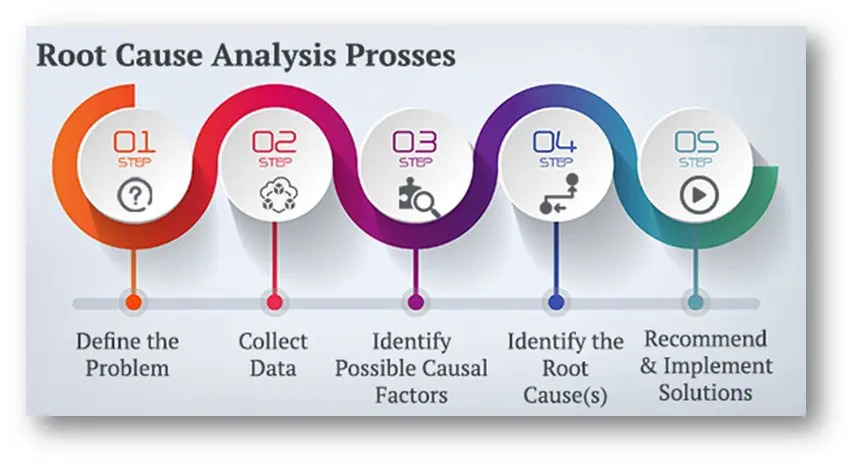
Organizations across engineering, manufacturing, healthcare, energy, and service industries face failures, incidents, and performance gaps every day. While many teams react quickly to fix what is broken, far fewer take the time to understand why the problem happened in the first place. This is where Root Cause Analysis (RCA) becomes essential.
However, not all root cause analyses are equal. The depth of investigation determines whether the issue is permanently resolved or simply postponed. Understanding root cause analysis levels allows organizations to move beyond surface fixes and achieve long-term operational improvement.
This article provides a comprehensive explanation of RCA levels, how they work, why many organizations stop too early, and how performing multi-level RCA leads to stronger systems, safer operations, and sustainable performance.
What Are Root Cause Analysis Levels?
Root Cause Analysis levels describe the depth at which causes of a problem are investigated. Each level uncovers a different category of cause, ranging from visible physical failures to deeper systemic weaknesses.
Definition of RCA Levels
Root Cause Analysis levels are structured layers of cause identification used to classify why an incident, failure, or deviation occurred. These levels typically include:
- Physical causes – what physically failed
- Human causes – what actions or decisions contributed
- Organizational causes – what systemic or management weaknesses allowed it to happen
Rather than stopping at the first obvious issue, RCA levels encourage investigators to dig deeper until controllable, preventive causes are identified.
Why Understanding RCA Levels Matters
Without understanding RCA levels, organizations often:
- Fix equipment without fixing behaviors
- Correct behaviors without fixing systems
- Repeat the same incidents despite multiple investigations
Understanding RCA levels ensures that corrective actions address root causes, not symptoms. This distinction is critical for compliance, safety, quality, reliability, and cost control.
How RCA Levels Improve Problem-Solving Depth
RCA levels provide:
- Structure to investigations
- Consistency across teams
- Clear prioritization of corrective actions
- Improved learning from incidents
By systematically moving through levels, organizations gain deeper insight into how failures emerge and how to prevent them in the future.
The Three Main Levels of Root Cause Analysis
Although some industries use expanded models, most professional RCA methodologies recognize three primary levels of root causes.
Level 1: Physical Causes (Surface-Level Issues)
Physical causes are the observable, technical reasons a failure occurred. These are typically the easiest to identify and the first to be addressed.
Level 2: Human Causes (Human Errors and Actions)
Human causes relate to actions, decisions, or omissions that contributed to the physical failure.
Level 3: Organizational Causes (Systemic and Process Failures)
Organizational causes are deep-rooted system weaknesses such as policies, management decisions, resource allocation, and cultural factors.
True problem elimination almost always requires reaching Level 3.
Level 1: Physical Root Causes Explained
Physical root causes answer the question:
“What physically failed?”
These causes are tangible, measurable, and visible.
Equipment Failure
Equipment failures include:
- Mechanical breakdowns
- Electrical faults
- Sensor malfunctions
- Wear and tear beyond acceptable limits
While replacing or repairing the equipment may restore operation, it does not explain why the failure occurred at that time.
Material Defects
Material-related causes involve:
- Poor raw material quality
- Incorrect material specifications
- Contamination
- Inconsistent supplier standards
Material defects often indicate deeper issues in procurement, quality assurance, or supplier management.
Environmental Factors
Environmental causes include:
- Temperature extremes
- Humidity
- Dust, corrosion, or vibration
- Exposure to chemicals
Environmental factors are frequently overlooked, yet they often accelerate degradation and failure mechanisms.
Level 2: Human Root Causes Explained
Human root causes explain how human interaction contributed to the physical failure.
Operator Mistakes
Operator-related issues may include:
- Incorrect operation
- Skipping steps
- Improper adjustments
- Failure to follow procedures
Labeling incidents as “operator error” without further analysis is a common RCA mistake.
Lack of Training
Training-related causes include:
- Inadequate onboarding
- Outdated training materials
- Lack of refresher training
- Poor skill verification
When training is insufficient, errors become predictable rather than random.
Communication Breakdowns
Communication failures may involve:
- Unclear instructions
- Incomplete shift handovers
- Missing documentation
- Conflicting priorities between departments
Communication issues often bridge the gap between human and organizational causes.
Level 3: Organizational Root Causes Explained
Organizational root causes answer the most important question:
“Why did the system allow this to happen?”
These causes are the hardest to identify but the most powerful to fix.
Ineffective Procedures
Procedural weaknesses include:
- Missing procedures
- Overly complex instructions
- Procedures that do not match real operations
- Lack of procedure ownership
If procedures are impractical, people will bypass them.
Poor Risk Management
Risk-related organizational failures include:
- Inadequate hazard identification
- Failure to update risk assessments
- Ignoring near-miss data
- Lack of preventive controls
Organizations that react only after incidents occur are operating in a reactive risk posture.
Inadequate Supervision
Supervisory and management issues include:
- Lack of oversight
- Inconsistent enforcement of rules
- Production pressure overriding safety
- Insufficient leadership accountability
Supervision quality strongly influences frontline behavior and decision-making.
Why Most Organizations Stop at Level 1
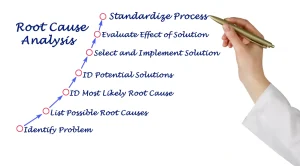
Despite the known benefits of deeper RCA, many organizations never move beyond physical causes.
Time Pressure
Investigations are often rushed due to:
- Production demands
- Customer pressure
- Regulatory deadlines
Quick fixes appear efficient but often lead to recurring failures.
Blame-Focused Investigations
When RCA is used to assign blame rather than learn:
- Employees become defensive
- Information is withheld
- Deeper causes remain hidden
A blame culture is incompatible with effective RCA.
Lack of Structured RCA Methodology
Without a clear framework:
- Investigations become inconsistent
- Root causes are subjective
- Corrective actions are weak
Structured RCA tools encourage depth and discipline.
How to Perform Multi-Level Root Cause Analysis
Effective RCA intentionally explores all three levels.
Asking Deeper “Why” Questions
Techniques such as iterative “why” questioning help uncover:
- Why the equipment failed
- Why the human error occurred
- Why the organization allowed the conditions to exist
The key is knowing when to stop—at a cause that is controllable and preventable.
Mapping Causal Chains
Causal mapping visually connects:
- Events
- Conditions
- Actions
- System weaknesses
This approach prevents oversimplification and highlights interdependencies.
Validating Systemic Contributors
Evidence-based validation includes:
- Data analysis
- Interviews
- Procedure reviews
- Historical incident trends
Root causes must be supported by facts, not assumptions.
Benefits of Identifying Higher-Level Root Causes
Organizations that consistently reach Level 2 and Level 3 achieve measurable improvements.
Long-Term Prevention of Recurring Issues
Addressing organizational causes:
- Reduces repeat incidents
- Improves asset reliability
- Lowers maintenance costs
Problems solved at the system level stay solved.
Improved Organizational Learning
Deep RCA transforms incidents into:
- Learning opportunities
- Process improvements
- Knowledge-sharing assets
This strengthens institutional memory.
Stronger Risk Mitigation Strategies
Understanding systemic weaknesses enables:
- Proactive controls
- Better decision-making
- Improved resilience to unexpected events
Common Mistakes When Defining RCA Levels
Even experienced teams can misapply RCA levels.
Confusing Symptoms with Causes
Examples of symptoms misidentified as causes:
- “Pump failed”
- “Operator error”
- “Procedure not followed”
These statements describe what happened, not why it happened.
Ignoring Organizational Contributors
Failing to examine:
- Management decisions
- Resource allocation
- Performance incentives
- Cultural norms
results in incomplete RCA and weak corrective actions.
Failing to Verify Root Causes with Evidence
Assumptions without evidence lead to:
- Ineffective solutions
- False confidence
- Recurring incidents
Every identified root cause should be verifiable and actionable.
Final Thoughts: Using RCA Levels to Drive Real Change
Root Cause Analysis is only as powerful as the depth at which it is applied. Organizations that stop at physical causes remain trapped in reactive cycles, while those that embrace multi-level RCA unlock continuous improvement.
By understanding and applying root cause analysis levels, organizations move from fixing problems to eliminating them, strengthening both operational performance and organizational resilience.