Organizational transformation is one of the most challenging initiatives any business can undertake. Whether driven by digital transformation, operational excellence programs, cultural change, or large-scale restructuring, many transformation efforts fail to deliver their intended outcomes. Missed deadlines, low adoption rates, resistance from employees, and underwhelming performance improvements are common symptoms.
Traditional problem-solving approaches often focus on isolated incidents or surface-level failures. However, transformational initiatives require a deeper, systemic investigation to understand why change efforts stall, regress, or fail entirely. This is where Transformation Root Cause Analysis (Transformation RCA) becomes essential.
Transformation Root Cause Analysis goes beyond fixing what is broken. It seeks to uncover structural, behavioral, and process-level causes that prevent organizations from successfully executing and sustaining change.
What Is Transformation Root Cause Analysis?
Definition of Transformation RCA
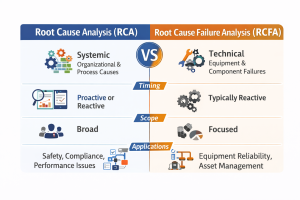
Transformation Root Cause Analysis is a structured, evidence-based methodology used to identify the underlying systemic causes that prevent organizational transformation initiatives from achieving their objectives. Unlike traditional Root Cause Analysis, which typically focuses on discrete failures or incidents, Transformation RCA examines end-to-end transformation processes, decision-making structures, cultural dynamics, leadership behaviors, and cross-functional interactions.
The goal is not to assign blame or address isolated symptoms, but to understand why the transformation system itself is not functioning as intended.
In essence, Transformation RCA answers questions such as:
- Why did this transformation fail to gain traction?
- Why are new processes not being adopted?
- Why do old behaviors resurface after initial improvements?
- Why do transformation programs deliver short-term wins but fail long-term?
Difference from Traditional RCA
Traditional Root Cause Analysis is usually reactive. It is triggered by:
- Equipment failure
- Safety incidents
- Process deviations
- Quality defects
Its scope is often limited to identifying a specific root cause and implementing corrective actions to prevent recurrence.
Transformation RCA, by contrast, is:
- Systemic rather than event-based
- Strategic rather than tactical
- Long-term rather than short-term
While traditional RCA may identify that a process was not followed, Transformation RCA explores why the organization’s structure, incentives, leadership behaviors, or culture made non-compliance likely or inevitable.
Why It Is Important for Organizational Change
Most transformation failures are not caused by poor intent or lack of effort. They result from:
- Misaligned objectives
- Conflicting incentives
- Poorly designed processes
- Leadership gaps
- Inadequate communication
- Cultural resistance
Transformation RCA provides a disciplined framework to uncover these deep-rooted issues. Without it, organizations often:
- Repeat the same failed initiatives
- Waste resources on cosmetic fixes
- Lose employee trust in change programs
- Experience transformation fatigue
By applying Transformation RCA, organizations can design change initiatives that are resilient, realistic, and sustainable.
Key Principles of Transformation Root Cause Analysis
Focus on Systemic and Process-Level Issues
Transformation RCA assumes that outcomes are produced by systems, not individuals. Instead of asking:
- “Who failed?”
- “Who resisted change?”
It asks:
- “Which system conditions allowed this outcome?”
- “Which processes, structures, or policies influenced behavior?”
This systems-thinking approach helps organizations avoid the trap of blaming individuals while ignoring structural weaknesses that drive repeated failure.
Integrating Human, Technical, and Organizational Factors
Transformation does not fail for a single reason. It fails due to the interaction of:
- Human factors (skills, motivation, beliefs, fatigue)
- Technical factors (tools, systems, data, technology)
- Organizational factors (governance, leadership, incentives, culture)
Transformation RCA deliberately integrates all three dimensions, recognizing that successful change requires alignment across people, processes, and technology.
Evidence-Based Investigation
Opinions, assumptions, and anecdotes are not sufficient for transformation analysis. Transformation RCA relies on:
- Performance data
- Process metrics
- Employee feedback
- Behavioral observations
- Decision logs
- Change adoption indicators
Evidence-based investigation ensures conclusions are defensible and corrective actions are grounded in reality rather than perception.
Steps in Transformation Root Cause Analysis

Step 1: Define the Transformational Objective or Change
The first step is clearly defining what the organization intended to achieve. This includes:
- Strategic objectives
- Expected performance improvements
- Behavioral changes
- Cultural shifts
- Adoption milestones
A poorly defined transformation objective often leads to confusion, misalignment, and inconsistent execution. Clarity at this stage sets the foundation for meaningful analysis.
Step 2: Identify Failures or Obstacles in the Process
Next, identify where the transformation deviated from expectations. Common transformation obstacles include:
- Low adoption of new systems
- Resistance from middle management
- Inconsistent leadership messaging
- Delayed implementation
- Declining performance after initial gains
These obstacles should be documented objectively, focusing on what happened, not why it happened yet.
Step 3: Collect Relevant Data and Insights
Data collection should be multi-dimensional and include:
- Quantitative performance metrics
- Process compliance data
- Training attendance and effectiveness
- Employee surveys and interviews
- Stakeholder feedback
- Change communication records
This step ensures the analysis is rooted in facts rather than assumptions.
Step 4: Analyze Root Causes Impacting Transformation
Using structured analysis techniques, investigators examine:
- Why desired behaviors did not occur
- Why decisions were delayed or avoided
- Why processes were bypassed
- Why teams reverted to old habits
This stage often reveals latent systemic causes, such as:
- Incentives that reward old behaviors
- Leadership misalignment
- Overloaded change portfolios
- Conflicting priorities
Step 5: Develop Corrective and Preventive Strategies
Corrective actions address existing barriers, while preventive strategies ensure the same issues do not undermine future initiatives.
Effective strategies may include:
- Redesigning governance structures
- Adjusting performance metrics
- Improving leadership capability
- Simplifying processes
- Enhancing communication channels
Weak actions that rely on reminders or training alone are avoided unless supported by systemic change.
Step 6: Implement Changes and Monitor Progress
Transformation RCA does not end with recommendations. Success depends on:
- Clear ownership of actions
- Defined success metrics
- Regular monitoring
- Feedback loops
- Adaptive course correction
Monitoring ensures corrective strategies deliver the intended outcomes and remain effective over time.
Tools and Techniques for Transformation RCA
5 Whys Analysis
The 5 Whys technique helps trace surface problems back to deeper systemic causes. When applied thoughtfully, it reveals:
- Policy gaps
- Structural misalignment
- Leadership behaviors influencing outcomes
In transformation contexts, the method must go beyond individual actions to uncover organizational drivers.
Fishbone (Ishikawa) Diagrams
Fishbone diagrams visually map contributing factors across categories such as:
- Leadership
- Processes
- Technology
- People
- Culture
- Measurement systems
This structured visualization helps teams see how multiple factors converge to undermine transformation.
Process Mapping and Workflow Analysis
Detailed process mapping reveals:
- Bottlenecks
- Redundant approvals
- Role ambiguity
- Poor handoffs
These insights are critical when transformation stalls due to inefficient or misaligned workflows.
Stakeholder Analysis
Stakeholder analysis identifies:
- Key influencers
- Decision-makers
- Resisters
- Change champions
Understanding stakeholder motivations, concerns, and power dynamics is essential for addressing human and organizational root causes.
Benefits of Transformation Root Cause Analysis
Ensures Successful Organizational Change
By addressing systemic barriers, Transformation RCA increases the likelihood that change initiatives:
- Achieve their objectives
- Gain lasting adoption
- Deliver measurable value
Reduces Recurring Transformation Failures
Organizations often repeat the same mistakes across multiple initiatives. Transformation RCA breaks this cycle by identifying root causes that span projects, departments, and leadership layers.
Improves Process Efficiency and Adoption
When processes are redesigned based on root cause insights, they become:
- Simpler
- More intuitive
- Better aligned with real work conditions
This improves adoption and reduces resistance.
Supports Cultural and Systemic Improvements
Transformation RCA often uncovers cultural norms and systemic behaviors that undermine change. Addressing these issues leads to healthier organizational cultures and stronger long-term performance.
Common Challenges in Transformation RCA
Resistance to Change
Employees and leaders may resist deep analysis due to fear of exposure or loss of control. Overcoming this requires psychological safety and strong executive sponsorship.
Difficulty in Identifying Systemic Causes
Systemic causes are often invisible because they are normalized. Skilled facilitation and evidence-based analysis are essential to surface these hidden drivers.
Lack of Engagement Across Departments
Transformation spans multiple functions. Without cross-functional engagement, RCA findings may be incomplete or biased.
Best Practices for Effective Transformation RCA
Engage Cross-Functional Teams
Involving representatives from different functions ensures:
- Broader perspective
- Better data quality
- Shared ownership of solutions
Use Data-Driven Decision Making
Combining qualitative insights with quantitative data strengthens conclusions and builds credibility with stakeholders.
Document Lessons Learned and Share Insights
Documenting findings ensures organizational learning and prevents repeated mistakes in future initiatives.
Integrate Findings into Future Transformation Projects
Transformation RCA should inform:
- Strategy development
- Change management frameworks
- Leadership development programs
- Governance models
This integration transforms RCA from a diagnostic tool into a strategic capability.
Conclusion: Transformation RCA as a Strategic Capability
Transformation Root Cause Analysis is not just a problem-solving method—it is a strategic discipline. Organizations that embed Transformation RCA into their change efforts move beyond reactive fixes and build the capability to execute sustainable, resilient transformation.
By uncovering systemic barriers, aligning people and processes, and grounding decisions in evidence, Transformation RCA enables organizations to turn ambitious visions into lasting reality.
Image Alt Texts
- Transformation root cause analysis framework showing systemic, human, and process-level factors influencing organizational change
- Diagram illustrating steps of transformation root cause analysis from defining objectives to implementing corrective actions