Engineering simulation software has become a cornerstone of modern engineering practice. Across civil, mechanical, electrical, chemical, and industrial disciplines, simulation tools allow engineers to predict how systems will behave before anything is built or manufactured. This capability significantly reduces development risks, optimizes performance, lowers costs, and shortens time-to-market.
In industries where safety, reliability, and compliance with standards are critical, engineering simulation is no longer optional—it is essential. From finite element analysis (FEA) in structural engineering to computational fluid dynamics (CFD) in aerospace and process industries, simulation-driven design has transformed how engineers innovate and validate their ideas.
This article provides a comprehensive overview of engineering simulation software, covering the main types of engineering simulations, the industries that rely on simulation, best practices for integrating simulation into product and system development, and key considerations when selecting the right simulation software for your organization.
What Is Engineering Simulation Software?
Engineering simulation software refers to computer-based tools that use mathematical models and numerical methods to replicate real-world physical behavior. These tools enable engineers to analyze how structures, systems, and processes respond to forces such as loads, heat, fluid flow, vibration, electromagnetic fields, and chemical reactions.
Instead of relying solely on physical prototypes and trial-and-error testing, engineers can run thousands of virtual experiments, exploring different design scenarios quickly and cost-effectively. The results support better decision-making, improved safety margins, and optimized designs that meet regulatory and performance requirements.
At its core, simulation software bridges the gap between theoretical engineering principles and practical, real-world performance.
Types of Engineering Simulations
Engineering simulation encompasses a wide range of analysis methods, each tailored to specific physical phenomena. Below are the most common and impactful types of engineering simulations used today.
1. Finite Element Analysis (FEA)
Finite Element Analysis is one of the most widely used simulation techniques in engineering. FEA breaks complex geometries into small elements and solves governing equations to predict behavior under various conditions.
Key applications of FEA include:
- Structural stress and strain analysis
- Static and dynamic load assessment
- Fatigue and fracture prediction
- Thermal stress evaluation
- Modal and vibration analysis
FEA is extensively used in civil engineering (buildings, bridges, foundations), mechanical engineering (machine components, pressure vessels), and aerospace structures. Engineers rely on FEA to ensure safety, compliance with standards, and optimal material usage.
2. Computational Fluid Dynamics (CFD)
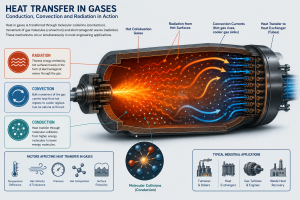
Computational Fluid Dynamics focuses on simulating fluid flow, heat transfer, and related physical processes. CFD software solves the Navier–Stokes equations to model the behavior of gases and liquids.
Typical CFD use cases include:
- Aerodynamic and hydrodynamic analysis
- HVAC and ventilation system design
- Heat exchanger optimization
- Multiphase flow in pipelines
- Combustion and chemical process modeling
CFD is critical in industries such as aerospace, automotive, energy, oil and gas, and building services engineering, where fluid behavior directly impacts performance and safety.
3. Multibody Dynamics (MBD)
Multibody dynamics simulation analyzes the motion and interaction of interconnected rigid or flexible bodies. It is especially useful for systems involving joints, linkages, gears, and mechanisms.
Applications of MBD include:
- Vehicle suspension and drivetrain systems
- Robotic arms and automation equipment
- Machinery with moving components
- Biomechanical systems
MBD simulations help engineers evaluate kinematics, forces, accelerations, and wear, ensuring smooth operation and long-term reliability.
4. Electromagnetic Simulation
Electromagnetic (EM) simulation software models electric and magnetic fields to predict how electronic and electrical systems behave.
Common EM simulation areas include:
- Antenna and RF system design
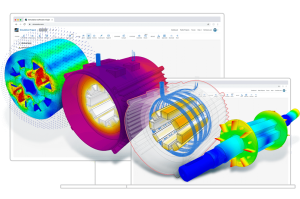
- Electric motors and generators
- Power electronics and transformers
- EMI/EMC compliance analysis
With the growing demand for electric vehicles, renewable energy systems, and wireless communication, EM simulation plays a vital role in modern engineering design.
5. Thermal Simulation
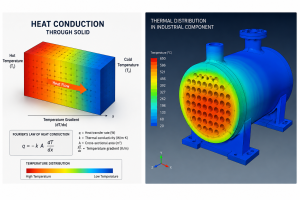
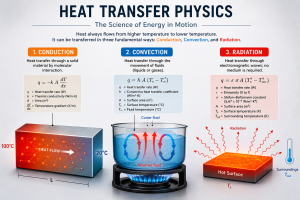
Thermal simulation evaluates heat generation, transfer, and dissipation within systems and components.
Typical thermal analysis scenarios include:
- Electronics cooling and thermal management
- Heat exchangers and furnaces
- Building energy performance
- Thermal fatigue and expansion analysis
Thermal simulation is often combined with FEA and CFD to provide a multiphysics understanding of complex systems.
6. Process and System Simulation
Process simulation software models industrial processes and integrated systems rather than individual components.
Key applications include:
- Chemical process optimization
- Oil and gas production systems
- Power plant performance modeling
- Manufacturing and production lines
These simulations help engineers optimize efficiency, reduce energy consumption, and evaluate operational scenarios before implementation.
7. Multiphysics Simulation
Multiphysics simulation integrates multiple physical domains—such as structural, thermal, fluid, and electromagnetic—into a single model.
Examples include:
- Thermo-mechanical stress in pressure vessels
- Fluid-structure interaction (FSI)
- Electro-thermal analysis in power electronics
Multiphysics tools are increasingly important as engineering systems become more complex and interconnected.
Industries Using Engineering Simulation
Engineering simulation software is used across virtually all industrial sectors. Below are the key industries where simulation delivers the greatest impact.
1. Civil and Structural Engineering
Simulation supports the design and assessment of buildings, bridges, tunnels, and infrastructure projects.
Key benefits include:
- Structural safety and code compliance
- Earthquake and wind load simulation
- Material optimization and cost reduction
- Lifecycle and durability analysis
Simulation tools help civil engineers meet national and international standards while improving resilience and sustainability.
2. Mechanical and Manufacturing Industries
Manufacturers rely on simulation to validate product designs and manufacturing processes.
Common applications include:
- Stress and fatigue analysis of components
- Tooling and forming simulations
- Vibration and noise reduction
- Failure analysis and design improvement
Simulation-driven design reduces physical prototyping and accelerates innovation.
3. Aerospace and Defense
In aerospace and defense, simulation is essential due to extreme safety and performance requirements.
Simulation use cases include:
- Aerodynamic performance
- Structural integrity under extreme loads
- Thermal behavior at high speeds
- System-level integration and validation
Simulation enables engineers to test scenarios that are impractical or impossible to recreate physically.
4. Automotive and Transportation
Automotive engineering increasingly relies on simulation for electrification, safety, and efficiency.
Applications include:
- Crash and impact analysis
- Powertrain and battery simulation
- Aerodynamic optimization
- Noise, vibration, and harshness (NVH) analysis
Simulation supports compliance with safety regulations and improves vehicle performance.
5. Energy, Oil, and Gas
Energy-related industries use simulation to manage complex systems and harsh operating environments.
Key applications include:
- Pipeline flow assurance
- Pressure vessel and equipment design
- Thermal and structural analysis of plants
- Risk and failure assessment
Simulation improves reliability, safety, and operational efficiency.
6. Electronics and High-Tech Industries
Miniaturization and performance demands make simulation critical in electronics design.
Typical use cases include:
- Thermal management of electronic devices
- Signal integrity and EMC analysis
- Reliability and lifecycle prediction
Simulation helps engineers manage heat, power, and electromagnetic effects in compact systems.
Integrating Simulation into the Engineering Development Process
To gain maximum value, simulation must be integrated throughout the entire development lifecycle—not treated as a final validation step.
Early Concept Design
During early design stages, simulation allows engineers to explore concepts quickly and identify potential risks before significant investment.
Benefits include:
- Rapid concept comparison
- Early identification of design constraints
- Reduced downstream changes
Detailed Design and Optimization
As designs mature, simulation supports detailed analysis and optimization.
Key activities include:
- Geometry refinement
- Material selection
- Performance optimization
- Compliance verification
Parametric studies and optimization algorithms are often used to achieve optimal designs.
Validation and Verification
Simulation results are validated against experimental data, codes, and standards.
This phase ensures:
- Model accuracy
- Regulatory compliance
- Confidence in final design decisions
Digital Twins and Lifecycle Management
Advanced organizations use simulation to create digital twins—virtual representations of real assets.
Applications include:
- Predictive maintenance
- Performance monitoring
- Lifecycle optimization
Simulation thus extends beyond design into operation and asset management.
Selecting the Right Engineering Simulation Software
Choosing the right simulation software is a strategic decision that impacts productivity, accuracy, and long-term success.
1. Define Engineering Requirements
Start by identifying the physical phenomena, analysis types, and industry standards relevant to your projects.
2. Accuracy and Solver Capability
Evaluate the numerical methods, solver robustness, and validation history of the software.
3. Industry Standards and Compliance
Ensure the software supports relevant codes, standards, and certification requirements.
4. Usability and Learning Curve
User-friendly interfaces, documentation, and training resources reduce adoption time.
5. Integration with CAD and BIM
Seamless integration with CAD, BIM, and PLM tools improves workflow efficiency.
6. Scalability and Performance
Consider whether the software supports large models, high-performance computing, and future growth.
7. Support and Long-Term Cost
Assess technical support quality, licensing models, and total cost of ownership.
Conclusion
Engineering simulation software has transformed how engineers design, analyze, and validate complex systems. By enabling accurate prediction of real-world behavior, simulation reduces risk, improves performance, and supports innovation across industries.
From FEA and CFD to multiphysics and system-level modeling, simulation tools are now embedded throughout the engineering lifecycle. Organizations that successfully integrate simulation into their development processes gain a significant competitive advantage—delivering safer, more efficient, and more reliable solutions.
Selecting the right engineering simulation software, and using it strategically, is essential for any company aiming to meet modern engineering challenges and industry standards.