Driving Accuracy, Efficiency, and Innovation
Engineering simulation services have become a critical component of modern engineering and industrial projects. As systems grow more complex and performance, safety, and compliance requirements become more demanding, organizations increasingly rely on specialized simulation expertise to support design, analysis, and decision-making.
Engineering simulation services go beyond software usage. They combine advanced numerical methods, industry standards, engineering judgment, and domain knowledge to deliver reliable, actionable insights. Whether applied to structural integrity, fluid flow, thermal behavior, or multiphysics interactions, simulation services help reduce risk, optimize designs, and minimize costly trial-and-error testing.
This article provides a comprehensive, SEO-focused overview of engineering simulation services, explaining what they are, why they matter, the types of services offered, their applications across industries, and how businesses can gain long-term value by integrating simulation into their engineering workflows.
What Are Engineering Simulation Services?
Engineering simulation services refer to professional engineering activities that use computational modeling and numerical analysis to predict the real-world behavior of systems, components, and processes. These services are typically delivered by specialized consulting firms or engineering teams with deep expertise in simulation methodologies and industry standards.
Unlike off-the-shelf software solutions, simulation services provide tailored analysis aligned with project-specific requirements. They account for real operating conditions, material behavior, regulatory constraints, and failure scenarios to deliver results that can be confidently used for design validation and decision-making.
Engineering simulation services often support critical phases of a project, including concept development, detailed design, troubleshooting, failure investigation, and lifecycle optimization.
Why Engineering Simulation Services Are Essential
The increasing reliance on engineering simulation services is driven by several key factors.
Managing Complexity in Modern Engineering Systems
Modern engineering systems involve complex geometries, advanced materials, and multiple interacting physical phenomena. Simulation services enable engineers to understand these interactions and predict system behavior with high accuracy.
Reducing Development Cost and Time
Physical prototyping and experimental testing are expensive and time-consuming. Engineering simulation services reduce the number of physical tests required by validating designs virtually before manufacturing or construction begins.
Enhancing Safety and Compliance
Many industries operate under strict regulatory frameworks. Simulation services help demonstrate compliance with international codes and standards while ensuring safety margins are properly evaluated.
Supporting Data-Driven Decisions
Simulation results provide quantitative data that supports informed engineering and management decisions, reducing reliance on assumptions and conservative overdesign.
Core Types of Engineering Simulation Services
Engineering simulation services cover a wide range of analysis types, each addressing specific engineering challenges.
Finite Element Analysis (FEA) Services
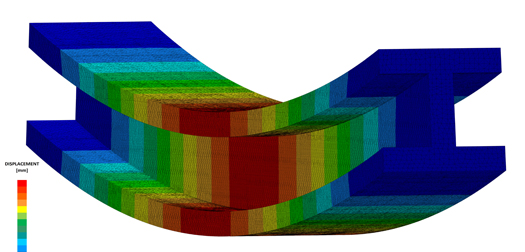
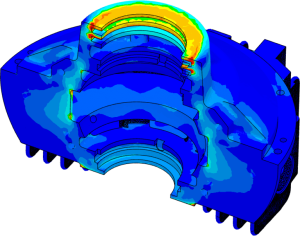
Finite Element Analysis services focus on evaluating the structural and mechanical behavior of components and systems under various loading conditions.
Typical FEA services include:
- Linear and nonlinear structural analysis
- Static and dynamic load assessment
- Fatigue and fracture mechanics
- Buckling and stability analysis
- Thermal stress and expansion analysis
FEA services are widely used in civil, mechanical, and industrial engineering to ensure structural integrity and optimize material usage.
Computational Fluid Dynamics (CFD) Services
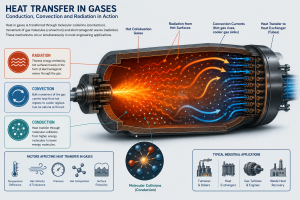
CFD simulation services analyze fluid flow, heat transfer, and related transport phenomena.
Common CFD applications include:
- Internal and external flow analysis
- HVAC and ventilation performance
- Heat exchanger and cooling system design
- Multiphase and turbulent flow modeling
- Combustion and process flow simulation
CFD services help engineers improve efficiency, reduce energy consumption, and solve complex flow-related problems.
Thermal Simulation Services
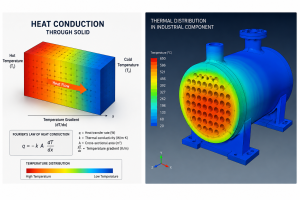
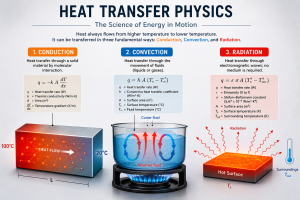
Thermal simulation services evaluate heat generation, transfer, and dissipation in engineering systems.
Applications include:
- Electronics thermal management
- Industrial furnace and heat treatment systems
- Building energy and insulation analysis
- Thermal fatigue and reliability studies
Thermal analysis is often integrated with structural and fluid simulations for comprehensive multiphysics evaluation.
Multi physics Simulation Services
Multi physics simulation services address problems where multiple physical domains interact simultaneously.
Typical examples include:
- Fluid–structure interaction (FSI)
- Thermo-mechanical stress analysis
- Electro-thermal coupling in power systems
- Coupled chemical and thermal processes
These services are essential for accurately modeling real-world behavior in complex engineering systems.
Process and System Simulation Services
Process simulation services focus on system-level behavior rather than individual components.
Common use cases include:
- Chemical and petrochemical process modeling
- Oil and gas production systems
- Power generation and distribution systems
- Manufacturing and production line optimization
Process simulation supports efficiency improvement, capacity planning, and risk reduction.
Engineering Simulation Services Across Industries
Engineering simulation services are applied across a wide range of industries, delivering value throughout the asset lifecycle.
Civil and Structural Engineering
Simulation services support the design and assessment of buildings, bridges, tunnels, and infrastructure projects.
Key applications include:
- Structural safety and serviceability checks
- Earthquake and wind load analysis
- Construction-stage simulation
- Rehabilitation and strengthening assessment
Mechanical and Manufacturing Industries
Manufacturers use simulation services to validate product designs and optimize manufacturing processes.
Applications include:
- Stress, fatigue, and failure analysis
- Tooling, forming, and casting simulation
- Vibration and noise reduction
- Reliability and lifecycle assessment
Energy, Oil, and Gas
Simulation services help manage high-risk assets operating under extreme conditions.
Typical applications include:
- Pressure vessel and piping analysis
- Flow assurance and thermal analysis
- Equipment integrity and remaining life assessment
- Failure investigation and risk assessment
Aerospace and Transportation
In aerospace and transportation, simulation services are critical for safety and performance.
Applications include:
- Aerodynamic and hydrodynamic analysis
- Structural performance under extreme loads
- Thermal behavior in high-speed environments
- System-level integration studies
Electronics and High-Tech Industries
Simulation services support the design of compact, high-performance electronic systems.
Applications include:
- Thermal and electromagnetic analysis
- Signal integrity and EMC assessment
- Reliability prediction and optimization
Integrating Engineering Simulation Services into Projects
To maximize value, engineering simulation services should be integrated throughout the project lifecycle.
Concept and Feasibility Stage
Simulation services help evaluate design concepts, identify risks, and compare alternatives early in the project.
Detailed Design and Optimization
During detailed design, simulation supports geometry refinement, material selection, and performance optimization.
Verification, Validation, and Compliance
Simulation results are used to demonstrate compliance with codes, standards, and client requirements.
Operation and Lifecycle Support
Simulation services extend into operation through digital twins, performance monitoring, and predictive maintenance.
Key Benefits of Professional Engineering Simulation Services
Organizations that leverage professional simulation services gain several advantages:
- Improved design accuracy and confidence
- Reduced development cost and rework
- Enhanced safety and regulatory compliance
- Faster project timelines
- Data-driven decision-making
- Improved asset reliability and lifecycle performance
How to Choose the Right Engineering Simulation Service Provider
Selecting the right partner is essential for achieving reliable results.
Key considerations include:
- Industry-specific experience
- Knowledge of relevant codes and standards
- Proven simulation methodologies
- Clear reporting and communication
- Ability to integrate with client workflows
A strong simulation service provider acts as an extension of the client’s engineering team.
Future Trends in Engineering Simulation Services
The field of engineering simulation services continues to evolve.
Key trends include:
- Increased use of multiphysics and coupled simulations
- Integration with digital twins and real-time data
- Greater automation and optimization using AI
- Cloud-based and high-performance computing
These advancements further enhance the value of simulation services across industries.
Conclusion
Engineering simulation services play a vital role in modern engineering and industrial projects. By combining advanced simulation tools with expert engineering knowledge, these services enable organizations to design safer, more efficient, and more reliable systems.
From early concept evaluation to lifecycle optimization, professional simulation services reduce uncertainty, control risk, and support innovation. As engineering challenges continue to grow in complexity, the strategic use of engineering simulation services will remain a key differentiator for successful organizations.