What Is Value Flow Quality?
Definition of Value Flow Quality
Value Flow Quality refers to the systematic approach of ensuring that quality is embedded throughout the entire flow of value within an organization—from raw material input to final product delivery. Unlike isolated quality checks, it focuses on maintaining consistency, reliability, and performance at every stage of production, logistics, and supply chain processes.
In simple terms, Value Flow Quality ensures that every step in the value chain contributes positively to the final product, without introducing defects, delays, or inefficiencies. It combines principles of quality management, process optimization, and value stream thinking into one integrated strategy.
Rather than treating quality as a final checkpoint, this concept positions quality as a continuous attribute of the entire flow, ensuring that each process step adds measurable value.
Importance in Manufacturing and Supply Chain Management
In today’s competitive industrial environment, maintaining high quality is no longer enough—companies must ensure that quality is consistent across all operations.
Value Flow Quality plays a critical role in:
- Reducing production costs caused by rework and scrap
- Improving delivery performance and lead times
- Enhancing product reliability and brand reputation
- Ensuring compliance with international standards
- Strengthening supply chain coordination
For manufacturing companies, especially those operating across multiple facilities or countries, poor quality in one stage can disrupt the entire chain. Value Flow Quality helps eliminate these weak links by creating a seamless, quality-driven workflow.
Difference Between Value Flow Quality and Traditional Quality Control
Traditional quality control typically focuses on inspection after production. While this method can identify defects, it often comes too late—after resources have already been consumed.
Value Flow Quality, on the other hand:
- Emphasizes prevention rather than detection
- Integrates quality into every process step
- Uses real-time data and monitoring
- Aligns quality goals with business value creation
Instead of asking, “Is the final product acceptable?”, Value Flow Quality asks,
“Is every step in our process contributing to a high-quality outcome?”
This shift significantly reduces waste, improves efficiency, and supports continuous improvement.
Key Principles of Value Flow Quality
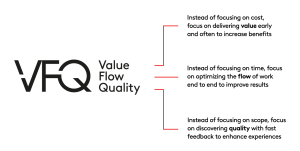
Ensuring Quality at Each Step of Material and Product Flow
The foundation of Value Flow Quality is the idea that quality should be built into every stage of the process. From raw material handling to final delivery, each step must meet predefined quality standards.
This includes:
- Supplier quality verification
- Controlled production environments
- Standardized work procedures
- Quality checks integrated into workflows
By embedding quality at every step, companies prevent defects from propagating downstream.
Minimizing Defects and Rework
Defects and rework are among the most significant sources of inefficiency in manufacturing. Value Flow Quality addresses this by focusing on root cause elimination rather than temporary fixes.
Key strategies include:
- Identifying process variations
- Implementing mistake-proofing (poka-yoke)
- Using statistical process control (SPC)
- Standardizing best practices
The goal is to create processes that are inherently capable of producing defect-free outputs.
Integrating Quality into Production and Logistics Processes
Quality should not be limited to production alone. Logistics, warehousing, and transportation also play a vital role in maintaining product integrity.
Value Flow Quality ensures that:
- Materials are stored under proper conditions
- Handling processes prevent damage
- Transportation maintains product specifications
- Inventory systems track quality status
This integration ensures that quality is preserved throughout the entire value chain.
Aligning Value Creation with Customer Expectations
Ultimately, quality is defined by the customer. Value Flow Quality aligns internal processes with external expectations, ensuring that the final product meets or exceeds customer requirements.
This involves:
- Understanding customer specifications
- Translating requirements into process standards
- Monitoring customer feedback
- Continuously improving based on insights
By focusing on value from the customer’s perspective, organizations can deliver products that truly meet market demands.
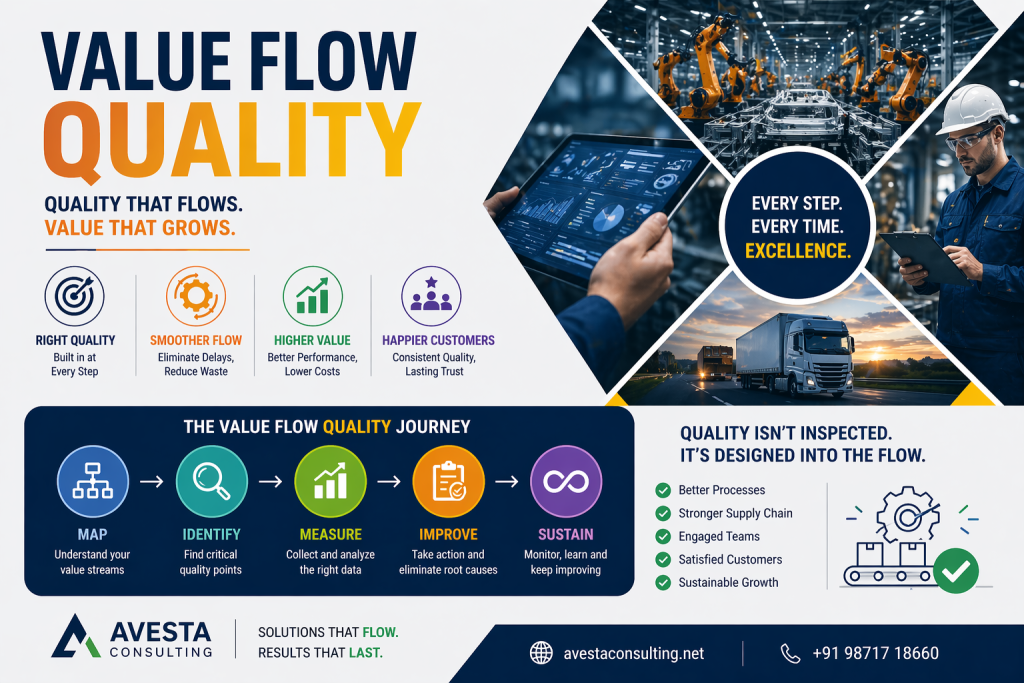
Steps to Improve Value Flow Quality
Step 1: Map Value Flows in the Organization
The first step is to gain a clear understanding of how value flows through the organization. This involves mapping all processes from raw material input to final product delivery.
Value flow mapping helps identify:
- Process steps and sequences
- Material and information flows
- Bottlenecks and inefficiencies
- Quality checkpoints
This visual representation provides a foundation for improvement.
Step 2: Identify Critical Quality Points
Not all process steps have the same impact on quality. Identifying critical quality points allows organizations to focus their efforts where it matters most.
These points typically include:
- High-risk operations
- Complex processes
- Supplier interfaces
- Customer-facing stages
By prioritizing these areas, companies can achieve faster and more effective improvements.
Step 3: Collect and Analyse Process and Quality Data
Data is essential for understanding process performance and identifying improvement opportunities.
Key data sources include:
- Production metrics
- Defect rates
- Process variability
- Customer complaints
Advanced analytics tools can help uncover patterns, trends, and root causes, enabling data-driven decision-making.
Step 4: Implement Corrective and Preventive Actions
Once issues are identified, organizations must take action to eliminate root causes and prevent recurrence.
Corrective actions address existing problems, while preventive actions focus on avoiding future issues.
Examples include:
- Process redesign
- Equipment upgrades
- Training programs
- Supplier improvements
The emphasis should always be on long-term solutions rather than quick fixes.
Step 5: Monitor Results and Continuously Improve
Improvement is an ongoing process. Organizations must continuously monitor performance and refine their processes.
This involves:
- Tracking key performance indicators (KPIs)
- Conducting regular audits
- Reviewing process performance
- Encouraging employee feedback
Continuous improvement ensures that Value Flow Quality evolves with changing business needs.
Tools and Techniques for Value Flow Quality
Process Mapping and Value Stream Mapping
These tools provide a visual representation of processes, helping identify inefficiencies and quality issues.
They enable organizations to:
- Understand end-to-end workflows
- Identify waste and bottlenecks
- Optimize process design
Value stream mapping, in particular, focuses on maximizing value while minimizing waste.
Lean and Six Sigma Methods
Lean and Six Sigma are widely used methodologies for improving quality and efficiency.
- Lean focuses on eliminating waste
- Six Sigma focuses on reducing variability and defects
When combined, they provide a powerful framework for achieving Value Flow Quality.
Quality Management Systems (QMS)
A Quality Management System provides a structured approach to managing quality across the organization.
Key elements include:
- Standard operating procedures (SOPs)
- Documentation and record-keeping
- Internal audits
- Continuous improvement processes
A robust QMS ensures consistency and compliance with industry standards.
Real-Time Monitoring and Dashboards
Modern technologies enable real-time monitoring of processes and quality metrics.
Benefits include:
- Immediate detection of issues
- Faster response times
- Improved visibility and transparency
- Data-driven decision-making
Dashboards provide a centralized view of performance, allowing managers to track progress and identify trends.
Applications of Value Flow Quality
Manufacturing Production Lines
In production environments, Value Flow Quality ensures that each stage contributes to a high-quality output.
Applications include:
- Assembly line optimization
- Automated quality checks
- Process standardization
- Defect prevention
This leads to higher productivity and reduced waste.
Supply Chain and Logistics Processes
Value Flow Quality extends beyond the factory floor into the supply chain.
Applications include:
- Supplier quality management
- Inventory control
- Transportation optimization
- Traceability systems
By ensuring quality across the supply chain, companies can deliver consistent results to customers.
New Product Introduction and Ramp-Up
Launching new products presents unique challenges. Value Flow Quality helps ensure a smooth transition from development to production.
Key activities include:
- Process validation
- Pilot production runs
- Risk assessment
- Continuous monitoring
This reduces the risk of defects and delays during ramp-up.
Customer Satisfaction and Compliance Monitoring
Value Flow Quality plays a crucial role in meeting customer expectations and regulatory requirements.
Applications include:
- Quality audits
- Compliance tracking
- Customer feedback analysis
- Continuous improvement initiatives
By maintaining high standards, companies can build trust and strengthen their market position.
Benefits of Value Flow Quality
Reduced Defects and Waste
By addressing quality issues at their source, organizations can significantly reduce defects and waste.
This leads to:
- Lower production costs
- Improved resource utilization
- Increased profitability
Improved Operational Efficiency
Efficient processes are inherently more reliable and cost-effective.
Value Flow Quality improves efficiency by:
- Eliminating bottlenecks
- Reducing rework
- Streamlining workflows
Better Alignment with Customer Requirements
Understanding and meeting customer expectations is essential for success.
Value Flow Quality ensures that:
- Products meet specifications
- Delivery timelines are maintained
- Customer satisfaction is enhanced
Enhanced Decision-Making and Planning
Access to accurate and timely data enables better decision-making.
Organizations can:
- Identify trends and patterns
- Predict potential issues
- Optimize resource allocation
Common Challenges in Value Flow Quality
Complex and Dynamic Material and Product Flows
Modern supply chains are complex and constantly changing.
Challenges include:
- Multiple suppliers and partners
- Global operations
- Variable demand
Managing these complexities requires advanced tools and strategies.
Incomplete or Inaccurate Quality Data
Poor data quality can lead to incorrect decisions.
Common issues include:
- Inconsistent data collection
- Lack of standardization
- Limited visibility
Improving data accuracy is essential for effective quality management.
Resistance to Process and Cultural Changes
Implementing Value Flow Quality often requires significant changes in processes and culture.
Challenges include:
- Employee resistance
- Lack of training
- Organizational silos
Strong leadership and communication are key to overcoming these barriers.
Best Practices for Effective Value Flow Quality
Engage Cross-Functional Teams
Quality is not the responsibility of a single department—it requires collaboration across the organization.
Engaging cross-functional teams ensures that:
- Different perspectives are considered
- Processes are aligned
- Communication is improved
Continuously Monitor and Validate Improvements
Improvements must be validated to ensure they deliver the desired results.
This involves:
- Regular performance reviews
- Data analysis
- Feedback loops
Continuous monitoring helps sustain improvements over time.
Integrate Quality into All Stages of Material and Product Flow
Quality should be embedded in every process, from design to delivery.
This requires:
- Standardized processes
- Clear quality criteria
- Consistent execution
Foster a Culture of Continuous Improvement
A culture of continuous improvement encourages innovation and accountability.
Key elements include:
- Employee involvement
- Training and development
- Recognition of achievements
Organizations that embrace this culture are better positioned for long-term success.
Conclusion
Value Flow Quality represents a fundamental shift in how organizations approach quality management. By integrating quality into every stage of the value chain, companies can achieve higher efficiency, lower costs, and greater customer satisfaction.
For businesses aiming to stay competitive in today’s dynamic market, adopting Value Flow Quality is not just an option—it is a necessity. With the right strategies, tools, and mindset, organizations can transform their operations and deliver consistent, high-quality results.
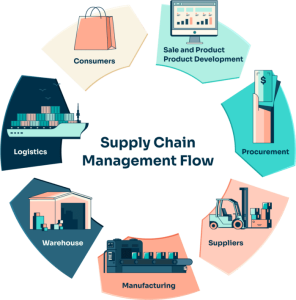
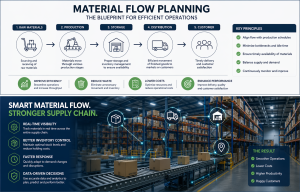
- “Value flow quality diagram showing material and process steps in manufacturing workflow”
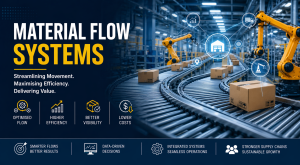
- “Industrial production line with integrated quality control and real-time monitoring system”