Understanding Silver’s Exceptional Heat Transfer Properties and Industrial Applications
Silver is widely recognized as one of the world’s most valuable precious metals, but its importance extends far beyond jewelry, currency, and investment. In engineering, manufacturing, electronics, and thermal management systems, silver is renowned for possessing the highest thermal conductivity of any naturally occurring metal. This remarkable property makes it indispensable in industries where efficient heat transfer directly impacts performance, reliability, and product lifespan.
From aerospace equipment and semiconductor manufacturing to renewable energy systems and medical devices, engineers rely on silver whenever maximum thermal efficiency is required. Its ability to rapidly conduct heat minimizes thermal resistance, prevents overheating, and improves the overall efficiency of high-performance components.
Understanding the thermal conductivity of silver is essential for engineers, designers, researchers, and manufacturers involved in thermal analysis, material selection, and product development. Whether designing a heat exchanger, optimizing an electrical connector, or selecting materials for electronic cooling systems, knowing how silver transfers heat helps engineers make informed decisions.
In this comprehensive guide, we’ll explore:
- What thermal conductivity means
- Why silver has the highest thermal conductivity
- The thermal conductivity of silver in W/m·K
- Silver versus gold, copper, aluminum, and steel
- Engineering applications
- Heat transfer calculations
- Material selection considerations
- Frequently asked questions about silver conductivity
What Is Thermal Conductivity?
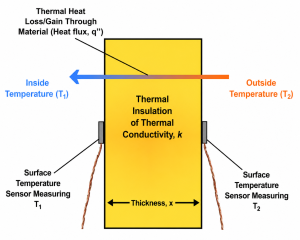
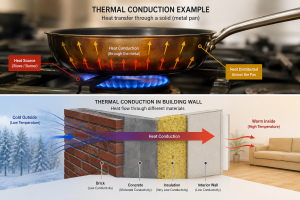
Thermal conductivity is a physical property that describes how efficiently a material transfers heat from one location to another. It measures the amount of heat energy that passes through a material due to a temperature difference.
Materials with high thermal conductivity transfer heat quickly, while materials with low thermal conductivity act as thermal insulators.
Engineers typically represent thermal conductivity using the symbol:
k
The standard SI unit is:
Watts per meter-kelvin (W/m·K)
The higher the k-value, the faster heat travels through the material.
For example:
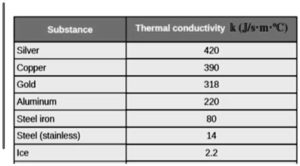
| Material | Approximate Thermal Conductivity (W/m·K) |
|---|---|
| Silver | 429 |
| Copper | 401 |
| Gold | 318 |
| Aluminum | 237 |
| Brass | 109 |
| Carbon Steel | 50 |
| Stainless Steel | 15–20 |
| Glass | 1.0 |
| Wood | 0.12 |
| Air | 0.024 |
This comparison immediately highlights why silver is considered the ultimate thermal conductor among common engineering materials.
What Is the Conductivity of Silver?
Silver has the highest thermal conductivity of any naturally occurring metal, making it the benchmark material for heat transfer applications.
Its thermal conductivity is approximately:
429 W/m·K at room temperature (20–25°C).
This means silver transfers thermal energy more efficiently than copper, gold, aluminum, steel, titanium, and virtually every other engineering metal.
The excellent conductivity of silver comes from its atomic structure. Heat in metals is transferred primarily by free-moving electrons. Silver possesses an exceptionally high concentration of highly mobile electrons, allowing thermal energy to travel through the material with minimal resistance.
This same characteristic also explains why silver has the highest electrical conductivity of all metals.
What Is the Thermal Conductivity of Silver in W/m·K?
The accepted engineering value is:
Thermal Conductivity of Silver = 429 W/m·K
Some engineering references report slightly different values depending on:
- Material purity
- Alloy composition
- Temperature
- Manufacturing process
- Crystal orientation
- Measurement standards
Typical engineering values include:
| Silver Grade | Thermal Conductivity (W/m·K) |
|---|---|
| Pure Silver (99.99%) | 429 |
| Commercial Silver | 420–429 |
| Sterling Silver | 330–370 |
| Silver Alloys | 250–390 |
The conductivity decreases whenever alloying elements such as copper, nickel, or zinc are introduced because these atoms interfere with electron movement inside the crystal lattice.
Why Does Silver Conduct Heat So Well?
The outstanding thermal conductivity of silver results from several atomic and physical characteristics working together.
1. High Electron Mobility
In metallic materials, free electrons carry most thermal energy.
Silver’s electrons encounter very little resistance as they move through the lattice, allowing heat to spread rapidly throughout the material.
2. Highly Ordered Crystal Structure
Silver has a face-centered cubic (FCC) crystal structure.
This structure minimizes atomic defects and provides efficient pathways for electron movement, enhancing both electrical and thermal conductivity.
3. Low Electron Scattering
Impurities, grain boundaries, and alloying elements cause electrons to scatter.
Pure silver contains very few interruptions, allowing heat flow with exceptional efficiency.
4. Excellent Electrical Conductivity
Thermal conductivity and electrical conductivity are closely related through the Wiedemann–Franz Law.
Because silver is the best electrical conductor among metals, it also exhibits the highest thermal conductivity.
Factors That Affect Silver’s Thermal Conductivity
Although silver possesses exceptional heat transfer capabilities, its thermal conductivity is not constant under all conditions.
Several factors can influence its performance.
Temperature
As temperature increases, atoms vibrate more intensely.
These vibrations interfere with electron movement, slightly reducing thermal conductivity.
At cryogenic temperatures, silver becomes even more conductive.
Purity
Higher purity results in fewer crystal defects.
For example:
- 99.99% silver conducts heat more efficiently than sterling silver.
- Alloying elements reduce conductivity.
Mechanical Processing
Cold working, rolling, machining, and forming introduce microscopic defects into the crystal structure.
These defects scatter electrons and slightly reduce heat transfer efficiency.
Surface Condition
Oxidation, contamination, or poor surface contact increases thermal resistance.
Even though silver itself conducts heat extremely well, surface imperfections can significantly reduce overall heat transfer between components.
Silver vs. Other Engineering Metals
Choosing a material involves balancing conductivity, strength, corrosion resistance, machinability, and cost.
The table below compares several commonly used engineering metals.
| Material | Thermal Conductivity (W/m·K) | Relative Cost | Typical Applications |
|---|---|---|---|
| Silver | 429 | Very High | Aerospace, electronics, high-performance thermal interfaces |
| Copper | 401 | Moderate | Heat exchangers, electrical systems, cooling plates |
| Gold | 318 | Extremely High | Aerospace connectors, electronics, corrosion-resistant contacts |
| Aluminum | 237 | Low | Automotive, heat sinks, structural cooling |
| Brass | 109 | Moderate | Plumbing, fittings, decorative components |
| Carbon Steel | 50 | Low | Structural applications |
| Stainless Steel | 15–20 | Moderate | Food processing, chemical plants |
Although silver offers the highest conductivity, engineers often select copper or aluminum because they provide an excellent balance between performance and cost.
Silver is typically reserved for specialized applications where maximum heat transfer outweighs material expense.
Heat Transfer Equation Using Thermal Conductivity
Engineers calculate conductive heat transfer using Fourier’s Law of Heat Conduction:
Q=kAΔT/L
Where:
- Q = Heat transfer rate (Watts)
- k = Thermal conductivity (W/m·K)
- A = Cross-sectional area (m²)
- ΔT = Temperature difference (K or °C)
- L = Material thickness (m)
Example Calculation
A pure silver plate has:
- Area = 0.02 m²
- Thickness = 0.01 m
- Temperature difference = 50°C
Using silver’s thermal conductivity:
Q=(429×0.02×50)/0.01
Q=42,900 W
This example demonstrates how rapidly silver can transfer thermal energy, making it ideal for demanding thermal management applications.
Engineering Applications of Silver
Although silver is expensive, its unparalleled thermal performance makes it indispensable in industries where efficiency, reliability, and precision are critical.
Some of the most common applications include:
1. High-Performance Electronics
Modern electronic devices generate significant amounts of heat in increasingly compact spaces. Silver is used in:
- Thermal interface materials (TIMs)
- High-performance thermal pastes
- Semiconductor packaging
- Power electronics
- Advanced printed circuit boards
- RF and microwave systems
Its superior conductivity helps maintain lower operating temperatures, improving efficiency and extending component lifespan.
2. Aerospace Engineering
The aerospace industry demands materials capable of performing reliably under extreme thermal conditions. Aircraft, satellites, spacecraft, and defense systems experience rapid temperature fluctuations, requiring efficient heat dissipation to protect sensitive electronic equipment.
Silver is commonly used in:
- Satellite communication systems
- Radar equipment
- Spacecraft thermal control systems
- Avionics
- Military electronics
- High-frequency communication devices
Its exceptional thermal conductivity allows heat to spread quickly across components, reducing localized hot spots that could compromise system reliability. Although silver increases manufacturing costs, its performance advantages often justify its use in mission-critical aerospace applications.
3. Semiconductor Manufacturing
Modern semiconductor devices contain billions of transistors packed into extremely small areas, generating significant heat during operation.
Silver contributes to thermal management in:
- Integrated circuit packaging
- Semiconductor die attachment
- Thermal interface materials
- High-power transistors
- LED chips
- Power modules
Efficient heat removal is essential for maintaining processing speed, preventing thermal degradation, and extending component lifespan. Silver’s superior thermal conductivity helps semiconductor manufacturers meet increasingly demanding performance requirements.
4. Electric Vehicles and Battery Technology
The rapid growth of electric vehicles (EVs) has increased the need for advanced thermal management solutions. Batteries, power electronics, and charging systems all generate considerable heat during operation.
Silver is used in:
- Battery connectors
- High-current busbars
- Charging infrastructure
- Electric motor components
- Inverter systems
- Power distribution modules
By efficiently conducting heat away from critical components, silver helps improve battery efficiency, enhance safety, and increase the operational life of electric vehicle systems.
5. Renewable Energy Systems
Renewable energy technologies rely on efficient heat transfer to maximize energy conversion and system reliability.
Silver is commonly incorporated into:
- Solar photovoltaic cells
- Solar thermal collectors
- Energy storage systems
- Power conversion electronics
- Wind turbine electrical components
In photovoltaic cells, silver not only provides excellent electrical conductivity but also assists in managing heat generated during energy conversion, improving overall system efficiency.
6. Medical Devices
Many advanced medical instruments require precise temperature control and reliable electrical performance. Silver’s combination of high thermal conductivity, electrical conductivity, and antimicrobial properties makes it an attractive engineering material.
Applications include:
- Diagnostic equipment
- Medical imaging systems
- Surgical instruments
- Implantable electronic devices
- Laboratory instruments
- Patient monitoring equipment
Efficient thermal management improves equipment accuracy while helping maintain safe operating temperatures.
7. Industrial Heat Exchangers
Although copper and aluminum dominate conventional heat exchanger manufacturing, silver is occasionally used in specialized industrial equipment where maximum heat transfer efficiency is essential.
Typical applications include:
- Scientific research equipment
- Cryogenic systems
- Laboratory instruments
- High-performance industrial reactors
- Precision thermal control systems
In these environments, the superior conductivity of silver can significantly improve thermal response and process stability.
8. High-Performance Computing and Artificial Intelligence
Artificial intelligence, cloud computing, and high-performance computing (HPC) continue to push processor power to new levels, increasing thermal management challenges.
Silver-based materials are used in:
- CPU heat spreaders
- GPU cooling systems
- Thermal interface compounds
- Data center cooling technologies
- AI accelerators
- Supercomputers
As processors become more powerful, efficient heat removal becomes essential for maintaining performance, reducing energy consumption, and preventing hardware failures.
9. Precision Scientific Instruments
Many scientific instruments require stable thermal conditions to achieve accurate measurements.
Silver is used in:
- Precision laboratory equipment
- Spectroscopy instruments
- Cryogenic research facilities
- Calibration equipment
- Optical systems
- High-accuracy sensors
Its rapid heat transfer minimizes temperature gradients that could introduce measurement errors.
10. Industrial Brazing and Soldering
Silver-based brazing alloys are widely used in manufacturing because they provide excellent thermal conductivity alongside strong mechanical joints.
Common industries include:
- HVAC manufacturing
- Refrigeration systems
- Aerospace assembly
- Automotive manufacturing
- Industrial piping
- Heat exchanger fabrication
Silver brazing alloys improve both thermal performance and joint reliability, particularly in systems exposed to repeated heating and cooling cycles.
Why Engineers Choose Silver Despite Its Cost
Although silver is considerably more expensive than most engineering metals, there are situations where its benefits outweigh the additional investment.
Engineers often select silver when projects require:
- Maximum thermal conductivity
- Superior electrical conductivity
- Rapid heat dissipation
- Long-term reliability
- High-performance electronics
- Critical aerospace applications
- Precision thermal control
In these specialized applications, even a small improvement in heat transfer can enhance efficiency, reduce maintenance requirements, and extend equipment lifespan. As a result, the long-term performance benefits may justify the higher initial material cost.
Silver vs. Gold: Which Has Better Thermal Conductivity?
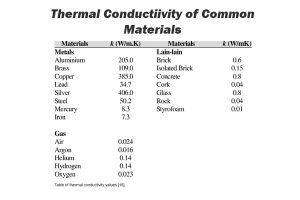
One of the most common questions engineers ask when selecting materials for high-performance applications is whether silver or gold provides better thermal conductivity. While both are precious metals with excellent conductive properties, silver clearly outperforms gold in heat transfer.
What Is the Thermal Conductivity of Silver vs. Gold?
At room temperature, the typical thermal conductivity values are:
| Property | Silver | Gold |
|---|---|---|
| Thermal Conductivity | 429 W/m·K | 318 W/m·K |
| Electrical Conductivity | Highest of all metals | Very High |
| Corrosion Resistance | Excellent | Outstanding |
| Relative Cost | Very High | Extremely High |
| Oxidation Resistance | Good | Excellent |
Silver transfers heat approximately 35% more efficiently than gold. This significant difference makes silver the preferred choice when maximum thermal performance is the primary objective.
However, gold possesses one major advantage: it is highly resistant to oxidation and corrosion. Unlike silver, which can tarnish over time due to sulfur compounds in the environment, gold maintains a clean, stable surface even under harsh operating conditions.
As a result, engineers often choose:
- Silver for maximum heat transfer efficiency.
- Gold for environments requiring exceptional corrosion resistance, long-term reliability, or high-reliability electrical contacts.
Silver vs. Copper
Copper is often considered the closest competitor to silver because it combines outstanding thermal conductivity with a much lower cost.
| Property | Silver | Copper |
|---|---|---|
| Thermal Conductivity | 429 W/m·K | 401 W/m·K |
| Relative Cost | Very High | Moderate |
| Weight | Slightly Higher | Lower |
| Availability | Limited | Excellent |
| Industrial Usage | Specialized | Very Common |
Although silver has the highest thermal conductivity, the improvement over copper is only about 7%.
For many engineering projects, this modest increase does not justify silver’s significantly higher price. Consequently, copper remains the most widely used material for:
- Heat exchangers
- Cooling plates
- Radiators
- HVAC equipment
- Electrical wiring
- Industrial heat sinks
Silver is generally reserved for applications where even a small improvement in thermal performance can have a substantial impact on system reliability or efficiency.
Silver vs. Aluminum
Aluminum is another widely used thermal management material, especially in industries where weight is a critical design factor.
| Property | Silver | Aluminum |
|---|---|---|
| Thermal Conductivity | 429 W/m·K | 237 W/m·K |
| Density | High | Low |
| Weight | Heavy | Lightweight |
| Cost | Very High | Low |
| Corrosion Resistance | Good | Excellent |
| Machinability | Excellent | Excellent |
Although aluminum conducts heat less effectively than silver, it offers several practical advantages:
- Lightweight construction
- Low material cost
- Good corrosion resistance
- Easy machining
- Excellent availability
For applications such as automotive radiators, electronic enclosures, LED heat sinks, and aerospace structures, aluminum often provides the best balance between thermal performance, weight, and manufacturing cost.
Why Isn’t Silver Used Everywhere?
Considering its superior thermal conductivity, many people wonder why silver is not the standard material for all heat transfer applications.
The answer lies in engineering economics.
Material selection always involves balancing several factors:
- Thermal performance
- Mechanical strength
- Manufacturability
- Durability
- Corrosion resistance
- Availability
- Total project cost
Although silver offers unmatched heat transfer capability, it is also one of the most expensive engineering metals. In many cases, copper or aluminum can deliver more than enough performance at a fraction of the cost.
Therefore, silver is typically reserved for applications where performance is more important than material expense.
Major Industrial Applications of Silver
Silver’s exceptional thermal conductivity makes it indispensable in numerous advanced engineering industries.
1. Semiconductor Manufacturing
Semiconductor devices generate significant heat during operation. Excessive temperatures reduce efficiency, shorten component life, and can lead to failure.
Silver is used in:
- Die attachment materials
- Thermal interface compounds
- High-performance solders
- Heat spreaders
- Advanced packaging technologies
Its superior conductivity enables rapid heat dissipation, protecting sensitive electronic components.
2. Aerospace Engineering
Aircraft and spacecraft operate under extreme thermal conditions. Components experience rapid temperature changes, intense heat loads, and harsh environmental exposure.
Silver is commonly found in:
- Satellite electronics
- Radar systems
- Spacecraft connectors
- Thermal control systems
- Military avionics
In aerospace applications, reliability often outweighs cost, making silver an attractive material despite its high price.
3. Electric Vehicles (EVs)
Modern electric vehicles rely on efficient thermal management to maximize battery life and performance.
Silver is used in:
- Battery connectors
- High-current electrical contacts
- Charging systems
- Power electronics
- High-performance switches
Efficient heat transfer helps reduce thermal stress, improving system safety and extending component lifespan.
4. Medical Equipment
Many advanced medical devices require precise temperature control and reliable electrical performance.
Silver is commonly incorporated into:
- Surgical instruments
- Diagnostic equipment
- Medical sensors
- Imaging systems
- Implantable electronic devices
Its combination of thermal conductivity, electrical conductivity, and antimicrobial properties makes it particularly valuable in healthcare applications.
5. Renewable Energy Systems
As renewable energy technologies become more advanced, thermal management becomes increasingly important.
Silver contributes to:
- Solar photovoltaic cells
- High-efficiency solar collectors
- Power conversion equipment
- Wind turbine electronics
- Battery storage systems
Efficient heat removal improves energy conversion efficiency and increases equipment longevity.
6. High-Performance Computing
Modern data centers and AI computing systems generate enormous amounts of heat.
Silver-based thermal materials are used in:
- CPU heat spreaders
- GPU cooling systems
- Thermal interface materials
- High-density servers
- Supercomputers
As processor power continues to increase, efficient thermal management becomes even more critical.
Advantages of Silver in Heat Transfer Applications
Silver offers numerous engineering benefits beyond its exceptionally high thermal conductivity.
Outstanding Heat Transfer
No naturally occurring metal transfers heat more efficiently.
Excellent Electrical Conductivity
Silver also ranks first among all metals in electrical conductivity, making it ideal for combined electrical and thermal applications.
Superior Reliability
Rapid heat dissipation reduces thermal stress, minimizing component fatigue and extending service life.
Good Mechanical Stability
Silver maintains excellent conductivity over a wide range of operating conditions.
Easy Manufacturing
Silver can be:
- Rolled
- Drawn
- Machined
- Brazed
- Soldered
- Electroplated
These characteristics simplify manufacturing for precision components.
Limitations of Silver
Despite its remarkable properties, silver is not the perfect engineering material.
High Cost
The biggest limitation is price.
Silver can cost many times more than copper or aluminum, significantly increasing project budgets.
Tarnishing
Silver reacts with sulfur-containing compounds in the atmosphere, forming silver sulfide.
Although tarnishing has only a minor effect on bulk thermal conductivity, it can increase contact resistance in some applications.
Softness
Pure silver is relatively soft compared with many engineering metals.
Wear-resistant applications often require silver alloys rather than pure silver.
Limited Structural Strength
Silver is generally unsuitable for structural load-bearing components.
It is typically combined with stronger materials in composite assemblies.
Design Considerations for Engineers
Selecting silver for thermal management involves more than simply choosing the material with the highest conductivity.
Engineers should evaluate several design factors:
Thermal Contact Resistance
The interface between two components often contributes more thermal resistance than the material itself.
Surface flatness, contact pressure, and interface materials play a critical role in overall performance.
Material Purity
Higher purity silver provides better thermal conductivity but may reduce mechanical strength.
The appropriate purity depends on the application’s performance requirements.
Operating Temperature
Although silver maintains excellent conductivity across a broad temperature range, engineers should account for property variations under extreme operating conditions.
Manufacturing Process
Casting, rolling, annealing, and machining can influence grain structure and thermal performance.
Selecting the appropriate manufacturing method helps optimize conductivity.
Cost-Benefit Analysis
The performance gain from silver should always be weighed against its higher material cost.
For many applications, copper may offer a more economical solution with only a slight reduction in thermal performance.
Selecting the Right Material for Thermal Applications
When choosing a material for heat transfer systems, engineers typically compare several criteria:
| Design Requirement | Recommended Material |
|---|---|
| Maximum thermal conductivity | Silver |
| Best performance-to-cost ratio | Copper |
| Lightweight cooling systems | Aluminum |
| Corrosion resistance | Gold |
| Structural strength | Steel |
| Chemical processing equipment | Stainless Steel |
No single material is ideal for every application. The optimal choice depends on balancing thermal performance, mechanical properties, environmental conditions, manufacturability, and budget.
Frequently Asked Questions (FAQ)
What Is the Conductivity of Silver?
Silver has the highest thermal conductivity of any naturally occurring metal, with a typical value of 429 W/m·K at room temperature. This means silver transfers heat more efficiently than copper, gold, aluminum, or steel, making it the preferred material for high-performance thermal applications.
In addition to its exceptional thermal conductivity, silver also has the highest electrical conductivity of all metals. This unique combination makes it indispensable in advanced electronics, aerospace systems, renewable energy technologies, and precision engineering.
What Is the Thermal Conductivity of Silver in W/m·K?
The accepted engineering value is:
429 W/m·K
Depending on the purity and operating temperature, published values generally range between 420 and 429 W/m·K.
Engineers typically use 429 W/m·K in thermal design calculations involving pure silver.
What Is the Thermal Conductivity of Silver vs. Gold?
Silver conducts heat significantly better than gold.
| Material | Thermal Conductivity |
|---|---|
| Silver | 429 W/m·K |
| Gold | 318 W/m·K |
Silver transfers heat approximately 35% more efficiently than gold.
However, gold offers superior corrosion resistance and does not tarnish, making it the preferred choice for highly corrosive environments or long-life electrical contacts.
Why Does Silver Conduct Heat Better Than Copper?
Although copper is an outstanding thermal conductor, silver performs slightly better because its electrons move through the crystal lattice with even less resistance.
Silver’s highly ordered atomic structure minimizes electron scattering, allowing thermal energy to travel more efficiently.
The improvement over copper is approximately 7%, which is significant in high-performance engineering applications but often insufficient to justify the increased material cost in general industrial use.
Does Sterling Silver Have the Same Thermal Conductivity as Pure Silver?
No.
Sterling silver typically contains 92.5% silver and 7.5% copper.
The addition of copper improves mechanical strength but reduces thermal conductivity.
Typical values range from 330 to 370 W/m·K, depending on the exact alloy composition.
Does Temperature Affect Silver’s Thermal Conductivity?
Yes.
As temperature increases:
- Atomic vibrations become stronger.
- Electron scattering increases.
- Thermal conductivity decreases slightly.
At very low temperatures, silver becomes an even better conductor of heat.
Engineers working with cryogenic systems often take advantage of this characteristic.
Is Silver the Best Material for Heat Sinks?
Technically, yes.
Economically, not usually.
Although silver provides the highest thermal conductivity, copper and aluminum dominate commercial heat sink manufacturing because they offer an excellent balance of performance, weight, machinability, and cost.
Silver is generally reserved for specialized cooling systems where every degree of temperature reduction matters.
Is Silver Used in Thermal Interface Materials?
Yes.
Many premium thermal interface materials (TIMs) contain microscopic silver particles suspended in a conductive paste.
These compounds are commonly used between processors and heat sinks to reduce thermal resistance and improve cooling performance in high-power electronic devices.
Can Silver Be Used in High-Temperature Applications?
Yes.
Silver maintains excellent thermal conductivity across a wide operating temperature range.
However, engineers must also consider:
- Mechanical strength
- Oxidation
- Creep behavior
- Cost
- Compatibility with surrounding materials
For extremely high-temperature structural applications, nickel-based superalloys or ceramic materials may be more suitable.
Common Misconceptions About Silver’s Thermal Conductivity
Despite its widespread use, several misconceptions surround silver’s thermal performance.
Myth 1: Silver Is Always the Best Engineering Material
While silver has the highest thermal conductivity, it is not automatically the best material for every project.
Material selection also depends on:
- Cost
- Weight
- Mechanical strength
- Corrosion resistance
- Manufacturability
- Availability
For many applications, copper or aluminum offers a more practical solution.
Myth 2: Silver Never Corrodes
Silver does not rust like iron, but it does tarnish.
Exposure to sulfur-containing gases forms a thin layer of silver sulfide on the surface.
Although this has minimal impact on bulk thermal conductivity, it can affect surface contact resistance in sensitive electrical or thermal interfaces.
Myth 3: All Silver Alloys Conduct Heat Equally Well
Not true.
Adding alloying elements disrupts electron movement within the metal’s crystal lattice.
As alloy content increases, thermal conductivity decreases.
Pure silver consistently provides the highest thermal performance.
Future Trends in Silver-Based Thermal Materials
As technology advances, thermal management is becoming increasingly important across multiple industries.
Emerging applications continue to expand the demand for high-conductivity materials.
Artificial Intelligence and High-Performance Computing
AI processors consume enormous amounts of power and generate substantial heat.
Silver-based thermal interface materials are expected to play an increasingly important role in next-generation data centers and supercomputers.
Electric Mobility
Future electric vehicles will require more efficient cooling systems for batteries, inverters, and charging infrastructure.
Silver’s exceptional thermal conductivity can improve efficiency, safety, and battery lifespan.
Renewable Energy
High-performance solar cells, power electronics, and energy storage systems increasingly rely on advanced thermal management.
Silver is expected to remain a key material for maximizing energy conversion efficiency.
Aerospace and Space Exploration
Satellites, spacecraft, and deep-space missions demand materials capable of operating under extreme thermal conditions.
Silver’s unique combination of thermal and electrical conductivity ensures its continued importance in future aerospace technologies.
Advanced Manufacturing
Additive manufacturing and metal 3D printing are enabling more complex silver components with optimized internal cooling channels and reduced material waste.
These innovations may expand the practical use of silver in high-performance thermal systems.
Best Practices for Engineers Working with Silver
To maximize the benefits of silver in thermal applications, engineers should follow several best practices:
- Select the highest practical purity for maximum thermal conductivity.
- Minimize thermal contact resistance through proper surface preparation.
- Consider silver plating when full silver components are not economically viable.
- Evaluate the total lifecycle cost rather than focusing solely on initial material price.
- Account for environmental conditions that may promote tarnishing or contamination.
- Use thermal simulation tools to verify that silver provides a measurable performance advantage over lower-cost alternatives.
By considering both performance and cost, engineers can make informed material selections that optimize system efficiency without exceeding project budgets.
Conclusion
Silver stands as the benchmark material for thermal conductivity, offering the highest heat transfer capability of any naturally occurring metal. With a thermal conductivity of approximately 429 W/m·K, it outperforms copper, gold, aluminum, and steel, making it indispensable in applications where efficient heat dissipation is essential.
Its exceptional thermal and electrical conductivity makes silver a preferred material for advanced electronics, aerospace systems, renewable energy technologies, medical devices, and precision manufacturing. However, successful material selection requires balancing conductivity with other engineering considerations such as mechanical properties, corrosion resistance, manufacturability, and overall project cost.
Although copper and aluminum remain the most common choices for general thermal management due to their affordability, silver continues to play a vital role in specialized, high-performance applications where even small improvements in heat transfer can significantly enhance reliability, efficiency, and service life.
Understanding the thermal conductivity of silver enables engineers to make better-informed design decisions, improve thermal performance, and develop more efficient products across a wide range of industries.
Whether you are designing cooling systems, optimizing industrial equipment, or performing detailed thermal simulations, selecting the right material is only one part of the engineering process. Comprehensive analysis, simulation, and verification are equally important to ensure long-term performance and operational reliability.
At Avesta Consulting, we help engineering teams evaluate material performance, optimize thermal systems, and develop innovative solutions using advanced engineering analysis, simulation, and design methodologies.