Introduction
Finite Element Analysis (FEA) has become a cornerstone of modern engineering design, enabling engineers to predict structural behavior, validate performance, and optimize systems before physical construction or manufacturing begins. However, in Australia, technical accuracy alone is not sufficient. Engineering outcomes must also comply with regulatory and professional standards, particularly when designs impact public safety, infrastructure, or high-risk assets.
This is where RPEQ (Registered Professional Engineer of Queensland) and CPEng (Chartered Professional Engineer) play a critical role. Aligning FEA results with Australian standards ensures that simulations are not only mathematically correct but also legally defensible, professionally endorsed, and accepted by authorities.
This article explains how FEA results are aligned with Australian standards, the meaning of RPEQ, the RPEQ stamping process, timelines, and how engineering consultancies ensure compliance across Australia.
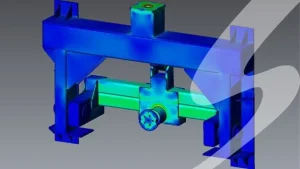
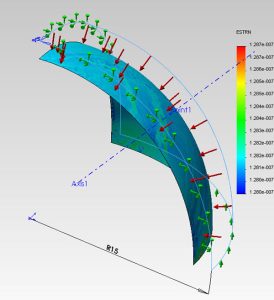
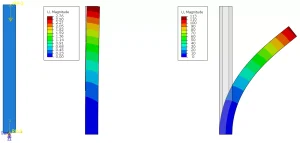
The Role of FEA in Australian Engineering Projects
FEA is widely used across Australian industries, including:
- Structural and civil engineering
- Mining and resources
- Oil & gas
- Renewable energy
- Marine and offshore structures
- Mechanical and industrial equipment design
FEA supports:
- Stress and deformation analysis
- Fatigue and fracture assessment
- Buckling and stability evaluation
- Thermal and coupled physics simulations
However, Australian regulators and clients expect more than software outputs. They require engineering judgment, documented assumptions, validated load cases, and professional accountability.
Why Australian Standards Matter in FEA
Australian Standards (AS), along with NCC, ISO, and international codes, define:
- Safety factors
- Load combinations
- Material properties
- Design limits and failure criteria
An FEA model that ignores these frameworks may produce results that are:
- Unsafe
- Non-compliant
- Legally invalid
For regulated projects, FEA must be reviewed, interpreted, and approved by a registered or chartered engineer.

Meaning of RPEQ
What is RPEQ?
RPEQ stands for Registered Professional Engineer of Queensland.
It is a legal registration required for engineers who provide professional engineering services in Queensland, particularly when services involve:
- Design certification
- Structural approval
- Public safety impact
- Compliance documentation
Under the Professional Engineers Act (Queensland), only RPEQ-registered engineers can legally approve and certify engineering designs.
Who Needs RPEQ?
An RPEQ is required when:
- Engineering work affects public safety
- Designs are submitted to councils or authorities
- Engineering certification is mandatory
- FEA results are used for construction approval
Even interstate or international engineering firms must engage an RPEQ if the project is in Queensland.
CPEng vs RPEQ: Understanding the Difference
| Aspect | CPEng | RPEQ |
| Issued by | Engineers Australia | Queensland Government |
| Scope | National / International | Queensland (legal) |
| Legal requirement | No | Yes (in QLD) |
| Focus | Competency & professionalism | Legal accountability |
???? Important:
Many engineers hold both CPEng and RPEQ, but RPEQ is the legally enforceable credential in Queensland.
Aligning FEA Results with RPEQ Requirements
Engineering Assumptions & Scope Definition
Before simulation begins, an RPEQ-aligned FEA must clearly define:
- Purpose of analysis
- Applicable Australian Standards (e.g. AS 4100, AS 1170, AS 3990)
- Load cases and combinations
- Boundary conditions and constraints
All assumptions must be explicitly documented, not implied.
Material Properties & Standards Compliance
Material models in FEA must align with:
- Australian Standards material grades
- Verified stress-strain relationships
- Temperature and fatigue considerations
Generic library materials are not sufficient unless validated.
Load Cases & Safety Factors
Australian standards define specific load combinations, such as:
- Dead loads
- Live loads
- Wind loads (AS 1170.2)
- Seismic loads (AS 1170.4)
RPEQ-reviewed FEA ensures:
- Correct load factors are applied
- Ultimate and serviceability limit states are evaluated
- Conservative safety margins are maintained
Model Validation & Sensitivity Checks
Before approval, an RPEQ will assess:
- Mesh convergence
- Boundary condition realism
- Stress singularities
- Sensitivity to load variation
FEA results must reflect realistic engineering behavior, not just numerical success.
Example of an RPEQ Stamp
An RPEQ stamp is a formal declaration of responsibility and compliance.
What Does an RPEQ Stamp Include?
A typical RPEQ stamp contains:
- Engineer’s full name
- RPEQ registration number
- Area of engineering practice
- Date of certification
- Statement of responsibility
???? The stamp confirms that:
- The engineer has reviewed the FEA results
- The design complies with applicable standards
- The engineer accepts professional and legal responsibility
Where Is the RPEQ Stamp Used?
- FEA reports
- Structural drawings
- Design calculations
- Council submissions
- Construction approval documents
RPEQ Process Duration
How Long Does RPEQ Registration Take?
The RPEQ application process typically takes:
⏱ 3 to 6 months, depending on:
- Completeness of documentation
- Engineering discipline
- Assessment workload
Typical RPEQ Registration Steps
- Hold CPEng status (or equivalent pathway)
- Submit experience and competency evidence
- Provide referees and project history
- Assessment by Board of Professional Engineers Queensland
- Registration approval
For companies, partnering with an external RPEQ engineer is often faster than internal registration.
Best Practices for RPEQ-Aligned FEA Reports
To ensure compliance and approval:
- Use clear, structured reporting
- Reference all applicable Australian Standards
- Include diagrams, boundary condition visuals, and load paths
- Avoid raw solver outputs without interpretation
- Provide clear pass/fail criteria against standards
At Avesta Consulting, FEA reports are structured to support RPEQ review and stamping, reducing approval delays.
Common Mistakes That Delay Approval
❌ Missing load justification
❌ Unrealistic constraints
❌ Over-refined mesh without validation
❌ No reference to Australian Standards
❌ Software screenshots without engineering explanation
RPEQ engineers focus on engineering logic, not just results.
How Engineering Consultancies Support RPEQ Compliance
Professional consultancies bridge the gap between:
- Advanced simulation tools
- Regulatory compliance
- Professional accountability
This includes:
- Pre-review of FEA models
- Alignment with Australian codes
- Preparation of stamp-ready documentation
- Collaboration with RPEQ engineers
Conclusion
FEA is a powerful engineering tool, but in Australia, its value is realized only when aligned with professional and legal standards. Understanding the role of RPEQ and CPEng is essential for engineers, project managers, and asset owners seeking approval, safety, and credibility.
By aligning FEA results with Australian Standards and ensuring RPEQ compliance, engineering projects achieve:
- Regulatory approval
- Reduced risk
- Professional accountability
- Long-term asset safety
For Queensland projects, RPEQ alignment is not optional — it is mandatory.