Heat transfer is one of the most important principles in engineering, manufacturing, energy systems, and industrial operations. Almost every machine, industrial process, or thermal system depends on the movement of heat from one place to another. From cooling electronic devices and operating industrial furnaces to designing HVAC systems and optimizing power plants, heat transfer affects performance, efficiency, safety, and operational cost.
In simple terms, heat transfer refers to the movement of thermal energy due to a temperature difference. Heat naturally flows from a hotter object or region to a colder one. While the scientific theory behind heat transfer can become highly complex, its practical applications can be seen everywhere in daily life and industrial engineering.
This article explores real heat transfer examples across industries and engineering systems. We will examine how conduction, convection, radiation, and phase-change heat transfer work in real-world applications and why engineers use simulation tools such as CFD and thermal analysis software to improve thermal performance.
What Is Heat Transfer?
Heat transfer is the process of thermal energy moving between materials, fluids, or systems.
The three classical modes of heat transfer are:
- Conduction
- Convection
- Radiation
In many industrial systems, phase-change heat transfer is also critically important.
Heat transfer plays a major role in:
- Mechanical engineering
- Chemical processing
- Electronics cooling
- Aerospace systems
- HVAC engineering
- Automotive systems
- Power generation
- Manufacturing processes
- Building insulation
Modern engineering increasingly relies on thermal simulations and Computational Fluid Dynamics (CFD) to analyze heat movement and optimize designs before manufacturing begins.
Why Heat Transfer Examples Matter in Engineering
Understanding theoretical heat transfer is important, but practical examples help engineers and industrial clients understand how thermal energy behaves in real systems.
Real-world heat transfer examples help companies:
- Improve energy efficiency
- Reduce overheating risks
- Lower operational costs
- Optimize cooling systems
- Improve product performance
- Increase equipment lifespan
- Enhance industrial safety
Heat transfer examples are also essential in engineering simulation because thermal problems are often difficult to visualize without CFD or Finite Element Analysis (FEA).
Example 1: Heat Transfer in a Car Radiator
One of the most common industrial heat transfer examples is the automotive radiator.
A car engine generates large amounts of heat during combustion. If this heat is not removed efficiently, the engine can overheat and fail.
The radiator transfers heat from the engine coolant to the surrounding air.
This system uses multiple heat transfer methods simultaneously:
Conduction
Heat moves from the hot coolant to the metal radiator tubes.
Convection
Air flowing across the radiator removes heat from the metal surfaces.
Forced Convection
Fans increase airflow to improve cooling performance.
Engineering Importance of Radiator Heat Transfer
Engineers analyze radiator performance to:
- Improve fuel efficiency
- Prevent overheating
- Reduce engine wear
- Optimize airflow
- Improve thermal management
CFD simulations are widely used in automotive thermal analysis to evaluate airflow distribution and cooling efficiency.
Example 2: Heat Transfer in Industrial Furnaces
Industrial furnaces operate at extremely high temperatures and are among the most important heat transfer applications in heavy industry.
Furnaces are used in:
- Steel production
- Glass manufacturing
- Cement plants
- Petrochemical processing
- Metal treatment
Radiation in Furnace Systems
Radiation is the dominant heat transfer mechanism inside high-temperature furnaces.
Hot combustion gases and flames emit radiant thermal energy toward furnace walls and processed materials.
At high temperatures, radiative heat transfer becomes extremely significant.
Conduction Through Refractory Walls
Industrial furnaces use refractory materials to reduce heat loss and protect structural components.
Heat conducts through refractory linings slowly to maintain thermal efficiency.
Proper refractory design helps:
- Minimize energy loss
- Increase furnace lifespan
- Improve thermal stability
- Protect steel structures
CFD and Thermal Simulation in Furnace Design
Engineers use CFD and thermal simulations to study:
- Flame distribution
- Temperature uniformity
- Heat loss
- Airflow behavior
- Combustion efficiency
Simulation tools help reduce fuel consumption and improve process efficiency in industrial furnace systems.
Example 3: Heat Transfer in Air Conditioning Systems
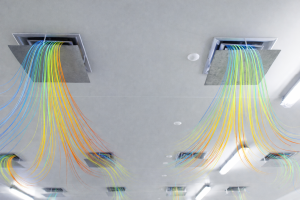
HVAC systems are one of the most familiar heat transfer applications in commercial and residential buildings.
Air conditioning systems remove unwanted heat from indoor environments and transfer it outdoors.
These systems involve:
- Convection
- Phase-change heat transfer
- Conduction
Refrigerant Phase Change
Refrigerants absorb heat while evaporating and release heat while condensing.
This phase-change process allows efficient thermal transfer.
The evaporator coil absorbs indoor heat, while the condenser releases heat outside.
Airflow and Convection
Fans move air across cooling coils to improve convective heat transfer.
Engineers optimize airflow patterns to improve thermal comfort and energy efficiency.
Example 4: Heat Transfer in Electronics Cooling
Modern electronics generate significant heat despite their small size.
Examples include:
- CPUs
- GPUs
- Servers
- Industrial control systems
- Power electronics
Without proper cooling, electronic devices can fail due to overheating.
Conduction in Heat Sinks
Heat sinks transfer heat away from electronic components through conduction.
Aluminum and copper are commonly used because of their high thermal conductivity.
Forced Convection in Electronic Cooling
Fans create airflow over heat sinks to remove thermal energy.
CFD analysis helps engineers predict:
- Airflow patterns
- Hot spots
- Cooling performance
- Thermal distribution
Efficient thermal management improves electronic reliability and lifespan.
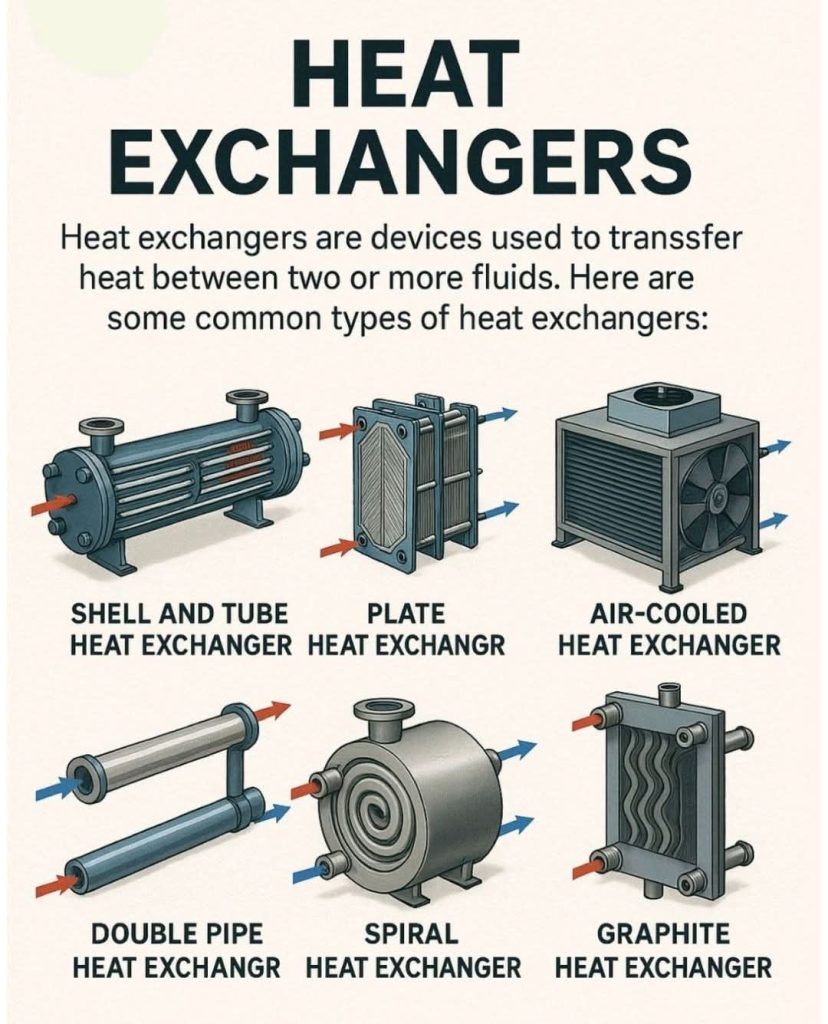
Example 5: Heat Transfer in Heat Exchangers
Heat exchangers are among the most important thermal engineering systems.
They transfer heat between fluids without mixing them directly.
Industries using heat exchangers include:
- Oil and gas
- Chemical processing
- HVAC
- Food production
- Power generation
How Heat Exchangers Work
Heat exchangers rely on:
Conduction
Heat transfers through metal walls separating fluids.
Convection
Fluid flow removes or supplies heat on both sides.
Common Heat Exchanger Types
- Shell and tube heat exchangers
- Plate heat exchangers
- Air-cooled heat exchangers
- Double-pipe heat exchangers
Why Engineers Simulate Heat Exchangers
Simulation software helps engineers optimize:
- Pressure drop
- Flow distribution
- Thermal efficiency
- Tube arrangement
- Fouling effects
Thermal analysis can significantly improve system efficiency and reduce operating costs.
Example 6: Heat Transfer in Solar Panels
Solar thermal systems are excellent examples of radiation heat transfer.
Solar collectors absorb radiant energy from the sun and convert it into usable thermal energy.
Radiation Absorption
Dark absorber surfaces maximize solar radiation absorption.
The absorbed heat transfers to water or working fluids through conduction and convection.
Thermal Efficiency Challenges
Engineers work to minimize:
- Heat loss
- Reflection losses
- Thermal resistance
Simulation software helps optimize collector geometry and thermal performance.
Example 7: Heat Transfer in Human Body Cooling
The human body continuously exchanges heat with its environment.
Body temperature regulation involves:
- Conduction
- Convection
- Radiation
- Evaporation
Sweating and Evaporation
Sweating cools the body through evaporative heat transfer.
As sweat evaporates, it absorbs heat from the skin.
Convection Around the Body
Airflow removes heat from skin surfaces through convection.
This is why fans help cool people even when air temperature remains unchanged.
Example 8: Heat Transfer in Power Plants
Power plants rely heavily on heat transfer systems.
Examples include:
- Steam boilers
- Turbines
- Condensers
- Cooling towers
Steam Generation
Boilers transfer heat to water until it evaporates into steam.
This phase-change process powers turbines for electricity generation.
Condensation Systems
Condensers remove heat from steam and convert it back into water.
Efficient heat transfer improves power plant performance and energy efficiency.
Example 9: Heat Transfer in Industrial Drying Processes
Industrial drying systems remove moisture using thermal energy.
Applications include:
- Food processing
- Pharmaceutical manufacturing
- Chemical production
- Textile industries
Convection in Drying
Hot air transfers heat to wet materials through convection.
Moisture evaporates as the material temperature rises.
Engineering Challenges in Drying Systems
Engineers optimize:
- Air velocity
- Humidity control
- Temperature distribution
- Drying time
- Energy efficiency
CFD simulations are frequently used to improve industrial drying performance.
Example 10: Heat Transfer in Aerospace Engineering
Aircraft and spacecraft face extreme thermal conditions.
Examples include:
- Jet engine heating
- Atmospheric re-entry
- Aerodynamic heating
- Electronic cooling
Radiation and High-Temperature Protection
Spacecraft thermal shields are designed to handle intense radiative heat loads.
Advanced materials reduce heat transfer into critical components.
CFD in Aerospace Thermal Analysis
Engineers use CFD to analyze:
- Airflow
- Thermal loads
- Shock waves
- Heat distribution
Thermal simulations improve safety and aerodynamic performance.
Combined Heat Transfer in Real Systems
Most engineering systems involve multiple heat transfer methods at the same time.
For example:
Industrial Oven
- Radiation from heating elements
- Convection from circulating air
- Conduction through trays and materials
Electronic Devices
- Conduction through chips
- Convection through cooling fans
- Radiation from hot surfaces
HVAC Systems
- Convection through airflow
- Conduction through ducts
- Phase-change heat transfer in refrigerants
Understanding these combined mechanisms is critical for accurate engineering analysis.
The Role of CFD and Thermal Simulation
Modern engineering relies heavily on thermal simulations.
Instead of building multiple prototypes, engineers use CFD and FEA software to predict thermal behavior digitally.
Simulation tools help evaluate:
- Heat distribution
- Fluid flow
- Thermal stress
- Cooling efficiency
- Energy losses
- Equipment reliability
These technologies reduce:
- Design costs
- Development time
- Material waste
- Operational risks
Challenges in Heat Transfer Engineering
Heat transfer systems are often difficult to optimize because of:
- Turbulent fluid flow
- Complex geometries
- High operating temperatures
- Material limitations
- Energy efficiency requirements
Advanced simulation software allows engineers to solve these challenges more efficiently.
Future Trends in Heat Transfer Technology
Heat transfer engineering continues evolving with new technologies such as:
- AI-assisted thermal optimization
- Smart cooling systems
- Digital twin simulation
- Advanced CFD modeling
- High-performance insulation materials
- Sustainable thermal systems
Industries are increasingly focusing on energy-efficient thermal solutions to reduce emissions and operational costs.
Conclusion
Heat transfer examples can be found in nearly every engineering and industrial system. From automotive radiators and industrial furnaces to electronics cooling and HVAC systems, thermal energy movement directly affects efficiency, safety, reliability, and operational performance.
Understanding real-world heat transfer applications helps engineers design better systems while helping industrial clients understand why thermal analysis and simulation are so important.
Modern CFD and thermal simulation technologies now allow engineers to analyze heat transfer behavior before manufacturing or installation begins. This improves performance, reduces risk, and supports more energy-efficient industrial systems.
As industries continue to demand higher efficiency and smarter engineering solutions, heat transfer analysis will remain one of the most important aspects of modern engineering design.