Most organizations investigate failures after they happen. The best-performing ones prevent them before they occur. Proactive Root Cause Analysis makes that possible.
Proactive Root Cause Analysis (RCA) is a forward-looking approach that helps organizations identify and eliminate potential causes of failure before incidents occur. In contrast to traditional reactive problem-solving, proactive RCA focuses on prevention, risk reduction, and long-term operational excellence. In industries such as engineering, manufacturing, oil & gas, IT operations, and safety-critical environments, proactive RCA is becoming a key pillar of reliability, compliance, and cost control.
This comprehensive guide explains what proactive root cause analysis is, how it differs from reactive RCA, why it matters today, and how organizations can implement it effectively using proven methodologies, tools, and frameworks.
What is Proactive Root Cause Analysis?
Definition and purpose of proactive RCA
Proactive Root Cause Analysis is a systematic process used to identify potential root causes of future problems before they result in failures, incidents, or losses. Instead of waiting for an event to happen, proactive RCA examines risks, weak signals, trends, near misses, and system vulnerabilities.
The main purpose of proactive RCA is prevention. By addressing underlying causes early, organizations can:
- Prevent repeat incidents
- Reduce unplanned downtime
- Improve reliability and asset performance
- Enhance safety and regulatory compliance
Proactive RCA shifts problem-solving from a corrective mindset to a preventive and predictive one.
Difference between proactive and reactive RCA
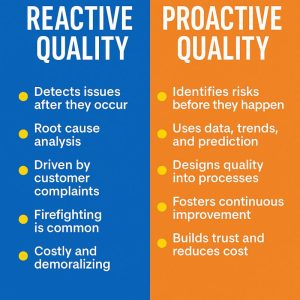
Reactive RCA is performed after an incident, failure, or non-conformance occurs. It aims to understand what went wrong and how to prevent recurrence. Proactive RCA, on the other hand, is applied before a failure happens, focusing on what could go wrong.
While reactive RCA is essential for learning from failures, it often comes with costs such as downtime, safety incidents, reputational damage, and regulatory penalties. Proactive RCA reduces reliance on reactive investigations by minimizing the number of incidents in the first place.
Why proactive RCA matters in modern organizations
Modern organizations operate in highly complex, interconnected systems where small issues can escalate rapidly. Increased automation, digitalization, global supply chains, and regulatory scrutiny make traditional reactive approaches insufficient.
Proactive RCA matters because it:
- Supports predictive maintenance and reliability-centered maintenance (RCM)
- Aligns with continuous improvement and operational excellence programs
- Reduces operational, safety, and financial risks
- Improves decision-making using data and trend analysis
In competitive markets, prevention is not only safer but also more cost-effective.
Reactive vs Proactive Root Cause Analysis
Key differences between reactive and proactive approaches
Reactive RCA focuses on past events, while proactive RCA focuses on future risks. Reactive approaches answer the question: Why did this happen? Proactive approaches ask: What could happen, and why?
Key differences include:
- Timing: after incident vs before incident
- Objective: correction vs prevention
- Data sources: incident reports vs risk data, trends, and near misses
- Impact: damage control vs risk avoidance
Both approaches are valuable, but proactive RCA delivers higher long-term value.
Business impact comparison
Reactive RCA often leads to:
- Production losses
- Emergency repairs
- Safety incidents
- Compliance violations
Proactive RCA delivers:
- Stable operations
- Lower maintenance costs
- Improved asset lifespan
- Higher workforce confidence and safety
Organizations that invest in proactive RCA typically experience fewer disruptions and stronger financial performance.
When to shift from reactive to proactive RCA
Organizations should consider shifting toward proactive RCA when:
- The same incidents occur repeatedly
- Maintenance costs are increasing without clear reasons
- Near-miss events are frequent
- Safety incidents or audit findings are rising
A balanced RCA strategy uses reactive RCA for learning and proactive RCA for prevention.
Benefits of Proactive Root Cause Analysis
Reducing repeat incidents and failures
By addressing root causes early, proactive RCA prevents recurring problems. Identifying design flaws, process gaps, or human-factor risks reduces the likelihood of repeated failures.
Improving operational efficiency
Proactive RCA helps optimize processes, improve asset reliability, and eliminate inefficiencies. When systems run smoothly, productivity increases and emergency interventions decrease.
Cost savings and risk reduction
Preventing failures is significantly cheaper than repairing damage. Proactive RCA reduces:
- Unplanned downtime
- Emergency maintenance costs
- Warranty claims and penalties
- Insurance and liability exposure
Enhancing safety and compliance
In safety-critical industries, proactive RCA helps identify hazards before they lead to accidents. This supports compliance with safety regulations and reduces workplace injuries and environmental incidents.
Proactive RCA Methodologies and Frameworks
PROACT methodology explained
The PROACT methodology is a structured RCA framework that focuses on problem definition, data collection, causal factor analysis, and corrective action development. In proactive applications, PROACT is used to analyze potential failures and system vulnerabilities before incidents occur.
5 Whys technique
The 5 Whys technique involves repeatedly asking “why” to uncover underlying causes. In proactive RCA, it is applied to potential failure scenarios to identify weaknesses in processes, design, or controls.
Fishbone (Ishikawa) diagram
The Fishbone diagram visually organizes potential causes into categories such as people, process, equipment, materials, and environment. It is highly effective for brainstorming and risk-based RCA.
Failure Mode and Effects Analysis (FMEA)
FMEA is one of the most powerful proactive RCA tools. It identifies potential failure modes, evaluates their impact, and prioritizes preventive actions based on risk severity and likelihood.
When to Use Proactive Root Cause Analysis
During risk assessments and audits
Proactive RCA strengthens risk assessments by identifying hidden vulnerabilities and improving control measures before audits or inspections.
For near-miss investigations
Near misses are valuable early-warning signals. Proactive RCA ensures lessons are learned before a serious incident occurs.
Before launching new systems or products
Applying proactive RCA during design and commissioning reduces startup failures, delays, and post-launch issues.
In continuous improvement programs
Proactive RCA supports Lean, Six Sigma, and operational excellence initiatives by focusing on prevention rather than correction.
Step-by-Step Proactive Root Cause Analysis Process
Step 1: Identify potential risks
Analyze processes, systems, and historical data to identify areas of potential failure.
Step 2: Collect and analyze data
Use operational data, trend analysis, inspections, and expert input to understand risk patterns.
Step 3: Identify root and contributing causes
Apply RCA tools to uncover systemic, organizational, technical, and human-factor causes.
Step 4: Develop preventive actions
Define actions that eliminate or control root causes, not just symptoms.
Step 5: Monitor and verify effectiveness
Track performance indicators and verify that preventive actions are effective over time.
Tools and Software for Proactive RCA
RCA software platforms
Specialized RCA software helps document investigations, manage data, and track corrective actions.
Data analytics and dashboards
Advanced analytics and dashboards help detect trends, anomalies, and early warning signals.
RCA templates and documentation tools
Standardized templates ensure consistency, traceability, and audit readiness.
Real-World Applications of Proactive RCA
Proactive RCA in IT operations
Used to prevent system outages, cybersecurity incidents, and performance degradation.
Proactive RCA in manufacturing
Improves equipment reliability, product quality, and production stability.
Proactive RCA in safety and compliance
Identifies hazards before accidents occur, supporting regulatory compliance and workforce safety.
Challenges in Implementing Proactive RCA
Organizational resistance
Cultural resistance and lack of leadership support can slow adoption.
Data quality limitations
Incomplete or inaccurate data reduces RCA effectiveness.
Resource and skill constraints
Proactive RCA requires trained personnel, time, and management commitment.
Conclusion
Proactive Root Cause Analysis is a strategic approach that enables organizations to move from firefighting to foresight. By identifying and addressing potential root causes before incidents occur, businesses can improve reliability, safety, compliance, and profitability. In an increasingly complex and competitive environment, proactive RCA is not just a best practice—it is a necessity for sustainable success.