Day: March 10, 2025

Civil engineers using structural analysis software to model and simulate concrete, steel, and composite structures under dynamic and environmental loads

Structural Analysis Software for Civil Engineering

 Enhancing Safety, Precision, and Efficiency Civil engineering projects, ranging from high-rise buildings and bridges to stadiums and infrastructure facilities, rely heavily on structural analysis to ensure safety, stability, and compliance with design codes. Advanced structural analysis software empowers civil engineers to simulate complex loads, evaluate structural performance, optimize designs, and


Read More
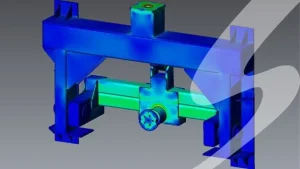
Engineering simulation software showing finite element analysis and computational fluid dynamics models used in structural and mechanical engineering.

Engineering Simulation Software

Engineering simulation software has become a cornerstone of modern engineering practice. Across civil, mechanical, electrical, chemical, and industrial disciplines, simulation tools allow engineers to predict how systems will behave before anything is built or manufactured. This capability significantly reduces development risks, optimizes performance, lowers costs, and shortens time-to-market. In industries

Read More
Engineering team analyzing a pressure vessel model using simulation software to evaluate stress, buckling, and material thickness for ASME compliance

Proven Vessel Design

 Ensuring Safety, Efficiency, and Compliance in Pressure Vessel Engineering Pressure vessels are critical components in industries ranging from chemical processing and oil & gas to power generation and pharmaceuticals. The design of a pressure vessel must account for extreme pressures, temperatures, and operational conditions to ensure safety, performance, and longevity.

Read More
3D structural analysis software showing finite element stress distribution in a civil engineering structure

Structural Analysis Software

 A Comprehensive Guide to Modern Structural Design and Simulation Structural analysis software has become an essential tool in modern engineering practice. From conceptual design to detailed verification, these tools enable engineers to predict how structures behave under various loading conditions, optimize material usage, and ensure compliance with design codes and

Read More
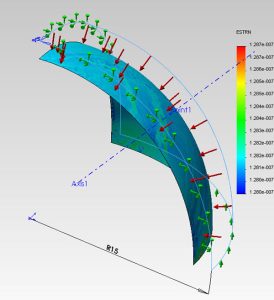
Finite Element Analysis model reviewed and approved by an RPEQ engineer in compliance with Australian Standards

Aligning FEA Results with Australian Standards (RPEQ & CPEng)

Introduction Finite Element Analysis (FEA) has become a cornerstone of modern engineering design, enabling engineers to predict structural behavior, validate performance, and optimize systems before physical construction or manufacturing begins. However, in Australia, technical accuracy alone is not sufficient. Engineering outcomes must also comply with regulatory and professional standards, particularly

Read More
FEA validation workflow based on NAFEMS standards and best practices

Using NAFEMS Standards to Validate FEA Results

A Technical Guide to FEA Verification, Benchmarks, and Best Practices Introduction Finite Element Analysis (FEA) has become a cornerstone of modern engineering design, enabling accurate prediction of structural behavior, thermal performance, and multi-physics interactions. However, as simulation results increasingly replace physical testing, a critical question arises: how reliable are the

Read More