In today’s competitive industrial landscape, companies are under constant pressure to produce faster, reduce costs, and maintain high-quality standards. One of the most powerful ways to achieve this is through effective material flow solutions.
From raw materials entering a factory to finished products reaching customers, the way materials move directly impacts productivity, cost efficiency, and customer satisfaction. Businesses that fail to optimize their material flow often struggle with bottlenecks, delays, and unnecessary expenses.
This comprehensive guide explores everything you need to know about material flow solutions, including principles, implementation steps, tools, benefits, and best practices.
What Are Material Flow Solutions?
Definition of Material Flow Solutions
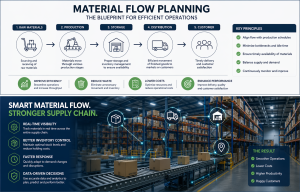
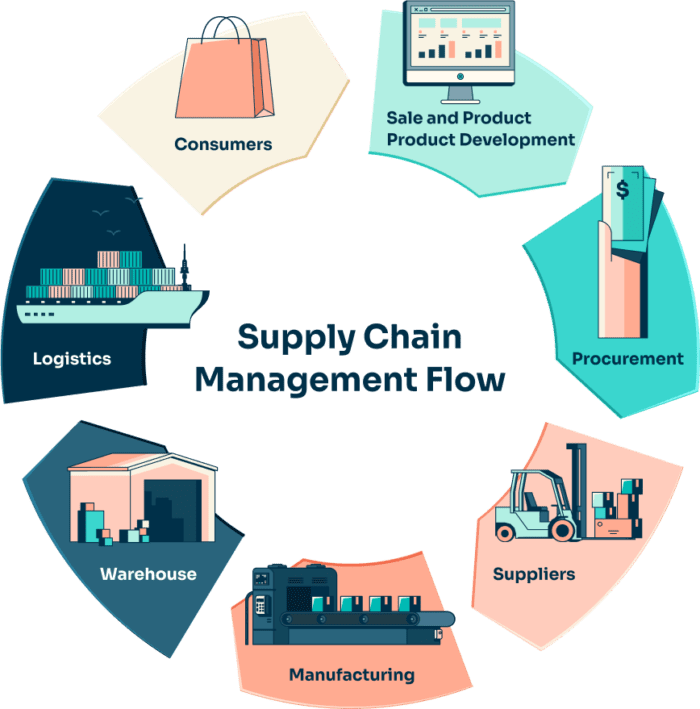
Material flow solutions refer to the strategies, systems, and technologies used to manage, control, and optimize the movement of materials throughout a production or supply chain process.
These solutions ensure that:
- The right materials are available
- At the right place
- At the right time
- In the right quantity
They combine process design, technology integration, and data analysis to create efficient workflows.
Importance for Manufacturing and Supply Chain Efficiency
Efficient material flow is the backbone of successful manufacturing and logistics operations.
Without proper material flow solutions, companies face:
- Production delays
- Excess inventory
- Increased operational costs
- Reduced customer satisfaction
On the other hand, optimized material flow leads to:
- Faster production cycles
- Reduced waste
- Improved resource utilization
- Enhanced competitiveness
For industries like automotive, pharmaceuticals, FMCG, and engineering, material flow solutions are not optional—they are essential.
Difference Between Solutions, Planning, and Optimisation
Although often used interchangeably, these terms have distinct meanings:
- Material Flow Planning focuses on designing how materials should move
- Material Flow Tracking monitors how materials actually move
- Material Flow Optimisation improves efficiency based on data
- Material Flow Solutions encompass all of the above, combining planning, execution, tracking, and continuous improvement
In simple terms, solutions are the complete ecosystem that ensures efficient material movement.
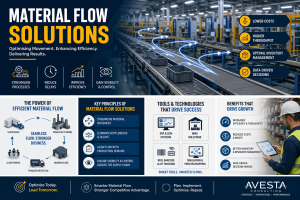
Key Principles of Material Flow Solutions
Streamlining Material Movement Through Processes
A core principle of material flow solutions is eliminating unnecessary movement.
Every extra step in material handling:
- Adds cost
- Increases time
- Raises risk of damage
Efficient systems aim for:
- Direct routes
- Minimal handling
- Logical sequencing of operations
Minimizing Bottlenecks and Delays
Bottlenecks are one of the biggest threats to productivity.
Material flow solutions help identify:
- Congested areas in production
- Delays between processes
- Imbalances in workload
By resolving these issues, companies can maintain a smooth and continuous flow.
Aligning Material Flow with Production Demand
Material flow must match production requirements.
If materials arrive too early:
- Inventory costs increase
If materials arrive too late:
- Production stops
Effective solutions ensure synchronization between supply and demand, often using just-in-time (JIT) strategies.
Ensuring Visibility and Control Across the Supply Chain
Visibility is critical for decision-making.
Modern material flow solutions provide:
- Real-time tracking
- Inventory visibility
- Process transparency
This enables managers to:
- Detect issues quickly
- Make informed decisions
- Improve responsiveness
Steps to Implement Material Flow Solutions
Step 1: Map Existing Material Flows
Start by understanding your current system.
This involves:
- Documenting material movement
- Identifying process steps
- Visualizing workflows using diagrams
Tools like process mapping and value stream mapping are highly effective here.
Step 2: Identify Inefficiencies and Bottlenecks
Once the current state is mapped, analyze it to find:
- Delays
- Redundant processes
- Excess handling
- Inventory accumulation points
Data-driven analysis is essential at this stage.
Step 3: Select Appropriate Tools and Technologies
Choosing the right tools depends on your business needs.
Examples include:
- ERP systems for planning
- WMS for warehouse control
- IoT devices for real-time tracking
The goal is to create a connected and intelligent system.
Step 4: Implement Process Improvements
After identifying solutions, implement changes such as:
- Layout redesign
- Automation
- Workflow adjustments
- Standard operating procedures (SOPs)
Implementation should be phased to minimize disruption.
Step 5: Monitor Results and Performance
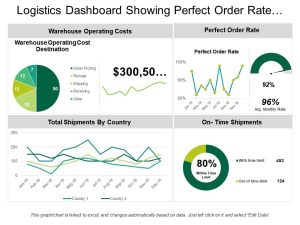
Track key performance indicators (KPIs) such as:
- Throughput
- Lead time
- Inventory turnover
- Downtime
Monitoring ensures that improvements deliver real results.
Step 6: Continuously Optimise Flows
Material flow solutions are not a one-time project.
Continuous improvement involves:
- Regular reviews
- Data analysis
- Process adjustments
This ensures long-term efficiency and adaptability.
Tools and Technologies for Material Flow Solutions
ERP and Supply Chain Management Systems
Enterprise Resource Planning (ERP) systems integrate:
- Procurement
- Production
- Inventory
- Distribution
They provide a centralized platform for managing material flow.
Warehouse Management Systems (WMS)
WMS solutions optimize warehouse operations by:
- Managing inventory locations
- Improving picking accuracy
- Reducing handling time
They are essential for large-scale operations.
RFID, Barcode, and IoT Tracking
Tracking technologies provide real-time visibility.
- Barcodes offer simple identification
- RFID enables automated tracking
- IoT sensors provide live data
These technologies reduce errors and improve efficiency.
Simulation and Process Mapping Software
Simulation tools allow companies to:
- Test different scenarios
- Predict outcomes
- Optimize layouts
This reduces risk before implementing changes in real operations.
Applications of Material Flow Solutions
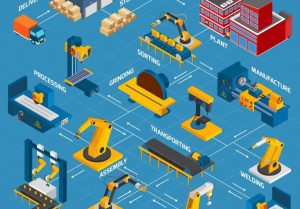
Manufacturing and Production Lines
Material flow solutions ensure:
- Continuous production
- Minimal downtime
- Efficient resource usage
They are especially critical in high-volume production environments.
Warehousing and Distribution Centers
In warehouses, material flow solutions help:
- Optimize storage
- Improve picking speed
- Reduce operational costs
Logistics and Transportation Networks
Efficient material flow extends beyond factories.
It includes:
- Transportation planning
- Route optimization
- Delivery scheduling
New Product Introduction and Ramp-Up Planning
When launching new products, companies must:
- Adjust material flow
- Scale operations
- Minimize disruptions
Material flow solutions support smooth transitions and faster market entry.
Benefits of Material Flow Solutions
Increased Operational Efficiency and Throughput
Optimized material flow reduces delays and improves productivity, allowing companies to produce more in less time.
Reduced Operational Costs and Waste
By eliminating inefficiencies, businesses can:
- Reduce labor costs
- Minimize waste
- Lower inventory expenses
Better Inventory and Resource Management
Material flow solutions ensure:
- Optimal inventory levels
- Efficient use of resources
- Reduced stockouts and overstocking
Data-Driven Decision-Making and Planning
Access to real-time data enables:
- Better forecasting
- Faster decision-making
- Continuous improvement
Common Challenges in Material Flow Solutions
Complex and Dynamic Processes
Modern supply chains are complex and constantly changing, making optimization challenging.
Resistance to Process Change
Employees may resist new systems or workflows.
Effective change management and training are essential.
Integration with Existing Systems
Integrating new technologies with legacy systems can be difficult and time-consuming.
Proper planning and expertise are required.
Best Practices for Effective Material Flow Solutions
Engage Cross-Functional Teams
Successful implementation requires collaboration between:
- Operations
- Engineering
- IT
- Supply chain teams
Validate Solutions with Real Data
Always base decisions on data, not assumptions.
Simulation and analytics tools are highly valuable.
Continuously Monitor and Optimise
Regular monitoring ensures:
- Sustained performance
- Early detection of issues
- Continuous improvement
Integrate Findings into Continuous Improvement Programs
Material flow solutions should be part of broader initiatives like:
- Lean manufacturing
- Six Sigma
- Operational excellence programs
Conclusion
Material flow solutions are a critical component of modern manufacturing and supply chain management. By optimizing how materials move through processes, businesses can achieve higher efficiency, lower costs, and better overall performance.
Whether you are managing a production line, warehouse, or logistics network, investing in the right material flow solutions can transform your operations and give you a strong competitive advantage.
For companies looking to stay ahead in today’s fast-paced market, the question is no longer whether to implement material flow solutions—but how quickly you can do it effectively.