manufacturing, power generation, HVAC systems, chemical processing, and thermal equipment design. Whether engineers are optimizing a combustion chamber, designing a heat exchanger, analyzing airflow in industrial furnaces, or improving energy efficiency in process plants, understanding how heat moves through gases is fundamental to achieving reliable and cost-effective engineering solutions.
In engineering environments, gases behave differently from solids and liquids because of their lower density, compressibility, and molecular spacing. These properties make gas heat transfer more complex and heavily dependent on flow behavior, pressure conditions, turbulence, radiation, and thermodynamic properties. Modern industries increasingly rely on advanced simulation tools such as Computational Fluid Dynamics (CFD) and Finite Element Analysis (FEA) to accurately predict thermal behavior and optimize performance.
For industries focused on energy efficiency, emissions reduction, and high-temperature equipment reliability, heat transfer analysis has become one of the most valuable engineering disciplines. Applications range from heat recovery steam generators (HRSGs) and waste heat recovery systems to furnaces, pressure vessels, and thermal process equipment.
What Is Heat Transfer in Gas Called?
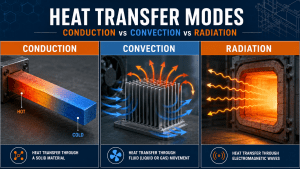
Heat transfer in gases refers to the movement of thermal energy through gaseous media due to temperature differences. In engineering and physics, this process generally occurs through three primary mechanisms:
- Conduction
- Convection
- Radiation
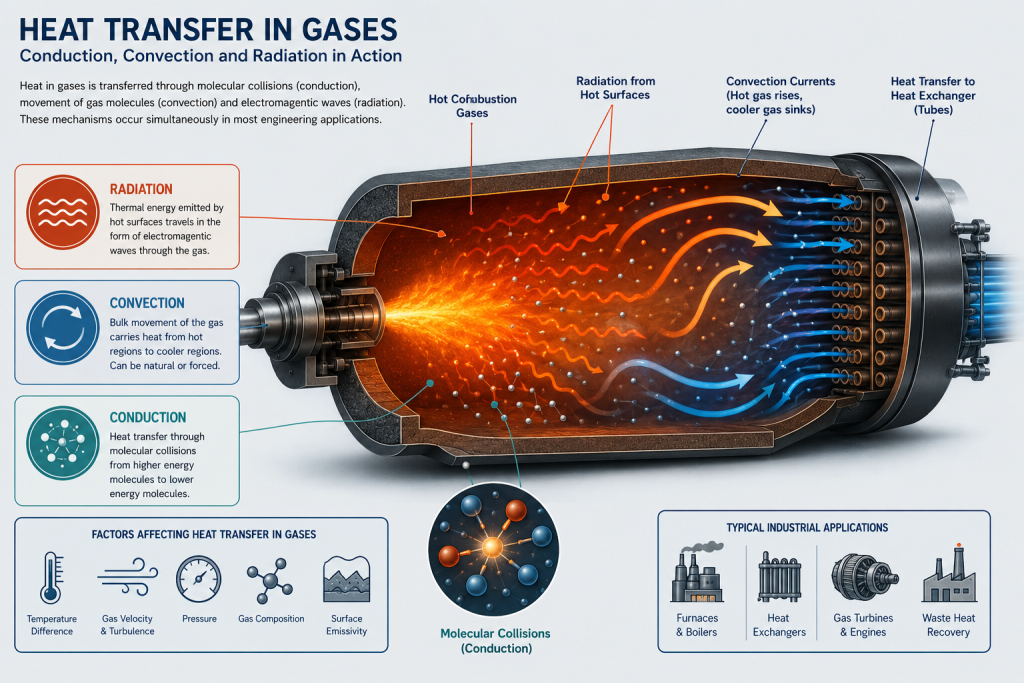
In practical industrial systems, these mechanisms rarely occur independently. Instead, they interact simultaneously to determine the overall thermal performance of equipment and processes.
For example:
- Hot combustion gases transfer heat to boiler tubes.
- Airflow removes heat from electronic equipment.
- Furnace gases radiate thermal energy to refractory walls.
- Exhaust gases transfer recoverable energy to heat exchangers.
The movement of thermal energy in gases is governed by thermodynamics, fluid mechanics, and molecular motion principles.
What Is Heat Mainly Transferred By in Gases?
In gases, heat is mainly transferred through convection and radiation, while conduction typically plays a smaller role compared to solids.
Convection as the Dominant Mechanism
Convection occurs when gas molecules move and carry thermal energy from one location to another.
There are two types:
Natural Convection
Natural convection occurs due to density differences caused by temperature variations.
Examples include:
- Warm air rising in a room
- Hot gases rising inside furnaces
- Natural ventilation systems
Forced Convection
Forced convection occurs when external devices move the gas.
Examples include:
- Fans
- Compressors
- Turbines
- Industrial blowers
In industrial engineering, forced convection is extremely important because it significantly increases heat transfer rates.
The heat transfer rate for convection is commonly expressed as:
q=hA(Ts−T∞)
Where:
- = heat transfer rate
- h = convection heat transfer coefficient
- A = surface area
- Ts = surface temperature
- T∞ = fluid temperature
This relationship is essential in CFD-based thermal analysis and heat exchanger design.
How Does Heat Transfer Through a Gas?
Heat transfer through gases occurs because gas molecules continuously move, collide, and exchange energy.
Molecular Motion and Energy Exchange
When a gas is heated:
- Molecular kinetic energy increases
- Molecules move faster
- Collisions transfer energy to cooler regions
Because gases have relatively large intermolecular spacing, conduction alone is usually inefficient compared to solids.
Role of Fluid Flow
Fluid flow dramatically affects gas heat transfer performance.
Factors influencing thermal transport include:
- Velocity
- Turbulence
- Pressure
- Gas composition
- Temperature gradients
- Boundary layer behavior
Turbulent flow generally enhances heat transfer because it increases mixing and reduces thermal resistance.
Which Gases Absorb Heat?
Different gases absorb and transfer thermal energy differently depending on their molecular structure and thermodynamic properties.
High Heat Capacity Gases
Some gases absorb more thermal energy because they possess higher specific heat capacities.
Examples include:
- Steam
- Carbon dioxide
- Water vapor
- Nitrogen
Radiatively Active Gases
Certain gases absorb thermal radiation efficiently due to molecular vibration modes.
Examples include:
- Carbon dioxide (CO₂)
- Water vapor (H₂O)
- Methane (CH₄)
These gases play major roles in:
- Combustion systems
- Furnace design
- Climate systems
- Energy recovery technologies
Understanding radiative gas behavior is essential in high-temperature engineering applications.
Radiation Heat Transfer
Radiation heat transfer becomes highly significant at elevated temperatures, especially above several hundred degrees Celsius.
Unlike conduction and convection, radiation does not require a physical medium. Thermal energy transfers through electromagnetic waves.
The Stefan–Boltzmann relationship defines radiative heat transfer:
q=σϵA(Ts4−Tsur4)
Where:
- σ= Stefan–Boltzmann constant
- ϵ= emissivity
- A = surface area
- Ts= surface temperature
- Tsur = surrounding temperature
Industrial Importance of Radiation
Radiation dominates in:
- Furnaces
- Kilns
- Boilers
- Reformers
- High-temperature pressure vessels
- Combustion chambers
Engineering simulation tools now combine CFD with radiation models to predict thermal performance more accurately.
Factors Affecting Radiation
Several engineering parameters influence radiative heat transfer efficiency.
Temperature
Radiation increases dramatically with temperature because it depends on the fourth power of temperature.
Surface Emissivity
Dark, rough surfaces emit and absorb radiation more effectively than polished metallic surfaces.
Gas Composition
Combustion gases containing CO₂ and H₂O absorb and emit radiation efficiently.
Geometry and View Factors
The orientation and spacing between surfaces affect radiative exchange.
Surface Fouling
Deposits on heat transfer surfaces reduce thermal efficiency and increase operating costs.
Combined Heat Transfer Mechanisms
Real engineering systems involve simultaneous conduction, convection, and radiation.
For example, in a boiler:
- Combustion gases radiate heat
- Gas flow convects heat to tubes
- Heat conducts through tube walls
- Water absorbs heat internally
This coupled thermal behavior creates complex engineering challenges requiring advanced simulation techniques.
Modern CFD and thermal analysis tools allow engineers to study these interactions virtually before manufacturing equipment.
Heat Transfer and Thermodynamics
Heat transfer is fundamentally linked to thermodynamics.
The First Law of Thermodynamics states that energy cannot be created or destroyed — only transferred or transformed.
In engineering systems, heat transfer governs:
- Energy efficiency
- Fuel consumption
- Thermal losses
- Equipment reliability
- Process optimization
For gases undergoing compression or expansion, thermodynamic behavior becomes especially important in:
- Turbines
- Compressors
- Engines
- HVAC systems
The ideal gas law is commonly used in thermal-fluid engineering:
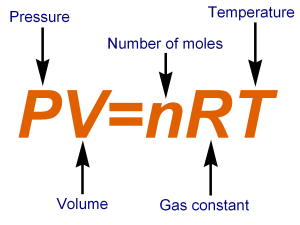
This relationship helps engineers model gas behavior under varying thermal and pressure conditions.
Computational Heat Transfer Analysis
Modern industries increasingly rely on computational analysis to study heat transfer in gases.
Computational Fluid Dynamics (CFD)
CFD numerically solves fluid flow and thermal equations to predict:
- Temperature fields
- Velocity distributions
- Heat flux
- Turbulence effects
- Combustion behavior
CFD is especially valuable because physical testing alone can be expensive and time-consuming.
Applications of CFD in Heat Transfer
CFD is widely used for:
- Furnace optimization
- Heat exchanger analysis
- Electronic cooling
- Ventilation systems
- Combustion analysis
- Waste heat recovery systems
Advanced engineering firms increasingly integrate AI and machine learning into simulation workflows for predictive thermal analysis and optimization.
Heat Transfer in Energy Efficiency and Sustainability
Heat transfer engineering directly impacts sustainability and industrial decarbonization.
Waste Heat Recovery
Large amounts of industrial heat are typically lost through exhaust gases.
Waste heat recovery systems capture this energy and reuse it to improve efficiency.
Examples include:
- HRSG systems
- Economizers
- Recuperators
- Regenerators
Emissions Reduction
Improved thermal efficiency reduces:
- Fuel consumption
- Carbon emissions
- Operating costs
Renewable Energy Applications
Heat transfer analysis is essential in:
- Solar thermal systems
- Hydrogen technologies
- Thermal energy storage
- Geothermal systems
Industrial engineering increasingly focuses on maximizing thermal efficiency while minimizing environmental impact.
Heat Transfer Challenges in Engineering
Despite technological advancements, engineers continue to face major heat transfer challenges.
Thermal Stress
Large temperature gradients create expansion and contraction stresses.
These stresses can cause:
- Cracking
- Distortion
- Fatigue
- Equipment failure
Fouling and Corrosion
Deposits reduce thermal performance and increase maintenance requirements.
High-Temperature Material Limits
Materials degrade under prolonged thermal exposure.
Turbulence Modeling Complexity
Accurately predicting turbulent gas flow remains computationally demanding.
Multiphysics Coupling
Modern systems often require simultaneous modeling of:
- Fluid flow
- Combustion
- Structural mechanics
- Radiation
- Chemical reactions
Advanced simulation methodologies continue evolving to address these complex engineering problems.
The Future of Heat Transfer Engineering
Heat transfer engineering is rapidly evolving due to advances in simulation, materials science, automation, and sustainability initiatives.
Artificial Intelligence Integration
AI-driven optimization tools can rapidly evaluate thousands of design variations.
Advanced Materials
Emerging materials improve:
- Thermal conductivity
- Corrosion resistance
- High-temperature performance
Digital Twin Technology
Digital twins allow real-time thermal monitoring and predictive maintenance.
Sustainable Energy Systems
Future energy systems will rely heavily on advanced thermal engineering solutions for:
- Hydrogen production
- Carbon capture
- Renewable integration
- Energy storage
Nanotechnology and Surface Engineering
Researchers are developing engineered surfaces that significantly enhance phase-change heat transfer performance.
The future of industrial engineering will increasingly depend on highly optimized thermal systems that maximize energy efficiency while minimizing environmental impact.
Why Heat Transfer Analysis Matters in Modern Industry
Heat transfer in gases is far more than a theoretical concept. It is a core engineering discipline that directly influences equipment safety, energy consumption, operating costs, and industrial sustainability.
From combustion systems and high-temperature vessels to HVAC systems and renewable energy technologies, thermal analysis enables engineers to design safer, more efficient, and more reliable systems.
Modern industries increasingly depend on advanced engineering simulation methods such as CFD and FEA to understand thermal behavior, predict failures, and optimize performance before physical construction begins.
As industries move toward decarbonization, electrification, and energy optimization, expertise in heat transfer engineering will remain essential for solving the next generation of industrial challenges.