Introduction
Thermal conductivity is one of the most important material properties considered in engineering design, manufacturing, construction, energy systems, and industrial processes. Whether designing pressure vessels, heat exchangers, furnaces, pipelines, structural components, or industrial equipment, engineers must understand how heat travels through materials.
Steel remains one of the most widely used engineering materials due to its strength, durability, affordability, and versatility. However, many engineers, designers, and project managers frequently ask:
- What is the k-value for steel?
- What is the thermal conductivity of steel in W/mK?
- How do you convert W/mK to R-value?
- What does 0.038 W/mK mean?
- How do you convert U-value to R-value?
Understanding these concepts helps engineers optimize energy efficiency, improve safety, reduce operating costs, and ensure compliance with engineering standards.
This guide explains thermal conductivity of steel in detail, including practical calculations and real-world engineering applications.
What Is Thermal Conductivity?
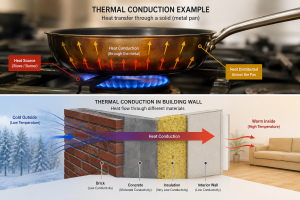
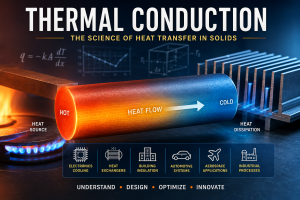
Thermal conductivity is a material’s ability to conduct heat.
It measures how quickly thermal energy moves through a material when there is a temperature difference between two sides.
The symbol for thermal conductivity is:
k
The standard unit is:
W/mK (Watts per meter-Kelvin)
A higher thermal conductivity means heat flows more easily through the material.
A lower thermal conductivity means the material acts as an insulator.
What Is the K-Value for Steel?
The k-value refers to the thermal conductivity of a material.
For steel, the k-value varies depending on the steel grade, composition, temperature, and manufacturing process.
Typical thermal conductivity values include:
| Steel Type | Thermal Conductivity (W/mK) |
|---|---|
| Carbon Steel | 45–60 |
| Mild Steel | 45–55 |
| Structural Steel | 45–60 |
| Stainless Steel 304 | 14–16 |
| Stainless Steel 316 | 13–16 |
| Tool Steel | 20–35 |
| High Alloy Steel | 10–30 |
A commonly accepted engineering value for carbon steel is:
50 W/mK
This value is often used in preliminary thermal calculations.
What Is the Thermal Conductivity of Steel in W/mK?
The thermal conductivity of steel is typically between:
14 W/mK and 60 W/mK
depending on the steel grade.
For example:
Carbon Steel
Carbon steel conducts heat relatively well compared to stainless steel.
Typical value:
50 W/mK
Stainless Steel
Stainless steel contains chromium and other alloying elements that reduce heat transfer.
Typical value:
15 W/mK
Comparison with Other Materials
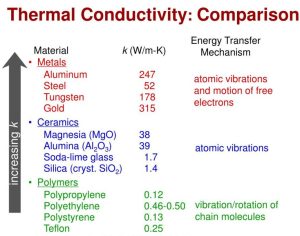
| Material | Thermal Conductivity (W/mK) |
|---|---|
| Copper | 385–400 |
| Aluminum | 205–235 |
| Carbon Steel | 50 |
| Stainless Steel | 15 |
| Glass | 0.8–1.0 |
| Concrete | 1.5–2.0 |
| Mineral Wool | 0.035–0.045 |
| Polyurethane Foam | 0.020–0.030 |
This comparison shows why steel is considered a moderate conductor while insulation materials are designed to have extremely low thermal conductivity.
Why Thermal Conductivity Matters in Engineering
Understanding thermal conductivity is essential for:
Heat Exchanger Design
Engineers need accurate thermal properties to predict heat transfer rates.
Pressure Vessel Design
Temperature gradients affect stresses and structural integrity.
Furnace Design
Thermal conductivity influences refractory selection and energy efficiency.
Building Design
Steel framing can create thermal bridges that increase heat loss.
Process Equipment
Chemical and industrial processes require controlled heat transfer.
Finite Element Analysis (FEA)
Thermal simulations depend heavily on accurate conductivity values.
The Physics Behind Heat Conduction
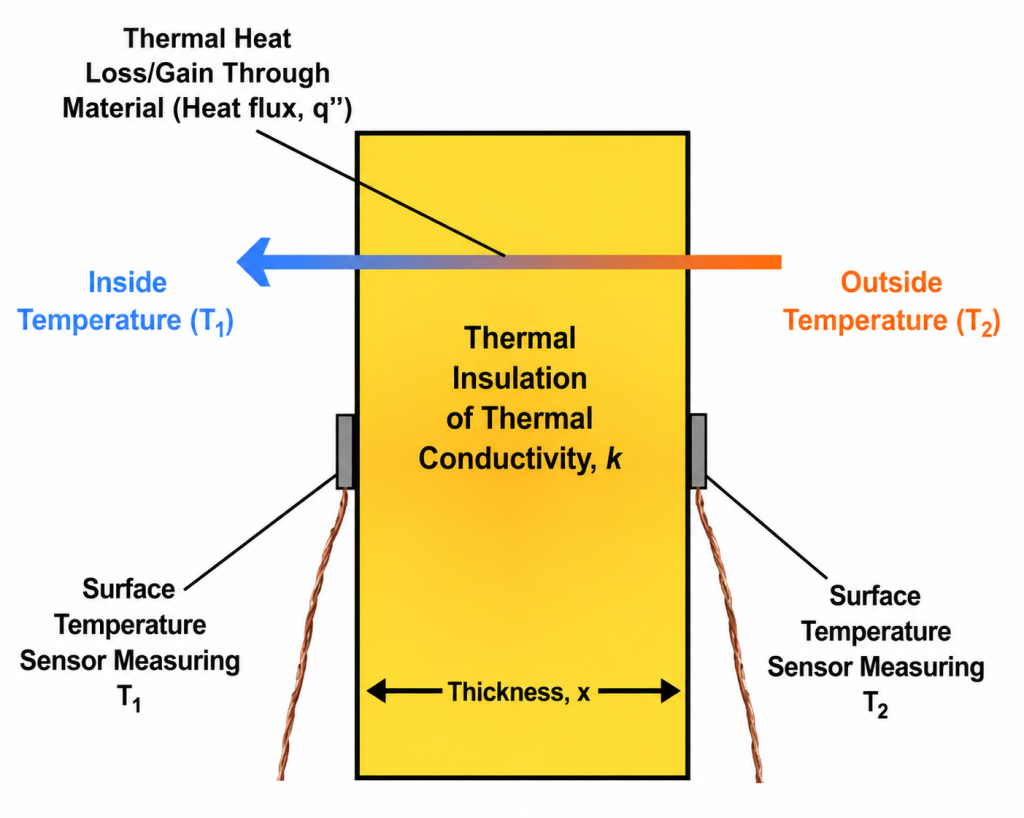
Heat conduction follows Fourier’s Law:
Where:
- Q = Heat transfer rate (W)
- k = Thermal conductivity (W/mK)
- A = Area (m²)
- T₁−T₂ = Temperature difference
- L = Thickness
This equation demonstrates that higher k-values lead to greater heat transfer.
Example Calculation for Steel
Consider a steel plate:
- Thickness = 10 mm (0.01 m)
- Area = 1 m²
- Thermal conductivity = 50 W/mK
- Temperature difference = 100°C
Applying Fourier’s Law:
Q=500,000W
This example illustrates how efficiently steel can conduct heat.
What Does 0.038 W/mK Mean?
A thermal conductivity value of:
0.038 W/mK
is typically associated with insulation materials.
Examples include:
- Mineral wool
- Glass wool
- Rock wool
- PIR insulation
- Polyurethane foam
This means only 0.038 watts of heat pass through one meter of material per degree Kelvin temperature difference.
Compared with steel:
| Material | Thermal Conductivity |
|---|---|
| Carbon Steel | 50 W/mK |
| Insulation | 0.038 W/mK |
Steel conducts heat approximately:
1,300 times faster
than a material with a conductivity of 0.038 W/mK.
This demonstrates why insulation is required around steel equipment, pipes, tanks, and structural elements.
Understanding Thermal Resistance (R-Value)
While thermal conductivity measures heat flow through a material, R-value measures resistance to heat flow.
Higher R-values indicate better insulation performance.
The relationship is:
R=L/K
Where:
- R = Thermal resistance
- L = Material thickness
- k = Thermal conductivity
How Do You Convert W/mK to R-Value?
To convert thermal conductivity to R-value:
R=Thickness/Thermal Conductivity
Example
Insulation thickness:
100 mm = 0.1 m
Thermal conductivity:
0.038 W/mK
Calculation:
R=0.10/0.038
Therefore:
100 mm insulation with k = 0.038 W/mK provides an R-value of approximately 2.63 m²K/W.
Steel R-Value Example
Suppose a steel plate has:
Thickness = 10 mm = 0.01 m
Thermal conductivity = 50 W/mK
Calculation:
R=0.0002
This extremely low R-value shows that steel provides virtually no insulation.
What Is U-Value?
U-value measures overall heat transfer through a building element or assembly.
Units:
W/m²K
Lower U-values indicate better thermal performance.
Higher U-values indicate greater heat loss.
Relationship Between U-Value and R-Value
The conversion is simple:
R=1/U
and
U=1/R
Example
Given:
U=0.25
Calculation:
R=1/0.25 R=
Result:
R-value = 4 m²K/W
How Do You Convert R-Value to U-Value?
If:
R=5
Then:
U=1/5 U=
Result:
U-value = 0.20 W/m²K
Thermal Conductivity of Stainless Steel vs Carbon Steel
Engineers often assume all steel behaves similarly, but thermal performance can differ significantly.
| Property | Carbon Steel | Stainless Steel |
|---|---|---|
| Thermal Conductivity | ~50 W/mK | ~15 W/mK |
| Heat Transfer Rate | Higher | Lower |
| Corrosion Resistance | Moderate | Excellent |
| Cost | Lower | Higher |
Because stainless steel transfers heat less effectively, it is commonly selected for applications where heat loss reduction is desirable.
Thermal Conductivity in Structural Engineering
Structural steel members can create thermal bridges in buildings.
Common examples include:
- Steel columns
- Steel beams
- Curtain wall systems
- Roof connections
- Structural penetrations
Thermal bridges increase:
- Energy consumption
- Heating costs
- Cooling costs
- Condensation risk
Modern building design often incorporates thermal breaks to minimize these effects.
Thermal Conductivity in Industrial Equipment Design
Industrial facilities rely heavily on accurate thermal calculations.
Applications include:
Heat Exchangers
Thermal conductivity affects heat transfer efficiency.
Boilers
Material selection impacts energy performance.
Storage Tanks
Insulation design depends on steel conductivity.
Process Piping
Heat loss calculations determine insulation requirements.
Furnaces and Kilns
Steel shells require insulation systems to prevent excessive heat loss.
Role of Thermal Conductivity in FEA and CFD Analysis
Engineering simulation software requires thermal conductivity as a key material property.
In Finite Element Analysis (FEA), engineers evaluate:
- Thermal stresses
- Expansion and contraction
- Heat distribution
- Failure mechanisms
In Computational Fluid Dynamics (CFD), thermal conductivity helps predict:
- Heat transfer
- Temperature fields
- Cooling efficiency
- Process performance
Accurate material data leads to more reliable simulation results.
Common Engineering Standards Referencing Thermal Conductivity
Thermal conductivity values are frequently used in:
- ASTM standards
- ASME Boiler and Pressure Vessel Code
- ISO standards
- Eurocodes
- Australian Standards
- Building Energy Codes
These standards support thermal design, safety assessments, and energy efficiency calculations.
Best Practices When Using Steel Thermal Conductivity Data
Engineers should remember:
- Thermal conductivity changes with temperature.
- Different steel grades have different k-values.
- Stainless steel is significantly less conductive than carbon steel.
- Manufacturer data should be verified whenever possible.
- Thermal simulations should use temperature-dependent properties for critical applications.
- Insulation design should always consider both conductivity and thickness.
Conclusion
Thermal conductivity is a fundamental property that influences heat transfer, energy efficiency, equipment performance, and structural behavior. The thermal conductivity of steel generally ranges between 14 and 60 W/mK, with carbon steel averaging approximately 50 W/mK and stainless steel around 15 W/mK.
Understanding the relationship between k-value, thermal conductivity, R-value, and U-value allows engineers to make informed decisions in industrial design, building construction, thermal analysis, pressure vessel engineering, and simulation studies.
Whether designing heat exchangers, furnaces, structural systems, or energy-efficient facilities, accurate thermal conductivity data is essential for achieving safe, reliable, and cost-effective engineering solutions.