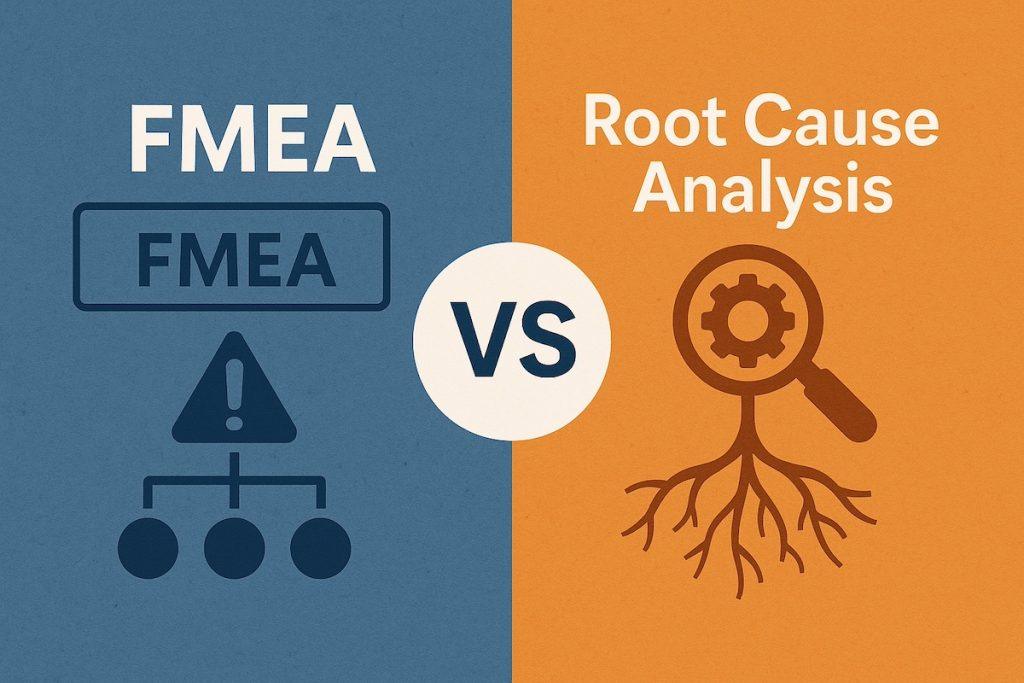
When equipment fails, processes break down, or incidents disrupt operations, organizations naturally want answers—fast. But the type of analysis chosen determines whether the issue is merely explained or truly prevented from happening again. Two commonly used—but often misunderstood—approaches are Failure Analysis and Root Cause Analysis (RCA).
Although these methods are closely related, they serve different purposes, operate at different depths, and deliver different outcomes. Confusing failure analysis with root cause analysis can result in incomplete investigations, weak corrective actions, and recurring problems.
This article provides a comprehensive comparison of failure analysis vs root cause analysis, explaining how they differ, when to use each, how they complement one another, and how organizations can integrate both into effective reliability and risk management programs.
Failure Analysis vs Root Cause Analysis: Key Differences
Understanding the distinction between these two approaches starts with clear definitions and intent.
Definition of Failure Analysis
Failure analysis is a technical investigation focused on determining how and why a component, material, or system physically failed. It examines failure mechanisms such as fracture, corrosion, fatigue, wear, overheating, or electrical breakdown.
The primary objective of failure analysis is to answer:
- What failed?
- How did it fail?
- What physical mechanism caused the failure?
Failure analysis is often conducted by engineers, laboratories, or technical specialists and relies heavily on scientific testing and inspection.
Definition of Root Cause Analysis (RCA)
Root Cause Analysis (RCA) is a structured problem-solving methodology aimed at identifying the underlying causes—including human, procedural, and organizational factors—that allowed a failure or incident to occur.
RCA seeks to answer:
- Why did the failure happen?
- Why were conditions allowed to exist?
- What systemic weaknesses contributed?
The goal of RCA is not just explanation, but prevention of recurrence.
Why the Two Are Often Confused
Failure analysis and RCA are frequently confused because:
- Both investigate “why” something went wrong
- Both may be triggered by the same event
- Both are used after failures or incidents
However, failure analysis typically explains the failure mechanism, while RCA explains the failure context and system weaknesses. One without the other often leads to incomplete conclusions.
What Is Failure Analysis?
Failure analysis is primarily concerned with technical failure mechanisms and physical evidence.
Focus on Physical or Technical Failure Mechanisms
Failure analysis examines:
- Material properties
- Stress conditions
- Environmental exposure
- Design limitations
- Manufacturing defects
It seeks to identify whether failure occurred due to fatigue, overload, corrosion, thermal stress, improper material selection, or manufacturing errors.
This approach is essential for understanding how a component physically failed, but it does not always explain why the system allowed the failure to occur.
Common Tools Used in Failure Analysis
Typical failure analysis tools include:
- Visual and microscopic examination
- Metallurgical analysis
- Fractography
- Chemical composition testing
- Non-destructive testing (NDT)
- Finite element analysis (FEA)
- Laboratory simulations
These tools provide objective, scientific insight into failure behavior.
Typical Industries Using Failure Analysis
Failure analysis is widely used in:
- Manufacturing
- Aerospace
- Automotive
- Oil and gas
- Power generation
- Construction and materials engineering
Any industry relying on mechanical integrity and material performance benefits from failure analysis.
What Is Root Cause Analysis?
Root Cause Analysis expands the investigation beyond the failed component to the system that produced the failure.
Focus on Underlying Systemic Causes
RCA examines factors such as:
- Operating conditions
- Maintenance practices
- Design standards
- Management decisions
- Organizational culture
Instead of asking only how the failure occurred, RCA asks why the failure was possible.
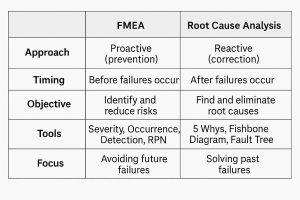
Identifying Human and Organizational Factors
RCA recognizes that:
- People operate within systems
- Systems shape decisions and behavior
- Human error is often a symptom, not a cause
Common RCA findings include:
- Inadequate procedures
- Insufficient training
- Poor communication
- Weak supervision
- Conflicting performance incentives
Preventing Recurrence of Problems
The ultimate objective of RCA is long-term prevention. Corrective actions focus on:
- Improving systems
- Modifying processes
- Strengthening controls
- Reducing risk exposure
A successful RCA ensures the same problem does not reappear in a different form.
Core Differences Between Failure Analysis and RCA
Although complementary, failure analysis and RCA differ in several fundamental ways.
Scope of Investigation
- Failure analysis focuses on a specific component or failure event
- RCA examines the broader operational, human, and organizational system
Failure analysis answers “what failed,” while RCA answers “why the system failed.”
Depth of Analysis
Failure analysis typically stops once the physical mechanism is identified.
RCA continues deeper until controllable and preventable causes are found.
Short-Term vs Long-Term Focus
- Failure analysis supports immediate technical understanding
- RCA supports sustainable, long-term improvement
One explains; the other prevents.
Technical vs Systemic Approach
Failure analysis is:
- Engineering-driven
- Data-intensive
- Laboratory-based
RCA is:
- System-focused
- Cross-functional
- Process- and behavior-aware
Both perspectives are necessary for complete understanding.
When to Use Failure Analysis
Failure analysis is most appropriate in technically driven situations.
Equipment or Component Breakdown
Failure analysis is essential when:
- Mechanical components fracture
- Bearings fail prematurely
- Electrical systems malfunction
- Structural elements collapse
Understanding the failure mechanism is critical before corrective action.
Material Defects Investigation
Failure analysis is ideal for investigating:
- Incorrect material selection
- Manufacturing defects
- Heat treatment issues
- Corrosion or chemical attack
These investigations often require specialized laboratory expertise.
Engineering and Laboratory Testing
Failure analysis supports:
- Design validation
- Product improvement
- Warranty claims
- Supplier quality investigations
It provides scientific evidence for engineering decisions.
When to Use Root Cause Analysis
RCA is the preferred approach when problems go beyond a single technical failure.
Repeated Operational Incidents
RCA is critical when:
- Failures recur despite repairs
- Similar incidents occur across assets
- Temporary fixes become routine
Recurring problems almost always indicate systemic weaknesses.
Safety or Compliance Failures
RCA is essential for:
- Safety incidents
- Environmental releases
- Regulatory non-compliance
- Near-miss events
Regulators often require formal RCA for serious incidents.
Organizational Performance Issues
RCA is effective for:
- Chronic downtime
- Poor reliability performance
- Quality defects
- Process inefficiencies
These issues rarely have purely technical causes.
Can Failure Analysis and RCA Work Together?
The most effective investigations combine both approaches.
Combining Technical and Systemic Investigation
Failure analysis provides:
- The physical failure mechanism
RCA provides: - The system context that allowed the failure
Together, they explain both how and why the failure occurred.
Creating Comprehensive Corrective Actions
When combined:
- Technical fixes address failure mechanisms
- Systemic actions address policies, procedures, and behaviors
This ensures corrective actions are both effective and sustainable.
Improving Asset Reliability and Risk Management
Integrating failure analysis with RCA:
- Improves reliability strategies
- Enhances risk management
- Strengthens asset life-cycle decisions
This integration is a hallmark of high-reliability organizations.
Advantages and Limitations of Each Approach
Both methods offer strengths—and limitations—when used alone.
Strengths of Failure Analysis
Failure analysis excels at:
- Identifying physical failure modes
- Providing scientific evidence
- Supporting engineering improvements
- Validating design assumptions
However, it may overlook human and organizational contributors.
Strengths of Root Cause Analysis
RCA is strong in:
- Identifying systemic weaknesses
- Preventing recurrence
- Improving processes and culture
- Supporting continuous improvement
But RCA may lack technical depth without failure analysis input.
Common Limitations to Consider
Limitations arise when:
- Failure analysis stops at the component level
- RCA lacks physical evidence
- Investigations are rushed or blame-focused
Balanced application avoids these pitfalls.
Choosing the Right Approach for Your Organization
Selecting the appropriate method depends on context, risk, and objectives.
Industry-Specific Considerations
- Asset-intensive industries benefit from combined approaches
- Highly regulated industries require formal RCA
- R&D environments rely heavily on failure analysis
Industry risk profiles should guide methodology selection.
Risk Level and Impact Assessment
High-consequence events demand:
- Deep RCA
- Evidence-based failure analysis
- Strong corrective action governance
Low-risk events may require lighter analysis.
Integration into Reliability Programs
Best practice organizations integrate both into:
- Reliability-centered maintenance (RCM)
- Asset management systems
- Risk assessments
- Continuous improvement frameworks
Integration ensures learning is captured and applied systematically.
Final Thoughts: Complementary, Not Competing Approaches
Failure analysis and root cause analysis are not competing methodologies. They are complementary tools that, when used together, provide a complete understanding of failures and how to prevent them.
Failure analysis explains what physically failed.
Root cause analysis explains why the system allowed it to fail.
Organizations that understand and apply both approaches correctly move beyond reactive fixes toward resilient, high-performing operations.