In asset-intensive industries, failures rarely occur without warning—and they almost never happen without deeper causes. Equipment breakdowns, safety incidents, environmental releases, and costly downtime are often treated as isolated technical problems. In reality, they are symptoms of systemic weaknesses that, if left unaddressed, will continue to resurface.
This is where the Root Cause Failure Analysis (RCFA) process plays a critical role.
A well-defined RCFA process provides organizations with a structured, evidence-based approach to understanding not only what failed, but why it failed and how to prevent it from happening again. Organizations that consistently apply RCFA move away from reactive firefighting and toward sustainable reliability and risk reduction.
This article explains the root cause failure analysis process in detail—when to initiate it, how each step works, the tools involved, common pitfalls, best practices, and the long-term benefits of a structured approach.
What Is the Root Cause Failure Analysis (RCFA) Process?
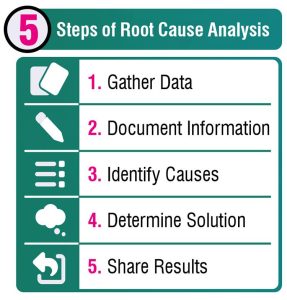
The RCFA process is a systematic framework for investigating failures in a disciplined, repeatable way.
Definition of the RCFA Process
The Root Cause Failure Analysis (RCFA) process is a structured sequence of investigative steps used to identify the physical, human, and organizational causes of equipment or system failures using verifiable evidence.
Unlike basic troubleshooting, RCFA does not stop at restoring functionality. Its purpose is to:
- Understand failure mechanisms
- Identify latent system weaknesses
- Implement corrective actions that eliminate recurrence
A formal RCFA process ensures investigations are consistent, objective, and defensible.
Objectives of Structured Failure Investigation
The main objectives of the RCFA process include:
- Preventing repeated failures
- Improving asset reliability
- Enhancing safety and environmental performance
- Reducing maintenance and downtime costs
- Supporting informed decision-making
Without a defined process, investigations often rely on assumptions and personal experience rather than facts.
Why a Defined Process Improves Reliability
A structured RCFA process:
- Forces deeper questioning beyond symptoms
- Promotes cross-functional collaboration
- Encourages evidence-based conclusions
- Creates organizational learning
Reliability improves when failures are treated as learning opportunities rather than isolated events.
When to Initiate a Root Cause Failure Analysis
Not every failure requires a full RCFA. However, certain conditions clearly justify a formal investigation.
Critical Equipment Breakdown
RCFA should be initiated when:
- A critical or bottleneck asset fails
- Failure disrupts production significantly
- Redundancy is limited or unavailable
Critical equipment failures often expose hidden vulnerabilities in design, operation, or maintenance.
Repeated or Chronic Failures
Recurring failures indicate:
- Ineffective corrective actions
- Misidentified root causes
- Systemic weaknesses
RCFA is essential when the same issue appears repeatedly across time, assets, or locations.
Safety or Environmental Incidents
Any event involving:
- Injury or near-miss
- Environmental release
- Regulatory non-compliance
requires a structured RCFA to meet legal obligations and prevent escalation.
High Financial Impact Events
Failures that cause:
- Significant downtime
- Major repair costs
- Lost production or penalties
should be investigated thoroughly to justify investment in prevention.
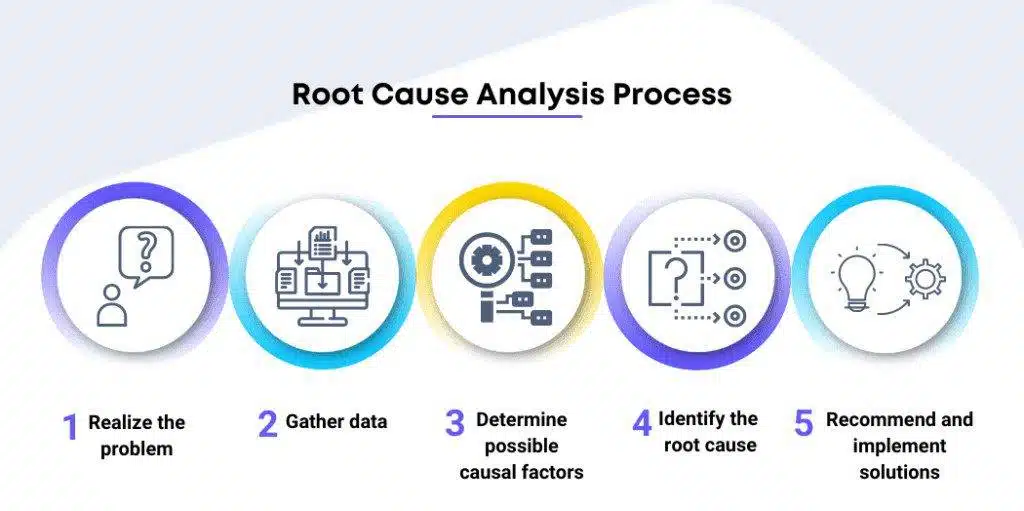
Step-by-Step Root Cause Failure Analysis Process
An effective RCFA process follows a clear sequence of steps that build upon one another.
Step 1: Clearly Define the Failure Event
The investigation begins by precisely defining:
- What failed
- When it failed
- Where it failed
- How it failed
- What the immediate consequences were
A vague failure definition leads to unfocused analysis and missed causes.
Step 2: Secure the Site and Preserve Evidence
Preserving evidence is critical, especially for mechanical or structural failures. This includes:
- Preventing premature repairs
- Isolating failed components
- Protecting fracture surfaces
- Recording site conditions
Once evidence is altered or destroyed, true root causes may never be identified.
Step 3: Collect Data and Physical Evidence
RCFA relies on factual inputs such as:
- Failed parts and materials
- Maintenance records
- Operating data and trends
- Alarm logs and control system data
- Inspection reports
- Environmental conditions
Incomplete data collection is one of the most common causes of weak RCFA outcomes.
Step 4: Build a Failure Timeline
A detailed timeline reconstructs events before, during, and after failure:
- Operating conditions
- Maintenance activities
- Process changes
- Human interventions
- Alarms and system responses
Timelines reveal cause-and-effect relationships that may not be obvious in isolation.
Step 5: Identify Causal Factors
Causal factors are conditions or actions that increased the likelihood of failure. These may include:
- Design weaknesses
- Inadequate maintenance
- Operating beyond limits
- Environmental stress
- Human actions or decisions
At this stage, the focus is on contributing factors, not final root causes.
Step 6: Determine Root and Systemic Causes
Root causes are:
- Controllable
- Preventable
- Supported by evidence
Systemic causes often relate to:
- Poor procedures
- Ineffective risk management
- Inadequate training
- Weak supervision
- Organizational culture
Most failures have multiple interacting root causes.
Step 7: Develop Corrective and Preventive Actions
Effective actions:
- Address root causes directly
- Modify systems, not just behavior
- Are specific, measurable, and assigned
- Include deadlines and accountability
Weak actions such as retraining alone rarely prevent recurrence.
Step 8: Implement and Monitor Effectiveness
RCFA is incomplete until actions are:
- Implemented
- Verified
- Monitored for effectiveness
Key performance indicators and follow-up reviews ensure corrective actions actually reduce risk.
Tools Used in the RCFA Process
Different tools support different stages of the RCFA process.
5 Whys Analysis
The 5 Whys method involves repeatedly asking “why” to move from symptoms to root causes. It is:
- Simple and fast
- Useful for straightforward failures
- Limited for complex systems
Fishbone (Ishikawa) Diagram
Fishbone diagrams categorize causes into groups such as:
- Equipment
- People
- Methods
- Materials
- Environment
- Management
They help visualize contributing factors and support structured discussion.
Fault Tree Analysis (FTA)
Fault Tree Analysis uses logic diagrams to show how combinations of failures lead to an undesired event. It is especially useful for:
- Complex systems
- Safety-critical failures
- Quantitative risk assessment
Failure Mode and Effects Analysis (FMEA)
FMEA supports RCFA by:
- Identifying potential failure modes
- Assessing severity and likelihood
- Prioritizing risks
RCFA findings often feed back into updated FMEAs.
Common Pitfalls in the RCFA Process
Even well-designed processes can fail if poorly executed.
Stopping at Surface-Level Causes
Common examples include:
- “Bearing failure”
- “Operator error”
- “Component fatigue”
These describe what happened, not why it happened.
Focusing on Blame Rather Than Systems
Blame-focused investigations:
- Reduce transparency
- Encourage defensiveness
- Hide systemic weaknesses
RCFA must focus on improving systems, not punishing individuals.
Inadequate Data Collection
Poor-quality data leads to:
- Assumptions
- Incomplete conclusions
- Ineffective actions
Evidence quality directly affects RCFA quality.
Weak Corrective Actions
Examples of weak actions:
- Re-training without system change
- Issuing reminders
- Replacing parts without addressing conditions
Strong actions modify design, process, or controls.
Best Practices for an Effective RCFA Process
High-performing organizations treat RCFA as a core capability.
Cross-Functional Investigation Teams
Effective RCFA teams include:
- Operations
- Maintenance
- Engineering
- Reliability
- Safety
This ensures balanced perspectives and deeper analysis.
Evidence-Based Validation of Causes
All conclusions must be supported by:
- Physical evidence
- Data trends
- Documentation
- Expert analysis
Unverified causes undermine credibility.
Documenting Lessons Learned
RCFA findings should be:
- Documented
- Shared
- Stored for future reference
This builds organizational memory and prevents knowledge loss.
Integrating Findings into Maintenance Strategy
RCFA results should inform:
- Maintenance plans
- Inspection intervals
- Spare part strategies
- Design improvements
Integration ensures long-term value beyond a single investigation.
Benefits of Following a Structured RCFA Process
Organizations that apply RCFA consistently realize significant benefits.
Reduced Downtime and Recurring Failures
Addressing root causes eliminates repeat incidents and improves operational stability.
Improved Asset Reliability
RCFA strengthens:
- Equipment availability
- Performance predictability
- Asset life-cycle management
Enhanced Safety and Compliance
Structured RCFA:
- Reduces incident risk
- Supports regulatory compliance
- Improves audit readiness
Long-Term Cost Reduction
Preventing failures lowers:
- Emergency repairs
- Spare part consumption
- Lost production
- Insurance and penalty costs
RCFA delivers both operational and financial value.
Final Thoughts: RCFA as a Reliability Foundation
The root cause failure analysis process is not just an investigation method—it is a strategic reliability tool. Organizations that embed RCFA into their culture move beyond reacting to failures and begin systematically preventing them.
By following a structured RCFA process, failures become opportunities to strengthen systems, improve safety, and enhance long-term performance.