Day: July 10, 2026

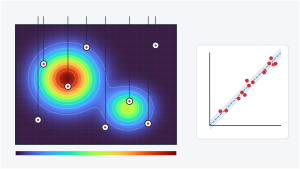
Engineer reviewing common RCFA tools with failure data, diagrams, and simulation results in an industrial control room

Common RCFA Tools: A Complete Guide for Engineering and Reliability Teams

Root Cause Failure Analysis, commonly known as RCFA, is one of the most important investigation methods used in engineering, maintenance, reliability, manufacturing, mining, oil and gas, power generation, infrastructure, and industrial operations. When equipment fails, production stops, safety risks increase, and repair costs rise. However, the most expensive mistake is

Read More
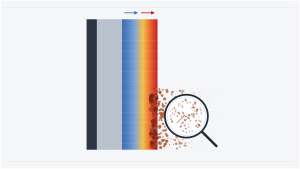
Pressure vessel failure prevention workflow showing inspection, root cause analysis, fatigue monitoring, and simulation verification

Common Pressure Vessel Failures and How to Prevent Them

Pressure vessels are among the most critical assets in industrial facilities. They store or process gases, vapours, liquids, and chemical products under pressure, often in demanding environments involving high temperature, corrosive fluids, cyclic loading, vibration, and strict safety requirements. Because of this, pressure vessel failures are rarely minor events. A

Read More
Comparison of thermal conductivity in silver, copper, gold, aluminum, and steel for engineering heat transfer analysis.

Thermal Conductivity of Silver: The Complete Engineering Guide

Understanding Silver’s Exceptional Heat Transfer Properties and Industrial Applications Silver is widely recognized as one of the world’s most valuable precious metals, but its importance extends far beyond jewelry, currency, and investment. In engineering, manufacturing, electronics, and thermal management systems, silver is renowned for possessing the highest thermal conductivity of

Read More
Engineer analyzing the thermal conductivity of iron using thermal simulation software for industrial equipment design.

Thermal Conductivity of Iron: Properties, K-Value, Heat Transfer, and Engineering Applications

Introduction Thermal conductivity is one of the most important material properties considered in engineering, manufacturing, construction, and industrial design. Whether engineers are designing heat exchangers, industrial furnaces, pressure vessels, structural components, or manufacturing equipment, understanding how efficiently a material transfers heat is essential for ensuring safety, energy efficiency, and long-term

Read More
Heat transfer through steel structures and industrial insulation systems demonstrating differences in thermal conductivity and energy efficiency

Thermal Conductivity of Steel: Understanding K-Value, W/mK, R-Value, and Engineering Applications

Introduction Thermal conductivity is one of the most important material properties considered in engineering design, manufacturing, construction, energy systems, and industrial processes. Whether designing pressure vessels, heat exchangers, furnaces, pipelines, structural components, or industrial equipment, engineers must understand how heat travels through materials. Steel remains one of the most widely

Read More