
Water Storage Tank Design: Loads, Materials, Codes and Verification
A water storage tank looks like a simple structure — a cylinder holding a fluid at atmospheric pressure — and that simplicity is exactly why it’s easy to under-scope. There’s no code stamp forcing a rigorous design-by-rule process the way there is for a pressure vessel, yet a tank that
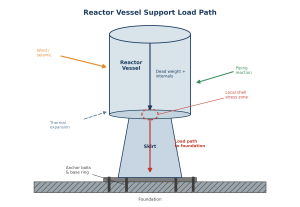
Structural Support Design for Reactor Vessels: Loads, Connections and Verification
Most discussions of reactor vessel design stop at the shell: wall thickness, head geometry, nozzle reinforcement, material selection. We’ve covered that ground in Reactor Pressure Vessel Design and in Design of Pressure Vessels: A Complete Guide. What tends to get less attention is the support system underneath the vessel —
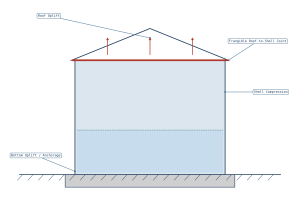
Frangible Roof Design for Storage Tanks: Principles, Codes and Failure Behaviour
Most explanations of frangible roofs stop at a definition and a code clause: the roof-to-shell joint is sized to be weaker than the shell, so it fails first if the tank over pressures. What that framing skips is the part that actually matters in practice — the complete load path

Pressure Vessel Certification in Australia: Standards, Documentation and Approval Process
Search results on pressure vessel certification in Australia tend to blur three things that are actually distinct: an engineer verifying a design, a regulator registering that design, and an owner registering the physical item once it’s built. Treating these as interchangeable is where projects lose time — a design that’s
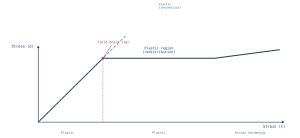
Plastic Analysis Software for Structural Engineers: Capabilities, Methods and Selection Criteria
Most vendor pages for plastic analysis software read the same way: a list of capabilities, a few case studies, a request-a-demo button. What they rarely explain is how to actually tell whether one tool’s plastic analysis capability is trustworthy against another’s — which is the question that matters once you’re
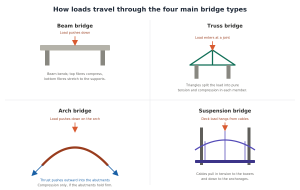
What Is the Strongest Bridge Design? Comparing Truss, Arch, Suspension and Beam Bridges
Type “strongest bridge design” into a search bar and most results hand you a single winner, usually the truss, sometimes the arch, and move on. That answer is comfortable but incomplete. A 400-meter river crossing and a 12-meter farm-access bridge are not competing for the same title, and a system